

Frequencies Are Heard Beneath the Surface
Each day, your mind tunes into hundreds and thousands of different frequencies from emotions, news headlines, electronic screens, voices, and even expectations that are beneath the surface of your everyday life. This is constant noise exposure, and even though it’s invisible, it affects your attention span and even your overall sense of balance. While some people call this anxiety, others call it energetic clutter. Psychics call this static in the aura, while scientists might say that it’s overstimulation in the nervous system. Whatever you call it, the idea behind it is the same: having an unsteady signal between the body, mind, and motion affects your life.
Energy hygiene is clearing that static. It’s a type of mental and emotional cleansing that takes your energy and gives it the same care that you give your physical health. In our culture today, productivity is important, and so we hardly ever stop to ask how much energy we’ve absorbed that isn’t ours or how much anxiety we carry without even realizing it.
Energy hygiene isn’t mystical, but it’s a way of being more conscious of what’s going on in your body and brain and noticing the constant exchange of information, stress, and emotion that shapes your inner being.
Stress Accumulates Like Dust
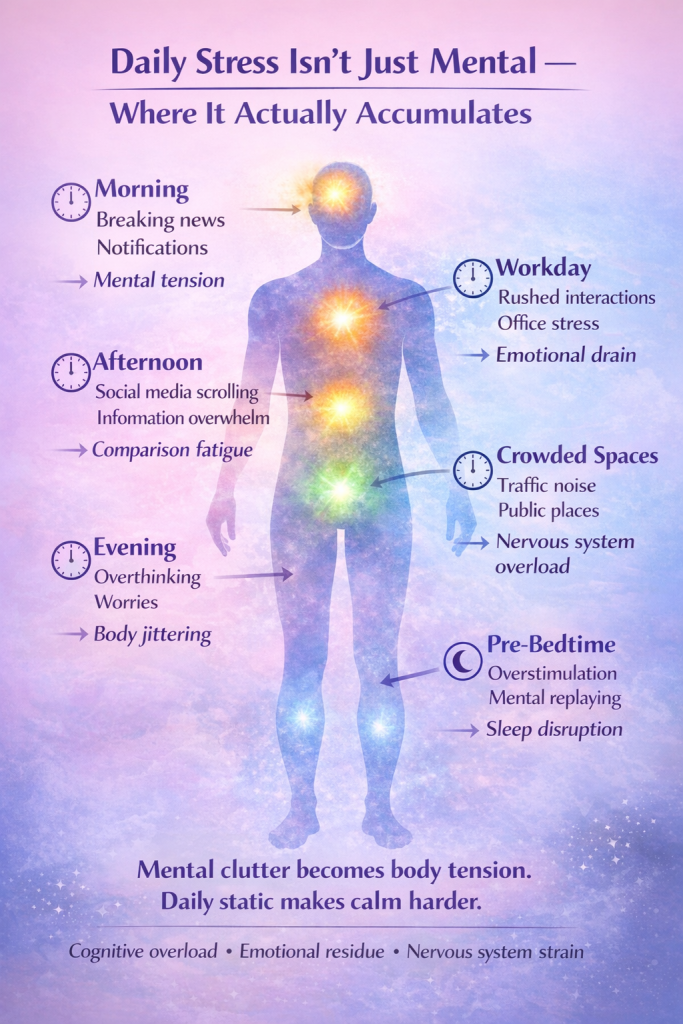
Even when you’re having peaceful and easy days, your energy accumulates just like dust does. You might wake up in the morning feeling great, but by afternoon, after having to deal with a dozen text messages, a small disagreement, or even looking at social media, your body and thoughts might feel heavy. You’re not just imagining this heaviness, but it’s part of the micro-stressors that have overloaded your nervous system, and your nervous system is still processing it.
The American Psychological Association quoted research that showed that chronic stress can trigger long-term activation of the hypothalamic-pituitary-adrenal (HPA) axis, which can lead to emotional tiredness and clouding of the cognitive functions. When a person is overstimulated, their perception gets smaller. The cortisol in the body becomes irregular, and we can no longer tell if it’s tension that belongs to what’s happening at the moment or if it’s leftover from the problems of yesterday.
Those who are therapists, infants, and even teachers all experience this. One high school counselor from Los Angeles said that her workday was like “carrying fifty radios on one frequency,” and she started doing energetic rinsing. Taking a few minutes each day for deep breathing and handshaking between student meetings helped her headaches disappear and improve her sleep.
This counselor wasn’t doing a magic trick or a spell, but she was resetting her nervous system. By doing grounding techniques, Psychology Today says that it is proven to help regulate the heart rate and to calm the vagus nerve, which is the internal de-stressor in the body.
Using Self-Care and Energy Hygiene
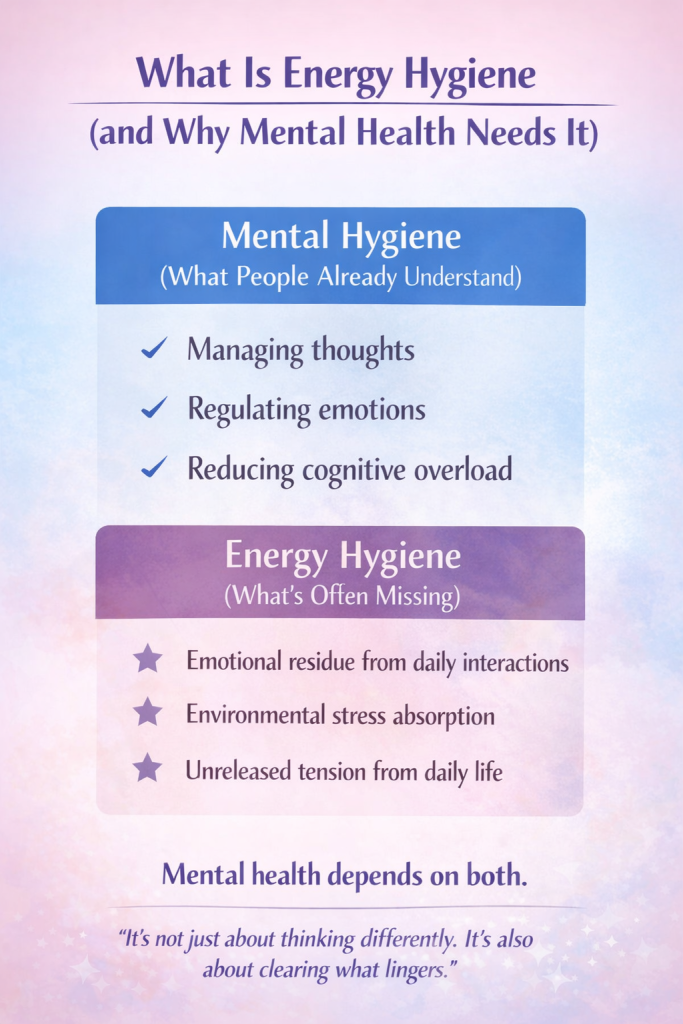
Most people think of self-care as a way to feel comforted, like taking long showers, eating favorite snacks, and cozying up to routines. These things absolutely matter, but they mostly soothe the surface. Energy hygiene is different. It’s not just about feeling relaxed, though, but it’s about releasing the emotional load the body has been carrying. A bath might relax your muscles, but if stress is still looping in your nervous system, the calm won’t last.
Research on embodied cognition suggests that emotions leave real impressions on the body; they show up in posture, breathing, and subtle movements. Energy hygiene works with these patterns through techniques such as grounding, breathwork, and intentional movement. These are similar to practices used in mindfulness-based stress reduction and not just comforting but regulating.
Think of energy hygiene as caring for the internal wiring. Self-care makes life feel smoother on the outside, while energy hygiene keeps the inner system clear enough to handle what’s next without burning out.
Knowing You Have Energy Build Up and Not Just Fatigue
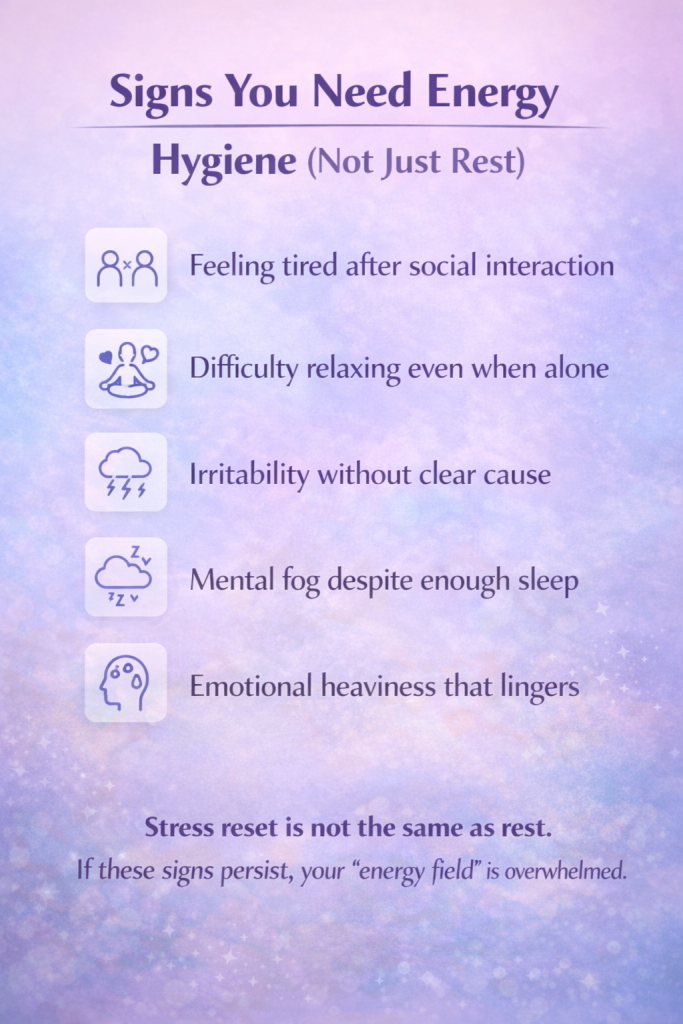
You don’t have to see energy to feel when something inside needs clearing. Some clues include:
- A heavy or “foggy” feeling that doesn’t match your day.
- Running out of energy after conversations or scrolling online.
- Overreacting to tiny inconveniences.
- Carrying other people’s emotions into your dreams.
- Feeling buzzed or tense even when you’re not moving.
A therapist once told me about a client who worked in crisis response. Even though she spent her day sitting at a desk, she came home exhausted and sore. Biofeedback showed that her body was syncing with the fear and panic she heard from callers, and her system was taking on stress that wasn’t hers.
Energy hygiene isn’t magical shielding, but it’s a reset. It helps your body stop holding onto what it was never meant to keep.
What Psychics Say About Energy Hygiene
Some psychics use the term “aura maintenance” to talk about how neuroscience looks at downtime or downregulation. This means that you reduce overstimulation to help restore clarity. When you look at the aura, it’s an energy field that goes outside of the body and mirrors what you’re feeling in your emotions. When your aura is overloaded, it can become dense or patchy, just like having static on a radio station.
One clairvoyant said, “When too many emotional devices connect, your signal weakens,” comparing this same thing to Wi-Fi. She used the daily ritual of light breathing, visualization, and saying silent affirmations, such as, “I release energy that isn’t mine.”
Even if you’re someone who doesn’t believe in auras, this is also a scientific truth. Each emotional exchange has mirrored neuron activation and micro expression that transmits subtle cues. The body picks us up as a constant pinging with the environment to no emotional data. When you learn to clear the signal, it’s a skill that everyone should develop.
How Science Sees Energy Hygiene
The idea of stress and grounding in science closely relates to intuitives as intuition. The body’s biochemical and electrical systems are sensitive to both environmental and psychological charges.
According to PMC, a review in the “National Library of Medicine” in 2023 looked at earthing practices, which are making physical contact with nature. They found that there were reductions in cortisol and inflammation markers that were able to be measured. Grounding helps to stabilize the autonomic nervous system, which controls heart rhythm, digestion, and mood.
Even mindfulness training has been shown to reduce amygdala activation, which is the brain’s alarm center. This is the same thing that Energy Hygiene does intuitively by teaching your mind to recognize noise vs. a signal and to step out of emotional reactions into being more aware. Cleaning your energy isn’t spirituality, but it’s about biology.
Energy Hygiene Techniques to Try
Here are some energy hygiene techniques you can try on your own:
Grounding By Connecting the Senses
When stress builds up, grounding through the senses can bring you back into the present moment quickly. Place your hand on something natural, such as a smooth stone, a wooden table, or running water. Notice the temperature, shape, and texture. This simple attention shift engages the thinking part of the brain and helps settle the emotional centers.
A nurse in Seattle shared a small ritual she uses at work: before stepping into a patient’s room, she gently touches the doorway and exhales. That tiny pause reminds her to reset before absorbing someone else’s stress.
Create a Light Rinse
The mind responds to imagined experiences almost as strongly as real ones. Visualizing a soft stream of light washing over your body can trigger relaxation and reduce tension. This kind of imagery is used in athletic training and pain therapy for a reason, but it calms the body by calming the brain.
Let Go of What Doesn’t Belong to You
Right before sleep, check in with yourself: What emotions did the day leave behind? Which ones belong to you, and which might have come from others? You can write them down or imagine handing those borrowed feelings back. This gentle ritual stops the mind from spinning stories at night and encourages deeper rest.
Get Your Energy Ready Ahead of Time
Before walking into a busy or emotionally charged space, take a moment to set a simple boundary:
- I can witness what’s happening without taking it on.
This primes your brain to notice stress without merging with it.
Clear Tension
A few minutes of shaking out your arms, stretching, or walking with intention can release stored stress from the muscles. Many therapists describe this as completing the stress cycle, which is letting the body finish what the mind started, so it doesn’t hold the tension inside.
These small actions may seem simple, but done consistently, they help the body and mind stay clear, centered, and less affected by the noise around you.
How to Have Energy Clarity
There are many things that can symbolize purification, such as salt, crystals, and water. But science also agrees with this. According to science, saltwater conducts ions that can help to mildly ground the skin and the body. This is a ritual of giving signals to the brain to shift the parasympathetic relaxation.
One teacher from Portland, Oregon, talked about how she started rinsing her hands in warm salt water after school. She said, “I used to take home my students’ anxiety. This gave me closure. My evenings felt lighter.”
Using Selenite and Quartz can help to release energy, according to psychics, but it requires an intention or a moment of awareness where the mind tells the body what energy to release.
Why Digital Energy Hygiene is Important
Stress today isn’t just about the physical space that you’re in; but online interaction has its own energetic weight. There are studies that show that scrolling can increase cortisol levels and emotional tiredness. Each time you read a comment or the news cycle, it can cause a stress response.
Digital rinsing is one thing that you can try. Put your phone face down for a few minutes and breathe deeply without having stimulation. Make sure that your feed has uplifting and neutral content. According to Verywell Mind, physical or digital clutter can directly affect mental health.
Social media isn’t toxic, always, but being constantly connected can break down boundaries, and energy hygiene is important and can mean a conscious disconnection.
Energy Hygiene in Real Life
Being in a workplace is full of energy. Even when there isn’t conflict, there can be shared tension in email threads and in meetings. Taking a reset break for just one minute between tasks can help to prevent burnout.
One HR manager at a Chicago law firm introduced a policy that encouraged staff to take two minutes of silence before they ever entered a meeting. At first, people were skeptical about this, but it soon became the company culture. Staff began reporting that there were fewer emotional outbursts and improved focus.
According to the American Nurse Journal, this is the energy model of having self-care where there is nourishment, balance, and restoration to fight against burnout.
Connecting with Energy and Spirit
When there are emotions that linger and are not processed, it can cause your perception to be clouded. If you look at this from a scientific perspective, this is called neural fatigue. From a psychic’s point of view, this is energetic congestion. Both show the same thing: that being aware can help to cleanse your energy.
Emotion isn’t just a feeling, but it’s energy in motion. When your energy is blocked, it can cause the body to have chronic tension or numbness. Energy hygiene helps to let energy flow through movement, breath, and being mindful.
One artist started sketching before scrolling on their phone before bed and said, “I realized it wasn’t just art, but it was clearing space.” Even though she had insomnia before this, it faded not because she changed what she was doing in her day, but because she changed her energy channel.
Creating Energy Hygiene Practices
Here are some energy hygiene practices you can do each day!
Morning Reset
Give yourself a grounded start before the world asks anything of you. Stand up slowly, feel the floor supporting you, and take a steady breath. Imagine your energy rooting downward, like you’re plugging into the earth. This kind of simple grounding is used in therapy and meditation because it stabilizes the nervous system before stress can set the pace for the day.
Midday Check-In
Little pauses matter. Step outside and notice the light on your skin, or stretch your fingers wide and let them relax again. These tiny interruptions signal to the body that it can shift out of stress mode, even if life is busy.
Evening Release
As the day winds down, allow your mind and body to release what they’ve absorbed. You might write a few thoughts down, breathe intentionally, or let a warm shower rinse away leftover tension. If you’ve been around a lot of people, try saying something like:
“I’ve done enough for today, and I let go of what isn’t mine.” It helps the nervous system move into a state where rest feels safe.
Keeping notes about how you feel each day can reveal patterns you might miss in the moment, just like how extra caffeine, a tough conversation, or lack of sleep can leave you feeling energetically heavy. Those clues help you adjust the habits that support you the most.
Where is Energy Hygiene Heading?
Energy-based approaches are already showing up in modern mental health care. Practices like tapping (EFT) and somatic therapies connect emotional well-being with the body’s stress responses, bridging science with more intuitive healing methods.
More therapists are teaming up with yoga instructors, meditation guides, and energy practitioners to help clients recover from overload in a whole-body way. What once seemed “too spiritual” is now seen as practical, just another strategy to help the nervous system reset.
As our understanding of mental health continues to grow, caring for our energy may become as everyday as caring for sleep: a daily habit that keeps our inner wiring clear, steady, and able to handle life with more ease.
Final Thoughts: Energy Hygiene Isn’t About Spirituality
Energy hygiene isn’t about spirituality, avoidance, or even superstition, but it’s about being aware. It tells you to take time to notice when your internal frequency has declined and to take the steps needed to restore it. Even science agrees that by being aware, you can regulate your emotions. Spiritualists see it as aura cleansing, but both agree that clarity helps you to release what isn’t yours.
Each time you take a conscious pause, a deep breath, or allow energy to be released, this is an act of energetic respect. It reminds you that mental health starts not just in the mind but in the space around you. When you learn to clear your energetic space, you won’t just feel calmer, but you’ll think more clearly, sleep better, and you’ll walk through this world as though the static has lifted, and a real signal can come through.




Wait, so now we gotta clean our energy too? What’s next? Vacuuming our vibes? 😂 I can barely keep up with laundry, let alone aura maintenance. Somebody help me make a to-do list for my chakras!
I find the comparison between neurological data and aura readings fascinating! It reflects an emerging integrative model in health psychology that emphasizes embodied cognition through sensory reset techniques.
Okay professor 😅 Can you say that again in English? Are you saying touching plants makes you smarter or something?
‘Energy hygiene’ sounds scientific but honestly feels like new-age spiritualism rebranded for LinkedIn professionals. You don’t need quartz or rituals—just boundaries and rest. But hey, if it helps people cope, who am I to stop them?
So basically if I get mad after reading comments online it’s not just cause people are annoying but cause my energy got clogged? That explains SO MUCH 😳 Time to rinse my brain with light beams or whatever.
Honestly, this article confused me a bit 😵💫 All the talk about signals, grounding, saltwater, vibes… Is it science or magic? I don’t get how touching a rock helps stress but maybe I’ll give it a go?
I think this whole ‘energy hygiene’ thing is just another trendy way of saying ‘take care of yourself.’ No need to invent fancy terms when the basics already work. Deep breathing isn’t magic—it’s just breathing.
There’s something poetic about the idea that stress clings like dust and can be rinsed away by breath or intention. Even if it sounds abstract, emotionally it makes sense—and sometimes metaphor is medicine too 💖
This article really resonated with me. I’ve been practicing mindfulness for years, and energy hygiene feels like a natural extension of that. It’s refreshing to see science and intuition being bridged like this. A high-quality read for sure.
This feels very real to me. I always wondered why I felt drained after social media or intense conversations. Now I understand it’s not just emotional but energetic! Gonna try the saltwater hand rinse tonight 🧂👐✨