

Every person carries a quiet antenna—an invisible receiver tuned to frequencies beyond the five senses. Some call it intuition, others psychic ability. But in today’s world of notifications, noise, and nonstop scrolling, that inner receiver gets fuzzy. The truth? Psychic gifts aren’t rare—they’re underused. Like muscles, they strengthen with intention, practice, and awareness.
This isn’t a guide about becoming “special.” It’s about remembering your natural sensitivity and refining it with modern wisdom. Whether you’re an empath who feels everything or a curious skeptic exploring your intuition, improving psychic gifts is really about improving how you listen to life itself.
What It Really Means to Have a Psychic Gift
Many people assume psychic gifts are magical or mysterious, but they’re deeply human. They arise from the same sensitivity that allows you to sense when someone is staring at you or feel tension in a room before anyone speaks. Psychic perception is simply expanded awareness.
The Three Layers of Perception
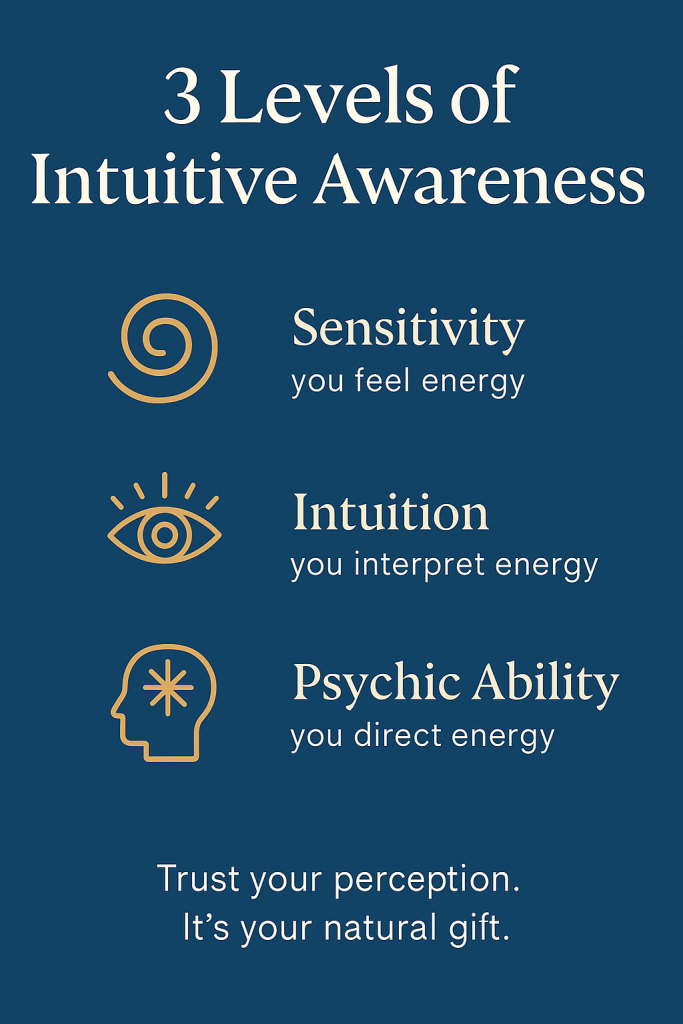
Sensitivity notices energy.
Intuition interprets energy.
Psychic ability directs it consciously.
Science is starting to catch up. Studies published in Psychology Today and National Geographic explore how “gut instincts” often stem from subtle neurological and emotional cues our conscious mind misses. Nurses, therapists, and artists often unknowingly use claircognizance—“clear knowing”—when making split-second decisions that later prove accurate.
Your psychic gift isn’t something you gain; it’s something you refine.
The Neuroscience of Psychic Awareness
If you’ve ever had a flash of insight before a phone rings, you’ve tapped into the pre-conscious brain. Neuroscientists studying intuition found that people often detect patterns milliseconds before they become conscious of them.
The Science of Subtle Knowing
Psychic perception is essentially heightened pattern recognition combined with emotional intelligence. Research on brainwave synchronization shows that alpha and theta waves—common during meditation—enhance intuition and creativity.
One fascinating case is the CIA’s Stargate Project, where remote viewers were tested for extrasensory perception to gather intelligence data. The project was eventually declassified, but it proved something profound: under certain conditions, human consciousness can perceive information beyond ordinary senses.
You don’t need a lab to prove your intuition. Just start noticing how your body reacts before your mind catches up—it’s your built-in psychic sensor.
Authoritative source: National Geographic – Can You Trust Your Gut?
Energy Hygiene: Protecting and Strengthening Your Field
Psychic burnout is real. When you absorb too much emotional or environmental energy, your intuitive signal gets distorted. Think of your aura as an energetic Wi-Fi network—if too many devices connect, it slows down.
Grounding Practices for Daily Stability
Walking barefoot on grass or soil (known as earthing)
Taking salt baths to clear stagnant energy
Visualizing roots from your feet grounding into the Earth
According to Healthline, grounding has measurable calming effects on the nervous system and may even reduce inflammation. When your body is calm, your intuitive clarity improves dramatically.
Example: A professional psychic who works long chat hours on PsychicOz ends each session with a “water meditation.” They place their hands under running water and visualize it washing away energetic residue. The result? A clearer connection for the next client.
Grounding isn’t just a ritual—it’s psychic maintenance.
How to Train Your Intuitive Muscles
Psychic ability isn’t about seeing flashing visions; it’s about subtle awareness cultivated through daily micro-practices.
Practical Intuitive Exercises
Energy Scanning – Sit with a friend and guess their emotional state without asking. Then check if you were right.
Intuitive Journaling – Write down random impressions or symbols that come to mind before checking the day’s events.
Dream Recall – Keep a dream journal. Patterns often reveal intuitive guidance.
Divination Feedback Loops – Use tarot cards, pendulums, or runes as tools for interpreting subconscious insight.
Professionals on PsychicOz.com refine accuracy by treating intuition like a science experiment—observing, recording, and reviewing results. For instance, some practice “photo reading,” where they meditate on random images to see what emotions or stories surface.
Like any art, your intuitive precision grows through consistent practice and self-trust.
The Role of Emotional Healing in Psychic Growth
Unhealed emotions can act like static on your psychic radio. If you carry old grief, resentment, or shame, it interferes with the clarity of your intuition. That’s why emotional healing and psychic growth go hand in hand.
Healing Clears the Frequency
Working with your shadow—the parts of you you’d rather ignore—creates more space for spiritual sensitivity. Therapists and energy healers alike agree that trauma work enhances clarity, empathy, and discernment.
Example: One intuitive found that after forgiving her estranged father, her clairaudience (clear hearing) returned stronger than ever. Emotional release literally freed up psychic bandwidth.
Psychic gifts don’t bypass healing—they deepen it.
Authoritative link: Psychology Today – Understanding Trauma
Connecting to Spirit Without Losing Yourself
When you start opening to spiritual dimensions, it’s easy to get swept away by sensations, symbols, and subtle voices. Yet the real mastery is balance—being open without losing your grounding in daily life.
Recognizing the Voice of Spirit
Your higher guidance speaks softly and calmly. It never pressures, frightens, or flatters. The ego voice, on the other hand, is impatient, dramatic, and often urgent. The more you practice stillness, the easier it becomes to distinguish between them.
Tip: Keep a “message journal.” After meditation, jot down what you hear or sense, then revisit it later. Real spirit guidance holds up with time; ego-based impulses fade or feel hollow.
Stay Human While Expanding Spiritually
Even famous mediums like John Edward or Tyler Henry emphasize rest, humor, and routine. Eat well, sleep deeply, and laugh often—because the most grounded psychics are often the clearest ones.
Example: A practicing clairvoyant once said, “I make better predictions after doing the dishes.” Mundane actions bring your spirit back to earth.
Connecting to spirit should never disconnect you from yourself.
Modern Tools and Tech That Can Help
The new era of psychic development combines ancient wisdom with modern technology. You can measure your meditation quality, track your heart coherence, and even practice remote intuition through virtual sessions.
Digital Allies for Intuitive Training
Muse headband: monitors brainwaves during meditation
HeartMath app: tracks heart-brain coherence for emotional balance
Insight Timer: offers guided meditations to strengthen psychic focus
Technology can support awareness rather than distract from it—if you use it consciously. Some intuitives even analyze data from meditation trackers to pinpoint when their intuitive accuracy peaks.
Authoritative link: Forbes – Meditation Benefits and Mental Clarity
Integrating AI and Intuition
Believe it or not, psychics are now blending intuitive reads with AI pattern analysis. For example, a tarot reader might use AI to identify recurring archetypes in journal entries or social media posts, merging logic with intuition.
The universe uses every available tool to communicate—why not use technology as part of your intuition training?
Common Mistakes When Developing Psychic Gifts
When people start expanding their intuitive senses, they often make the same missteps that block their growth.
Over-Practicing Without Grounding
Doing too many readings or meditations in a single day can lead to fatigue. Energy needs rest cycles. Think of intuition like a muscle—push it too hard, and it weakens.
Copying Others’ Styles
Psychic growth is not one-size-fits-all. Some see images; others feel sensations or hear words. Trying to mimic another’s style can disconnect you from your authentic energy language.
Mistaking Anxiety for Intuition
A calm intuitive hit feels neutral, while anxiety feels tense or urgent. True intuition speaks once and quietly; fear keeps repeating itself.
Example: A beginner empath thought her “warning” sensations meant danger everywhere—until she realized she was feeling her own overactive nerves. Once she practiced breathing and grounding, her psychic insights became specific and peaceful.
Community and Mentorship
Psychic development isn’t meant to be lonely. You grow faster when surrounded by energy-aware people who support your process.
The Value of Psychic Circles
Psychic circles or development groups create safe environments to test your gifts. Reading for others provides feedback and confidence. Even virtual circles—like those offered on PsychicOz.com—allow you to share experiences and receive validation.
Finding a Trustworthy Mentor
Choose mentors who emphasize ethics, boundaries, and empowerment. A good teacher won’t tell you what to think; they’ll help you discover how you perceive.
Example: A student once trained under a medium who made her write down every intuitive impression before confirming accuracy. Within three months, her accuracy rate improved by 70%.
Mentorship turns intuitive curiosity into a reliable skill.
Signs Your Psychic Abilities Are Expanding
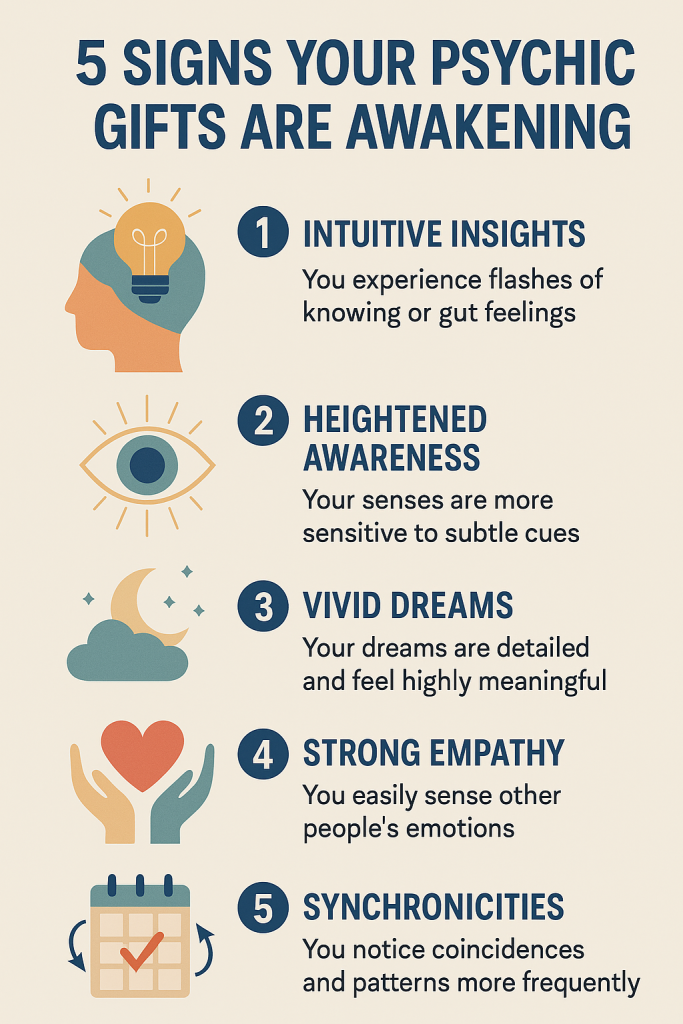
If you’ve been doing the inner work, you may notice subtle changes that signal growth.
Common Indicators of Expansion
Heightened synchronicities or “coincidences”
More vivid dreams with clear emotional messages
Random insights that later prove true
Stronger sense of others’ moods or hidden emotions
Feeling compelled to help people heal or find clarity
These shifts don’t mean you’re “different”—they mean you’re becoming more in tune with the energetic nature of reality.
Example: One client began noticing 11:11 daily right before major breakthroughs. Numbers became a personal sign that she was aligned with her intuitive flow.
Trust the evolution. Psychic sensitivity is a language—once you start learning it, the universe won’t stop talking.
Living as a Psychic in a Skeptical World
Developing psychic gifts often brings social challenges. Not everyone will understand, and that’s okay.
Navigating Judgment and Doubt
Skepticism can serve as balance—it keeps discernment sharp. Remember that your intuition doesn’t need validation to be real. Stay humble, stay kind, but don’t shrink your light.
Protecting Your Energy in Conversations
Avoid defending your beliefs to those who mock them. Your energy is better spent living your truth quietly and consistently. People respect authenticity more than argument.
Encouragement for the Awakening Soul
You’re not crazy for sensing more than others do—you’re just aware. Being psychic means learning to trust your internal compass, even when others can’t see the map.
As consciousness expands globally, intuitive awareness will become as natural as empathy. You are simply an early adopter of the new human frequency.
Conclusion
Improving your psychic gifts is not about becoming supernatural—it’s about becoming deeply natural. The more you align with your emotions, body, and inner stillness, the more the unseen world opens to you.
The next generation of psychics will blend intuition with science, spirituality with technology, and logic with love. Every moment you choose mindfulness over noise, you strengthen your inner signal.
So, keep practicing, grounding, laughing, and listening. The universe speaks fluently—through your intuition.
FAQ: Improve Your Psychic Gifts
1. Are psychic gifts something you’re born with or can anyone develop them?
Both. Everyone has intuitive capacity; consistent practice, grounding, and emotional clarity help it mature.
2. What’s the fastest daily practice to sharpen intuition?
Five minutes of breath-focused stillness followed by one written intuitive impression you later verify.
3. How do I know it’s intuition and not anxiety?
Intuition feels neutral and brief; anxiety is repetitive, urgent, and emotionally charged.
4. How often should I practice to see progress?
Short, consistent sessions work best: 10–15 minutes daily plus one longer weekly practice.
5. Which psychic sense should I train first?
Start with your strongest natural channel—seeing, sensing, hearing, or knowing—then round out others.
6. What is “energy hygiene” and why does it matter?
It’s routine clearing, grounding, and boundary setting so your signal stays clear and you avoid burnout.
7. Do food, sleep, and hydration affect psychic clarity?
Yes. Stable blood sugar, good sleep, and hydration calm the nervous system and reduce signal “static.”
8. Can technology support psychic development?
Yes. Meditation and heart-coherence trackers provide feedback that helps you notice intuitive states.
9. What role does emotional healing play?
Unprocessed emotions distort perception; healing work frees bandwidth for accurate intuitive data.
10. How can I practice discernment with spirit messages?
Time-test impressions in a journal, avoid urgent commands, and cross-check with grounded reality.
11. Is protection necessary before readings?
A simple intention, boundary visualization, and brief grounding are usually sufficient for most sessions.
12. What are easy grounding methods?
Barefoot walks on natural ground, slow exhalations, salt baths, and imagining roots from your feet.
13. How do I reduce post-reading fatigue?
Close each session with water rinsing, light stretching, and a brief gratitude release of the client’s energy.
14. What beginner exercises build accuracy?
Energy scanning with a partner, image “photo reads,” and one-card tarot reflections with notes.
15. How do I stop absorbing others’ emotions?
Strengthen boundaries by labeling what’s “mine vs. not mine,” and visualize a breathable protective field.
16. Can skeptics improve psychic skills?
Yes. Curiosity and structured experimentation often yield strong results regardless of belief.
17. What’s a healthy practice schedule?
Two to three short practices on weekdays and one longer review session on weekends.
18. How do I avoid copying other readers?
Track your own hits and misses, honor your natural style, and limit comparison on social media.
19. What if my insights are wrong sometimes?
Use misses as data. Ask, “Was I projecting, tired, or ungrounded?” Then adjust the protocol.
20. Are divination tools necessary?
Not required, but they act as mirrors that translate subtle impressions into readable symbols.
21. How do I read ethically for friends?
Get consent, set clear boundaries, avoid health/financial directives, and respect confidentiality.
22. How can I expand beyond one psychic sense?
After stabilizing your strongest sense, add brief drills for a second sense two or three times weekly.
23. What’s the best way to track progress?
Keep a dated log with your impressions, confidence ratings, and later outcomes for honest review.
24. How do I handle fear that arises during practice?
Pause, ground, soothe the body first. True guidance won’t pressure you to push past your window of tolerance.
25. Can group practice accelerate growth?
Yes. Circles provide feedback loops, pattern diversity, and accountability for steady improvement.
26. How do signs like repeating numbers fit in?
Treat them as prompts to check in with intuition rather than conclusions by themselves.
27. What if loved ones dismiss my path?
Share selectively, live the results, and protect your energy. Authenticity convinces more than debate.
28. How do I prepare for professional readings?
Create a pre-session ritual, set scope and ethics, log outcomes, and schedule recovery time.
29. What are common beginner mistakes?
Over-practicing without grounding, chasing drama over clarity, and confusing strong emotion for signal.
30. How do I know I’m genuinely improving?
Greater calm during reads, more specific hits, kinder self-talk, and clients validating outcomes later.




While the idea that everyone possesses latent psychic abilities is intriguing, it is ultimately a profoundly speculative assertion. The notion of ‘psychic gifts’ and the delineation between various ‘clairs’ – such as clairvoyance and clairsentience – lacks empirical evidence and scientific validation. Furthermore, the emphasis on metaphysical practices like aura reading, psychometry, and communicating with spirit guides may foster a reliance on pseudoscientific methods rather than encouraging critical thinking and evidence-based practices. Rather than promoting the development of supposed supernatural abilities, individuals might benefit more from honing their intuition through mindfulness and self-awareness techniques that are supported by psychological research.
I found this article incredibly insightful and eye-opening. The idea that we all possess some kind of psychic gift is empowering and makes me feel more in tune with my intuition. The practical tips on how to develop and enhance these gifts, like deep breathing and connecting with spirit guides, are very helpful and actionable. I am eager to start incorporating these practices into my daily routine to see how my perceptions and intuitions improve. Thank you for this enlightening read!
The explanation of various psychic gifts and how they can be honed with practice is quite enlightening. The section on tarot card reading and the importance of trusting one’s intuition offers a practical method for individuals to explore their psychic abilities.
The step-by-step guide to increasing psychic abilities, from deep breathing exercises to using positive affirmations, provides a tangible approach for personal development. The emphasis on self-awareness and connecting with like-minded individuals is also well-highlighted.
It’s interesting to read about how psychic senses can be developed and the importance of staying positive. The mention of using techniques like breathwork and reading auras to enhance psychic abilities is helpful and pragmatic.
The delineation of different types of psychic abilities like clairvoyance and clairsentience is quite informative. The practical tips on meditation and connecting with spirit guides could be beneficial for those interested in exploring their psychic potential.
This article provides a comprehensive overview of the various psychic gifts and the ways one can develop them. It’s fascinating to learn about the different types of clairvoyant abilities and how they can be nurtured through practices like meditation, aura reading, and psychometry. The emphasis on cleansing one’s energies and maintaining a positive mindset is crucial for anyone looking to enhance their psychic abilities. Additionally, the segment on connecting with spirit guides offers insightful techniques that can help individuals receive guidance and strengthen their intuitive skills. Overall, a very enlightening read!
The article provides a comprehensive overview of various psychic gifts and how to cultivate them. It’s intriguing that everyone is believed to possess some form of psychic ability. The idea of cleansing energies and seeking guidance from spirit guides is particularly noteworthy.