

Runes began as writing systems used by Germanic-language communities. Today, many people also use rune sets for divination, meditation and symbolic reflection.
The National Museum of Denmark describes runes as a Germanic method of writing developed from Mediterranean alphabets and provides a database of documented inscriptions. That historical evidence supports treating runes first as writing; modern casting systems should be labeled as later spiritual practice.
If you want the historical overview before trying a spread, start with What Is a Rune Reading? History, Symbols and Modern Use. You can also compare runes with other symbolic systems in Divination Methods: Tarot, Runes, Pendulums and Scrying.
The distinction matters. Historical rune inscriptions are well documented, while modern rune-reading methods include later interpretations and contemporary spiritual practices. A rune draw can prompt reflection; it cannot reliably predict a job offer, relationship outcome, health event or future decision.
What Are Runes?
Runic alphabets were used in parts of Northern Europe for inscriptions on stone, wood, metal and other materials. The Elder Futhark, with 24 characters, is the system most commonly used in modern divination sets.
Runes had practical uses as writing, names, memorials and ownership marks. Some historical sources and inscriptions also show magical or ritual uses. That does not mean every rune inscription was a divination tool.
The Odin Story and Rune Mythology
In the Old Norse poem Hávamál, Odin undergoes a dramatic ordeal connected with gaining the runes. Modern spiritual readers often use this story as an archetype of sacrifice, knowledge and initiation.
It is mythology, not a historical account of how the alphabet was invented.
Common Elder Futhark Meanings
Modern rune readers commonly assign symbolic themes such as:
- Fehu: resources, movement and value.
- Uruz: strength and endurance.
- Thurisaz: challenge, force and boundaries.
- Ansuz: language, communication and inspiration.
- Raidho: journey, direction and process.
- Kenaz: illumination, craft and learning.
- Gebo: exchange, gift and reciprocity.
- Wunjo: joy, belonging and satisfaction.
These are interpretive keywords rather than forces emitted by the symbols.
How to Prepare for a Rune Reading
You do not need to “clear your vibration” for the runes to work. A calm setup can simply help you focus.
- Choose one question.
- Prefer open-ended prompts over demands for certainty.
- Mix or select the runes without trying to force a particular result.
- Write down the draw before interpreting it.
- Compare the symbolism with facts you already know.
Useful questions include “What should I consider about this situation?” or “What am I overlooking?” rather than “Will I definitely get the job?”
Three Common Rune Spreads
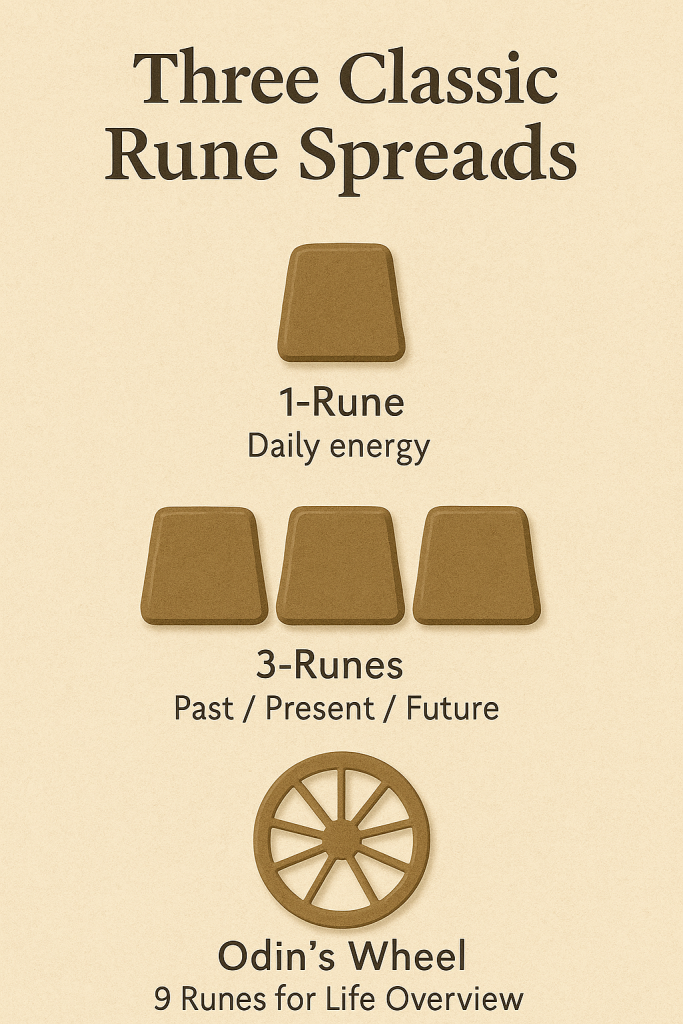
One-Rune Draw
Pull one rune and use its themes as a prompt for the day or a specific question. A Fehu draw, for example, might prompt you to think about resources, spending or what you value. It does not predict incoming money.
Three-Rune Spread
One common format uses three positions such as context, present issue and next consideration. Some readers call them past, present and future, but the third position is better treated as a possible direction rather than a guaranteed outcome.
Nine-Rune Layouts
Modern readers use several nine-rune arrangements. Meanings depend on the method being followed. Names such as “Odin’s Wheel” are not necessarily ancient standardized spreads, so learn the specific system your source uses.
Reversed Runes
Some readers interpret a rune differently when it appears reversed; others do not use reversals at all. Certain rune shapes also look the same upside down.
There is no single historically universal reversal system. Consistency in your chosen modern method is more useful than claiming one approach is objectively correct.
Rune Casting and Intuition
Symbols can help people generate associations they might not have considered. This is one reason runes, tarot and similar systems can feel insightful.
That does not mean a rune confirms a psychic impression. If a symbol and a hunch match, treat the match as material for reflection, not independent evidence that the hunch is true.
Runes and Quantum Physics
Rune casting is not explained by quantum entanglement, observer effects or “frequency resonance.” Quantum physics describes behavior at physical scales under specific conditions; it does not establish that intention directs which rune is selected or causes reality to match a symbol.
Runes do not need a physics claim to be valuable as a symbolic or spiritual practice.
Using Runes for Relationships
A rune such as Gebo may prompt reflection about reciprocity; Ansuz may prompt a conversation about communication. Neither can reveal another person’s private feelings, fidelity or future behavior.
Use direct conversation and observable behavior for relationship decisions.
Using Runes for Career Questions
Raidho, Fehu or other symbols may inspire useful questions about direction, resources and action. Do not quit a job, invest money or accept a financial risk because of a rune draw alone.
Pair reflection with salary information, market conditions, contracts, professional advice and your actual constraints.
Runes and Health
Do not use runes to diagnose illness, decide whether symptoms are serious or select treatment. A health-themed spread can be used only for broad reflection such as “What self-care habit have I neglected?” while medical questions stay with qualified professionals.
Runes for Protection or Manifestation
Modern practitioners sometimes wear Algiz as a protection symbol or use Fehu in prosperity rituals. The symbols can serve as reminders of boundaries, planning or financial goals.
They do not create a protective force field, block harm or attract money by themselves. Connect the symbol to practical action.
Making Your Own Rune Set
You can paint or carve a set on wood, stone, clay or another safe material. The material affects feel, durability and aesthetics—not the factual accuracy of a reading.
If you choose bone or culturally significant materials, consider sourcing, legality and ethical concerns. Avoid taking natural materials from protected places.
Cleansing and Consecrating Runes
Some practitioners use moonlight, sound, prayer or smoke as a ritual reset. These are optional symbolic practices.
Physically clean the set according to the material. Do not use salt, water, heat or smoke if it could damage the material or create a safety problem.
Digital Rune Apps and AI
A digital app can randomly select a rune and provide reference meanings. AI can summarize history or generate journaling prompts. Neither gives the software access to destiny, spirits or a hidden energy field.
Digital tools may actually be useful for reducing the temptation to consciously choose a preferred stone, but random selection is still random selection.
Cultural and Historical Respect
Runes come from historical Germanic writing traditions, with different alphabets and uses across time and place. Avoid describing every rune as an ancient “energy frequency” or claiming one modern divination method is exactly what Viking-era people practiced.
Study the language, archaeology and historical context alongside modern spiritual interpretations. Also be aware that some runic symbols have been appropriated in modern extremist contexts; historical use and contemporary context both matter.
Learning Through Journaling
A useful practice is to record:
- the date,
- your question,
- the rune or runes drawn,
- your first interpretation,
- alternative interpretations, and
- what actually happened later.
This helps reveal confirmation bias and prevents a reading from being rewritten after the fact.
The Five Runes Graphic
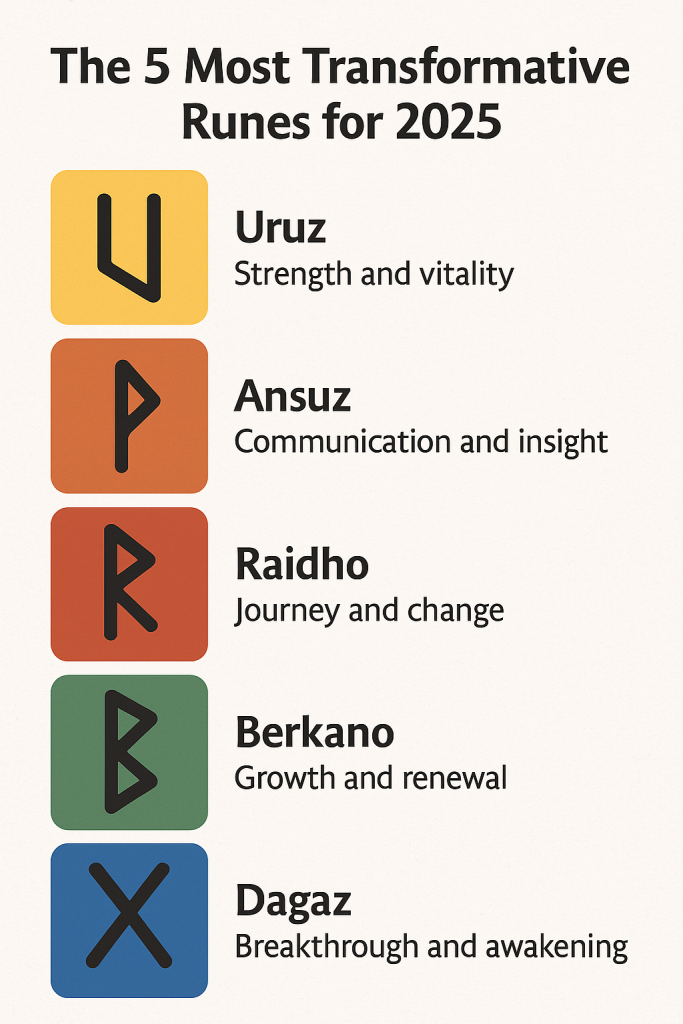
If an older infographic uses language such as “most transformative” or a particular year, read it as a symbolic shortlist rather than a forecast. Rune meanings are not tied to a calendar year unless a reader chooses that structure for a personal exercise.
Getting a Professional Rune Reading
A professional reader can help explain symbols and keep a spread organized. The quality of a reading should be judged by clarity, ethics and usefulness—not by claims of guaranteed accuracy.
A reader should not pressure you to spend more, diagnose health conditions, tell you a curse is present, guarantee a relationship outcome or insist that the runes override your own judgment.
Frequently Asked Questions
What are runes?
They are characters from historical Germanic writing systems. Modern practitioners also use rune sets for divination and reflection.
Can runes predict the future?
They can be interpreted as possible themes or directions, but they cannot reliably predict future events.
What rune set is best for beginners?
The 24-character Elder Futhark is the most common modern starting point.
Do reversed runes have different meanings?
Some modern systems use reversals and others do not. There is no single universal rule.
Can runes tell me whether a relationship will last?
No. They can prompt reflection about communication or reciprocity but cannot determine another person’s behavior.
Can runes be used for health questions?
Not for diagnosis or treatment. Keep health decisions with qualified professionals.
Do digital rune apps work differently?
They can select symbols and present meanings, but they do not gain supernatural access from being digital.
How can I make readings more useful?
Ask open questions, record the draw before interpreting it, consider multiple meanings and compare insights with real-world evidence.


