

Understanding the Feelings of Superstition
Even if you don’t feel that you’re superstitious, you probably understand the feeling of superstition. Like you might be walking around thinking about dinner, work, where your socks disappeared to, and then you spot something like a ladder that’s leaning against a wall. Right away, your brain hesitates as you ask yourself, “Wait, isn’t it bad luck to walk under a ladder?
This is the reaction that has caused superstitions to last from generation to generation. Just seeing something can bring up emotional feelings. A ladder creates a shape above your head, and your mind looks at it as dangerous. Then if we take culture and that do the mix, this is something now that’s dangerous and spiritual.
In truth, walking under a ladder isn’t just about folklore, but it’s a blend of safety, symbolism, and psychological pattern making, all of which get bigger with collective belief.
If you want to understand more about superstition claims, where they came from, spiritual symbols behind superstition, what psychics say about it, and what to do if you’ve broken some of these superstitions yourself, keep reading! This article will tell you a lot about superstitions and how they affect your life in the present.
What Are Superstition Claims?
Superstitions are easy to understand, just like “walking under a ladder can bring bad luck,” which shows that, depending on tradition and culture, bad luck can mean different things. Here are some things that bad luck can mean in different cultures:
- Accidents.
- Arguments.
- Money problems, such as big expenses out of nowhere.
- Feeling tired.
- Feeling unlucky.
- Attracting negative energy.
Some cultures say that bad luck will last only a day, others say it can last for a week, but even more believe that it opens up a door that leads you to different issues and misfortunes. There are some who believe, though, that it just increases the chances of things going wrong in your life.
The most well-known thing about superstitions isn’t the outcome of it, but the emotional effect that it has on people. Superstition can make people feel that they broke an invisible rule.
Psychology and Superstitions
Superstitions don’t keep coming up in life because they are logical, but because they’re memorable. People are wired to connect their lives with events. When something bad happens to them, the brain looks for reasons. This is how people survive, but at the same time, it also creates superstitions.
Superstitions and Confirmation Bias
Confirmation bias is what the brain stores. For example:
- One time, you walked under a ladder, and you had a bad day.
- You forget the times that you walked under a ladder and nothing bad happened.
If the brain sees the ladder as being bad luck, it becomes a highlighted memory even if statistically it shows it to be wrong.
Bad Luck Loop
Superstitions can feel real because they change the way that you behave. If you think that you’ve invited bad luck into your lie you might have feelings like:
- Tension.
- Anxiety.
- Rushed.
- Loss of focus.
- Emotionally reactive or strained.
When this mental state happens, it can cause you to have more conflict or to make more mistakes. Then, if something goes wrong and you see a ladder, you will automatically associate that ladder with what happened badly in your life.
Even skeptical people might experience the effects of superstition, and this isn’t because they are being punished by fate but because their anxiety can change, and it can cause their perception to change, which changes how they make decisions.
Ladder Superstition
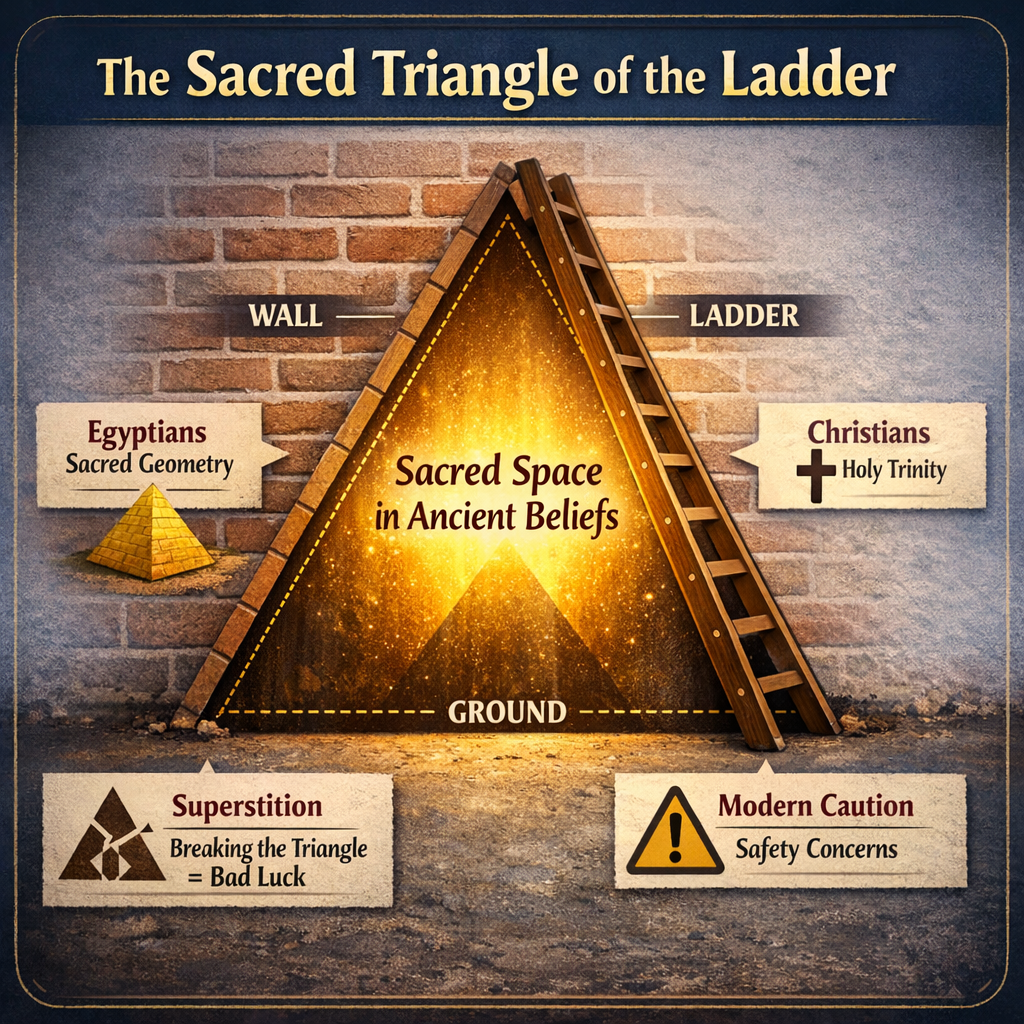
This is a superstition that comes from different places, which is why it’s one of the most well-known superstitions.
Origin of the Ladder Superstition
Before superstitions, ladders were considered to be dangerous. Walking under a ladder could increase the risks because:
- If you bump into a ladder, it could cause a fall or an accident.
- The worker on the ladder could lose balance.
- Paint or other things could drip down.
- Tools and other materials on the ladder could drop.
The superstition, “don’t walk under a ladder or it can bring bad luck,” started as advice for safety, but over time it became a cultural rule. Cultural rules can then turn into myths, and this is where they came from.
Bad luck became an explanation that made people obey the “don’t walk under” rule without even really knowing why.
Spiritual Origin of Superstitions
There are different ancient traditions that are considered in between spaces and are also seen as spiritually sensitive, like:
- Underneath certain structures.
- Bridges.
- Crossroads.
- Doorways.
- Thresholds.
These in-between spaces represent transitions, and this means they aren’t one place or another place fully.
A ladder is another thing that builds a temporary transition zone, and it connects the ground to a taller height. This makes it more symbolically powerful, and this can cause it to feel like a risk. Passing under a ladder could be seen as stepping into energy that is unstable.
Christian Origin
The ladder that leans against a wall can form a triangle, and in Christian culture, a triangle can represent the Holy Trinity. This means that a triangle would be considered protective and sacred, and walking through one could be considered spiritually disrespectful or unsafe, such as breaking a shield.
Even when societies were less religious, this superstition stayed because symbols often outlive their original meaning.
Ladders and Spirituality
When looking at spiritual symbolism, ladders are considered objects that represent movement and change. A ladder can symbolize things like:
- Energy of being under construction.
- Risk.
- Instability.
- Ambition.
- Reaching.
- Growth.
- Climbing.
When everything is stable, you don’t use a ladder, but you use a ladder when you are repairing, changing, or reaching something. This is why ladders can feel spiritually intense, and they can represent a time between when you are at a certain place and where you want to be.
This is why walking under a ladder can symbolize stepping into a different space or crossing into an unstable zone without being aware. This is why superstitions often feel intuitive and not by chance or random.
Psychics and Walking Under Ladders
Ethical psychics don’t treat superstition as automatic doom or bad luck, but they look at it symbolically. Walking under a ladder might affect your life when:
- You feel rushed and disconnected from your own intuition.
- You’re emotionally sensitive.
- You’re empathetic.
- You are in a big life change, such as a breakup or a job change.
- You already feel drained or anxious.
The ladder doesn’t create negativity in the psychic world, but the reaction to the ladder creates it.
If you walk under a ladder and immediately feel like you’re going to have bad luck, it will cause your energy to change. You become distracted, less grounded, and anxious. This energy change can make you attract or create more problems. This is why some people swear superstitions are real. And they are real, but just as energetic psychology, and not as karmic punishment.
What Walking Under a Ladder Could Mean
Here is what walking under a ladder could mean:
An Important Day
If you walk under a ladder on an important day, this could be a time when you’re panicking. You’re going into something important, and you feel like that walk ruined something in your life or gave you bad luck. This anxiety can be more damaging to your life than any ladder.
The spiritual meaning is a reminder that you can claim back your own power. Instead of feeling out of control, let the moment be grounding. This superstition is testing if you trust symbols more than you trust yourself.
You Keep Seeing Ladders
If you keep seeing ladders, it could symbolize:
- A change in your progress.
- Work you haven’t finished yet.
- Pressure of growth.
- Life changes.
This doesn’t mean bad luck, but it might mean that you’re in a place in your life where things are being repaired or rebuilt.
Pressure to Walk Under a Ladder
This is less about luck and more about boundaries. If someone is trying to talk you into walking under a ladder, saying, “Don’t be silly, it doesn’t bring bad luck,” and you ignore what you’re feeling and do it, the spiritual message might be that you are ignoring your own intuition to keep the peace.
Psychics might tell you that the most meaningful part of this is that you need to notice your own self-trust more and to have boundaries.
Dreaming About Walking Under a Ladder
Dreaming about walking under a ladder can symbolize:
- Crossing into a decision you don’t feel ready for.
- Feeling exposed to life.
- Stress about risk.
- Fear of failure.
The dream isn’t about predicting bad luck, but it’s about having emotional vulnerability because of change.
Fixing Things and Why That Works
People love doing rituals, and superstitions create stress, where rituals can remove that anxiety. Ladder fixes might include things like:
- Crossing your fingers.
- Knocking on wood to bring good luck.
- Using protective phrases.
- Spitting, which can be a symbol of rejection.
Even if these rituals don’t mean magic, they work because they help to reset your mind. They get rid of fear and give you control.
A psychic might say that this matters because energy comes with attention, and when the fear stops, the energy becomes stable.
Spiritual Resets
If you walked under a ladder and something in your life feels off, try doing these things:
- Wash your hands with intention.
- Say, “My energy is clear, and I am protected and grounded.”
- Imagine shaking the energy off of you.
- Take a pause and take 3 deep breaths.
Luck Versus Being Aware
The ladder superstition comes because it teaches people useful things. The lesson isn’t that bad luck happens, but the real lesson is:
- To trust your intuition when things feel off.
- To pay attention to what your body is sensing.
- To not walk blindly under unstable energy.
- To not rush through vulnerable things.
Superstition is something that is old wisdom that uses fear. If you get rid of fear, what remains is awareness.
Final Thoughts: Bad Luck or Life?
Walking under a ladder doesn’t mean that you’re guaranteed to be cursed, but most of the time, it’s just a moment where you question things. Superstitions survive because they have multiple truths:
- A ladder is physically risky.
- Ladders show different transitions.
- Collective belief creates energy changes.
- Fear can influence any kind of outcome.
The ladder spiritually shows that superstitions should be used as a life mirror and not as a chance of punishment. It tells you to slow down, be present, and to have power. If you walk under a ladder, don’t panic, just know that you’re still in charge.




Great read — I like the practical spiritual resets suggested. Washing your hands and taking a few breaths is such an easy way to feel grounded again.
The connection to threshold symbolism is fascinating; it shows how embodied metaphors influence behavior across cultures. This piece navigates that thoughtfully. 🙏
I’ll try the three deep breaths next time. Simple and smart! 🙂
Nice breakdown — now I get why I’ve felt strange walking under ladders during big life moments. The dream section really hit home. 🌟
A concise synthesis of folklore, embodied cognition, and ritualized anxiety. Highlighting confirmation bias and behavioral feedback loops turns a superstition topic into a lesson about how belief shapes perception — excellent work. 👏
Good tips. I like the little fixes like knocking on wood. 🙂
Makes sense — if you expect bad luck you act differently, and then things can go sideways. Nice explanation 👍
A thoughtful reminder that many cultural taboos begin with practical advice and later acquire symbolic charge. The balance of skepticism and spiritual interpretation here is well done, and the ritual suggestions are psychologically sound. 🧭
Cool! I won’t freak out next time I walk under a ladder. 😌
I love how this explains ladders as both safety and symbol — makes so much sense! I’ll think twice now, not because of luck but common sense 🙌
So true! I always felt weird under ladders and now I know why 😊
Nice point about rituals — small habits like knocking on wood really calm me after I walk under one.
Wow, I never thought about ladders as ‘in-between’ spaces. That explains a lot! 😊
Who knew ladders could be both practical and symbolic? Nice mix of science and spirituality — I’ll keep my intuition handy. 😉
Lovely reminder that fear fuels superstition more than fate does. I appreciate the practical takeaways for staying grounded. ✨
I’ll try the hand-wash reset next time. Feels peaceful and doable. 😊
This article frames superstition as an adaptive narrative tying safety, symbolism, and cognitive bias. Really insightful and a helpful way to reframe anxiety-driven beliefs — thank you for the clarity! 💡