

When Hard Moments Feel Like Symbols
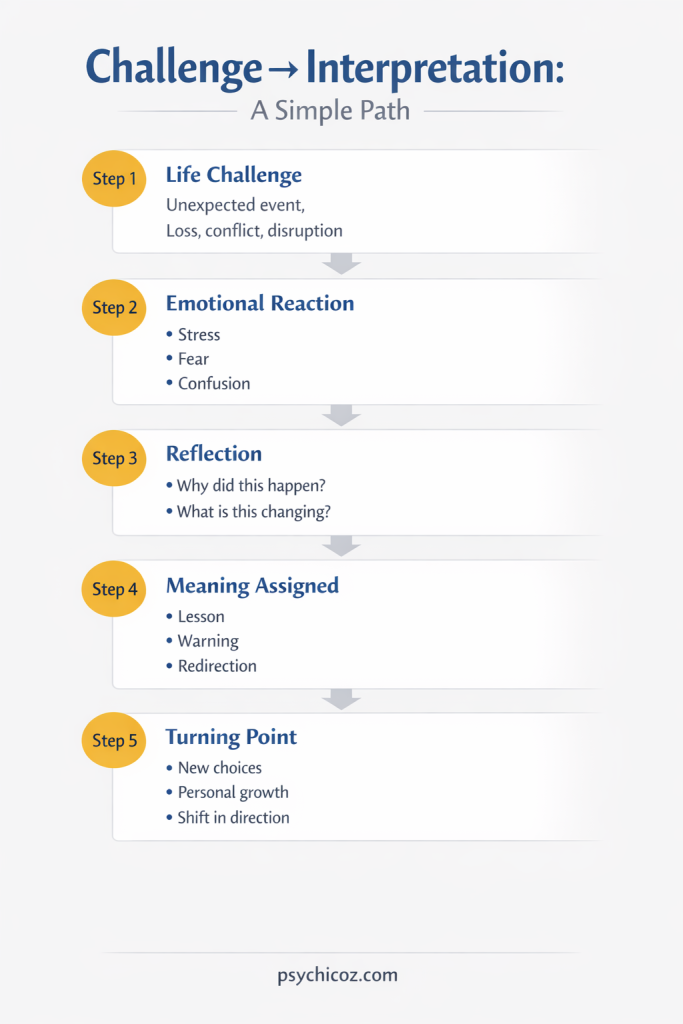
When life is hard, and you face things like a loss of a job, a breakup, an illness, or a change in your life’s direction, it isn’t a random event. Some people will analyze this and interpret the event. They look for messages, meanings, and patterns. They ask, “Why is this happening?” or “What is this trying to show me?”
This isn’t something that’s new, but it’s how humans react to situations. In every culture and all throughout history, people have looked at life problems as signs instead of accidents. Even in our world today, where the world is about data and science, instincts are still there. When life gets hard, people are listening more to their intuition over chance and emotional signals over timing.
Psychologists say that these feelings come from the brain’s need to have order. According to Harvard Health, meaning-making helps people to have more emotional stability when they are stressed, especially during times of uncertainty and anxiety. When things feel chaotic, people search for coherence.
When struggles come, intuition gets louder. According to the American Psychological Association, emotional disruptions increase sensitivity to internal cues, patterns, and symbolic connections. This means that when people face big challenges, they become more aware.
From a psychic’s point of view, people look at challenges as signs because they are just that, turning points. These are times when energy, emotional, and spiritual things change. Many intuitives say that hardships and problems are energetic rerouting, where they redirect someone from being stagnant towards their own personal alignment.
Whether you view this scientifically or spiritually, the results show that challenges in life feel more meaningful because they are wake-up calls, mirrors, and catalysts for change.
When The Brain Searches for Meaning
Our brains are always trying to make sense of what happens to us. When life suddenly changes, like losing a job, going through a breakup, or getting unexpected, good news, the mind immediately tries to understand why it’s happening. We naturally want things to feel like part of a bigger story.
Psychologists call this “narrative identity,” which basically means we connect our experiences together to figure out who we are and what comes next, according to the American Psychological Association. When something stressful or confusing happens, the brain searches for meaning because it wants us to feel grounded and safe.
There are three major ways the brain does this:
Pattern Recognition
Our brain is a connection-making machine. It looks for patterns all day long, even in situations that seem random. When we’re stressed or emotional, this gets even stronger.
- A few bad days in a row might feel like a sign that something needs to change.
- A small coincidence might suddenly feel meaningful or symbolic.
The brain does this to help guide us, but it’s trying to give chaos a clear direction, so we don’t feel lost.
Making Sense When Stressed
According to Harvard Research, it shows that when uncertainty comes, it activates a part of the brain that is responsible for threat detection. This causes people to look for meaning and clarity to help them cope. When life isn’t predictable, looking at signs and interpreting them helps them to have better emotional order.
Energy Coherence Instead of Chance
People don’t usually want to even believe that painful events are meaningless, and they often assign symbols and value to problems so that they feel a sense of purpose. This gives them something to move forward from and something to learn from. This reframes pain as growth instead of just pain.
This doesn’t mean that people believe that patterns don’t exist; it just means that the brain is trying to create coherence. It doesn’t want to keep memory of a bunch of experiences that are disconnected, but it wants a real story.
Psychology shows us that people need intuition. When analytical reasoning is no longer working to explain why someone is going through a hard moment, people look inward. They listen for instincts, subtle cues, and emotions. This inner listening can feel like looking for guidance.
When someone interprets challenges, the mind says, “This moment really does matter, so pay attention.”
Changes with Emotional Tools
When life feels overwhelming, the first thing most people want is a sense of direction. Seeing challenges as signs or “turning points” is a natural way the mind helps us move forward instead of staying stuck. It takes confusion and turns it into clarity. It takes fear and turns it into progress.
According to psychologists, this adaptive reappraisal, which basically means taking something stressful and giving it a more helpful meaning. Harvard Health explains that people who do this tend to bounce back faster and make healthier choices after tough events. They aren’t pretending everything is fine, but they’re finding a way to make the experience useful.
Here’s why thinking of hard moments as turning points actually works:
It makes things feel less scary.
When something painful or unexpected happens, it can feel like chaos. But when the mind decides, “This is leading me somewhere new,” the situation feels more understandable and manageable.
It creates a sense of purpose.
Instead of asking, “Why is this happening to me?” people start asking questions like:
- What can I learn from this?
- What needs to change?
- Where is this pushing me?
Those questions lead to growth instead of panic.
It inspires action.
When a problem feels meaningful, people are more likely to do something about it.
They may:
- Leave a toxic relationship.
- Switch to a healthier job.
- Start therapy.
- Set new boundaries.
- Try something they’ve been afraid to do.
Movement replaces helplessness.
It helps shape identity.
Hard experiences often become the moments that define who we are. When people look back, these turning points become the chapters that built their strength.
From a psychological point of view, this is a healthy and normal way to cope. From a more intuitive perspective, people often feel these disruptions are trying to guide them toward better truth, better alignment, and a version of themselves they were meant to grow into.
Turning points don’t just change the story, but they change the storyteller.
Looking for Signs During Hardships or Change
Most people don’t look for hidden meaning when everything in life is calm. It’s during the bigger, messier changes like breakups, job loss, moves, new relationships, grief, or sudden changes that we start paying attention to timing and coincidence.
Those transition moments make our emotions sharper. We start noticing details we normally ignore. We become more curious about where life is trying to take us. And there’s real science behind that.
People Search for Direction When Life is Hard
When life gets hard or overwhelming, people start searching for direction. They look at their challenges to see if they are signs or if they are turning points in life. This is an emotional navigation system that people have. It allows people to change their confusion to clarity and their fear of making different changes.
According to psychologists, this is called adaptive reappraisal. This is the ability to interpret the stressful things that happen in life in order to make someone more resilient. According to Harvard Health, people who reframe these hard times into something meaningful can recover faster from stress and make better decisions in the future.
This isn’t about wishful thinking or denying your problems, but it’s an emotional and cognitive strategy that helps people to regain their stability. Here’s why these challenging moments can be seen as signs:
Changes Help People to Grow and Cope with Problems
When something painful happens, the mind wants answers. It wants to know why and what now? Seeing a challenge as a turning point gives the experience shape. It becomes part of the story and not just chaos. Here’s why this helps so much:
It calms the mind.
A struggle becomes less scary when it feels like it has a purpose. Instead of a random problem, it feels like a step in a new direction.
It gives the moment meaning.
When people believe there’s a message in the challenge, they stop feeling stuck and start getting curious:
- What is this teaching me?
- What needs to change?
- Where is this guiding me?
Curiosity replaces fear.
It pushes us to take action.
When something hard happens, it can feel like a sign, and people are more likely to make better choices, like leaving a toxic relationship, setting boundaries, trying new things, or getting the help that they need. This movement replaces their helplessness.
It shapes who we become.
Hard experiences often become the turning points that define us. People look back and say, “That moment changed everything.” The challenge becomes proof of their strength.
According to psychology, this kind of meaning-making is a healthy way to recover and grow. Intuitive and spiritual people describe the same thing as realignment, and it’s like life nudging you toward who you’re becoming. Either way, turning points aren’t just emotional tools, but they’re the sparks that start transformation.
Why People Look for Signs During Hard Times
Most of us don’t look for hidden meaning when life is easy and predictable. The instinct to find signs shows up during major life shifts, like:
- Breakups.
- Job changes.
- Moving somewhere new.
- Grief or health scares.
- Unexpected new opportunities.
These moments make us more alert to timing, patterns, and coincidences. Our emotions are louder. Our intuition wakes up. And science actually supports why this happens.
Having More Emotional Awareness
According to the National Institute of Health, stress can increase emotional and sensory sensitivity. This means when people are uncertain about their lives, their nervous system is more alert to subtle cues, emotional changes, and patterns. Having this heightened emotional awareness makes moments that are more symbolic to seem more important.
Why Transitions Make Us Look for Signs.
When life shifts suddenly, such as a breakup, a job change, or a move, everything that once felt stable becomes uncertain. The brain doesn’t like that. It wants to feel oriented. So, it starts searching for new meaning, guidance, and direction.
Here’s how that process unfolds:
Looking for Direction
Big changes disrupt routines and familiar roles. When life no longer feels predictable, the mind looks for clues to help rebuild stability. Here are some examples:
- Getting offered a job when you’re doubting the job you’re in.
- A fight that happens before you plan to move.
- Seeing the same word, number, or theme everywhere you look.
It’s the brain trying to say: “Pay attention, something is shifting.”
Inside Signals Grow Louder
During transitions, people slow down and reflect more naturally. With fewer distractions, intuition rises to the surface. Decisions start to feel guided, not random. You may notice a stronger gut feeling about what’s right or wrong.
New Energy Opens During Changes
Many spiritual and psychic practitioners believe transitions create energetic openings at times when intuition and signs become easier to notice. Old paths fall away, and new ones start to form.
And no matter how someone explains it, either psychologically or spiritually, the experience is similar:
- Transitions increase awareness.
- Awareness creates meaning.
- Meaning becomes guidance.
That combination can change lives.
Real-Life Examples
These stories show how ordinary life disruptions can spark powerful transformation when people treat them like signs.
Example 1: Career Direction Through “Too Many Coincidences”
A graphic designer in Denver felt drained by her job but was scared to leave. Then in the same week:
- She lost a major project.
- Her laptop kept crashing.
- The office elevator broke.
- A forgotten freelance contact reached out.
Individually, small annoyances. Together? They felt like a message.
She quit, took the freelance opportunity, and now has a career she loves. Whether it was fate or frustration, it pushed her to trust her own instincts.
Example 2: Breakup Timing That Felt Predictive
A man in Toronto began noticing messages about “letting go” everywhere, like songs, conversations, and social media, just before his relationship ended.
Later, he saw those moments as emotional preparation. Psychologists call this retrospective meaning-making, which is connecting the dots once a change has happened. Intuitives call it inner knowing rising up.
Either way, the symbols helped him heal faster.
Example 3: A Health Scare as a Wake-Up Call
A woman ignored exhaustion until a medical emergency forced a pause. She said afterward: “My body was begging me to listen.”
She changed her schedule, started therapy, and found the calm she hadn’t felt in years. Cleveland Clinic notes that people often interpret physical symptoms as urgent messages from the body — because they are.
Example 4: Plans Falling Apart and Seeking a Better Plan
A recent graduate planned to move abroad. But everything kept collapsing like paperwork delays, housing issues, and a job offer that vanished at the last moment.
She chose a local job instead, which was a position that later turned into a long-term career. She said, “I thought the world was stopping me. It was actually redirecting me.” When events repeat or collide, especially during big life shifts, people instinctively look for meaning. The truth is simple: We notice signs most when we’re already searching for a new way forward.
Symbolic Thinking and Psychology
Symbolic thinking isn’t just something mystical, but it’s a natural way that humans live. When people see challenges as signs, they are able to work it out as a psychological process that connects cognition, emotion, and personal narrative. Here are three reasons why symbolic thinking is powerful during hard times:
Emotional Anchoring
When emotions feel out of control, the brain looks for symbols. They look for coincidence, timing, patterns, and phrases to make the experience more grounded. This helps to anchor them to see what is happening. The brain is saying, “We need to remember this because this is important.”
This is why even small events like having silence out of nowhere, repeated phrases, and a missed bus can feel like they are full of meaning when someone is struggling.
Integrating Patterns
The mind is always trying to connect the dots, especially when times are hard or stressful. According to the American Psychological Association, people interpret life through story-based cognition. They take events and turn them into stories that help to define their identity. When something happens that is out of the ordinary or hard, the brain searches for patterns so that the moment can be more coherent.
This doesn’t mean that people are inventing these patterns, but their brains are organizing the information to make it into something meaningful.
How Signs Help People to Cope
When something stressful happens, people often feel helpless at first. But when they interpret a challenge as a sign or a message, their perspective shifts:
Instead of “Why is this happening to me?” the question becomes: “Maybe this is happening for a reason.” That small change can make a huge difference. Harvard Health explains that when people find meaning in tough situations, they recover emotionally faster and make healthier choices afterward. Seeing a challenge as a turning point gives you purpose, direction, and calm.
So, symbolic thinking isn’t childish or silly, but it’s a real emotional coping strategy that helps people move forward instead of staying stuck. In intuitive or spiritual terms, signs are simply life mirroring what you already know inside. When external events match internal truth, it becomes easier to recognize the message. Both views agree that interpreting meaning helps people understand themselves better.
How Intuition Makes Meaning
People look for signs most when logic can’t solve the situation. That’s when intuition gets louder.
Intuition isn’t magic, but it’s fast, emotionally smart thinking based on experience, memory, and pattern recognition. But because it arrives suddenly and without obvious evidence, it feels mystical. Intuition shows up physically, not in long explanations:
- Tightness in the chest.
- A sinking feeling about one choice.
- A relief when imagining another.
- A quiet sense of certainty.
- A sudden moment of clarity.
During tough times, the body speaks up. The National Institutes of Health found that stress heightens internal awareness, which is why gut feelings feel stronger during major life changes. When logic is overwhelmed, the brain taps into stored emotional wisdom instead.
That’s when thoughts like these appear out of nowhere:
- “This path doesn’t feel right anymore.”
- “I think it’s time to make a change.”
- “I can’t ignore this any longer.”
Intuition offers truth in a flash and no spreadsheet required.
How Intuition Uses Symbols
Intuition rarely gives step-by-step instructions. It communicates through:
- Repeating themes.
- Coincidences that feel meaningful.
- Dreams with clear emotional messages.
- Images or memories that suddenly stick.
- Emotional “pull” toward or away from something.
In spiritual communities, this is seen as energetic redirection, like when life events and inner knowing line up to push you onto a better track.
That’s why people say:
- “The timing was too perfect.”
- “It felt like a message.”
- “Something was nudging me.”
Scientifically, that’s intuition and pattern recognition. Spiritually, that’s guidance. For many people, it’s both.
What Cultures Teach in Hardship
The idea that challenges are symbolic isn’t new, but it’s ancient. Across history and around the world, hardship has been viewed as:
- A test.
- A rite of passage.
- A new chapter.
- A break from the old self.
Indigenous traditions, Eastern philosophy, and even Greek mythology all treat struggles as signals of transformation.
Modern people still carry that mindset inside them.
How Stories Help Process Hard Times
For thousands of years, humans learned through stories where:
- Obstacles that weren’t accidents.
- Disruptions that pushed the hero to move forward.
- Loss that led to the next and better version of self.
So today, when someone loses a job right before finding a better one, or a relationship ends right before they meet someone healthier, or even when the moment feels like the plot unfolding. We’re wired to see turning points, because story is how the brain organizes life.
Symbolic Meaning in The Modern-Day Culture
Even in secular societies, people still talk about symbols. They talk about how the universe sends them messages, manifesting things, karma, and how things are meant to be. These aren’t just concepts, but they are part of people’s everyday language.
According to Harvard Health, mindfulness and introspection encourage people to be able to find meaning and presence in life. As this kind of language grows, the symbols will grow and change with it.
Using Intuitive and Psychic Ideas
Psychics often look at challenges in life as energetic invites. They view that adversity and problems show where someone is unbalanced and pushes them to be more authentic and open. A hard breakup might mean that someone’s emotional needs have changed, and a lost job opportunity might redirect someone towards a path that is more aligned. Chances and coincidences might reinforce decisions that someone felt but didn’t make.
Even people who aren’t spiritual feel that these interpretations are real because they give clarity and emotional relief when needed.
Sharing Human Knowledge
Across cultures, religions, and even modern self-help books, one idea shows up again and again:
Challenges aren’t random. They shape us. They redirect us. They transform us.
This shared belief influences how people view their struggles today. Instead of seeing difficulties as punishment, many see them as turning points or a sign that something important is changing.
Using the Signs for Personal Change and Growth
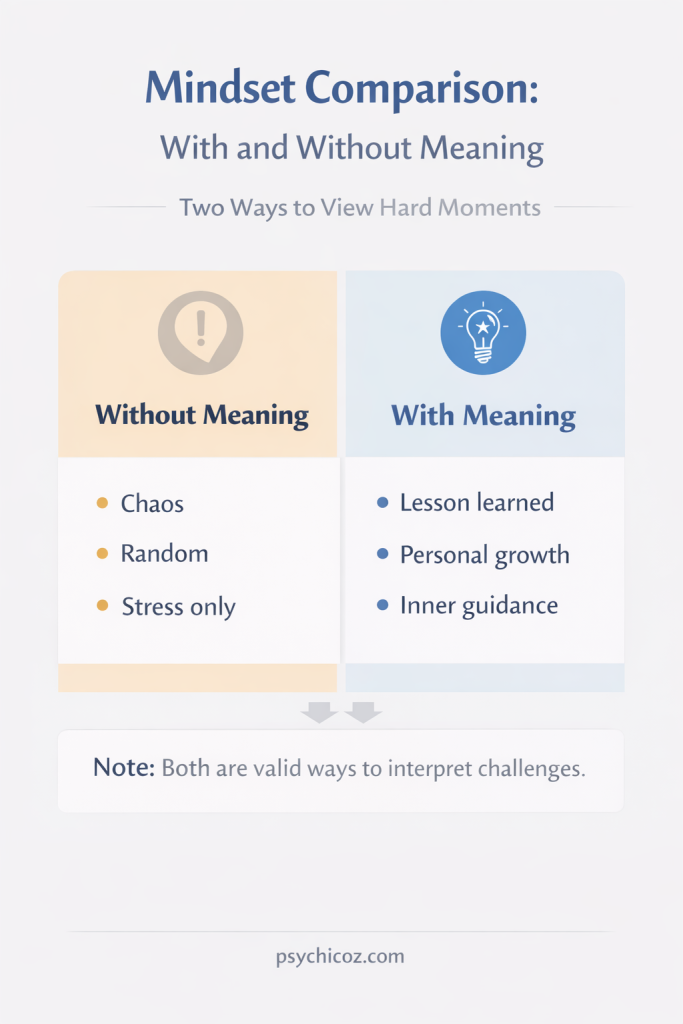
Seeing a challenge as a sign doesn’t just change how someone feels, but it changes what they decide to do. When a moment feels meaningful, people are much more willing to make the changes they’ve been avoiding.
When Meaning Leads to Change
A setback may suddenly feel like the push someone needed. A breakup may inspire healthier boundaries. A health scare may encourage slowing down and taking care of the body.
Cleveland Clinic explains that when people find meaning in adversity, they are more likely to make choices that improve their well-being. Meaning activates resilience and not defeat.
When Emotions Give Direction
A “sign” doesn’t have to be dramatic. It can be a quiet moment that shifts perspective:
- A tense argument that reveals deeper needs.
- A work setback that exposes burnout.
- A physical symptom that signals an imbalance.
- A repeating pattern that becomes impossible to ignore.
These moments help people choose what supports them instead of what drains them.
Challenges Show What’s Not Working
When someone interprets a challenge as a sign, it forces a moment of honesty. They can suddenly see:
- What they’ve been putting up with for too long.
- What they’ve been afraid to admit.
- Where their needs are not being met.
- What they have grown out of.
This clarity is often the very beginning of transformation.
Coincidences and Synchronicities Help with Decision-Making
Once a person is ready to change, they begin noticing small signs that reinforce their new direction:
- Hearing advice that matches a gut feeling.
- Receiving unexpected support from others.
- Seeing the same message or symbol everywhere.
- New opportunities are showing up after a painful ending.
Psychology calls this “confirmation awareness,” and you notice helpful patterns because you are emotionally ready to see them.
Intuitives call it “alignment.”
Either way, these moments make new choices feel more certain.
When Growing is Rewarding
When people find meaning in difficulty, the struggle becomes the spark for:
- Healthier relationships.
- Better career paths.
- Emotional healing.
- New hopes and goals.
- A stronger sense of self.
- Spiritual or intuitive awakening.
Later, many people can look back and say:
“That painful moment changed everything for me.”
The meaning did not erase the pain—but it gave the pain a purpose.
When Signs Help and When Signs Don’t Help
Meaning-making is powerful. It can help people feel guided instead of lost. Supported instead of alone. But like any tool, it works best when used with balance.
That’s where the next section will show how to know when signs support growth and when interpretation becomes stressful or confusing.
How Signs Can Help
Meaning-making is a great benefit to people because it:
- Encourages them to reflect healthily.
- Reduces stress and gives emotional structure.
- Shows patterns that someone might have avoided.
- Motivates positive changes.
- Helps to develop intuition.
- Develop self-awareness.
- Reframes problems positively.
If someone is leaving a job that drains them after getting sign after sign, chances are they will end up in a place that is more directed and aligned. Someone who sees relationship patterns with symbolic moments will look at their core needs. These signs help to guide someone to look inward.
According to Harvard Health, this is when the senses reinterpret things in constructive ways to bring on emotional stability and resilience.
When Signs Aren’t Helpful
When you look at symbolic interpretation, it is no longer helpful when there is:
- Too much overthinking.
- Misinterpretation of regular events as warnings.
- Avoiding communication.
- Avoiding practical steps.
- Feeling controlled by signs instead of empowered.
- Fear instead of clarity.
These things can appear when you are stressed or anxious. According to the American Psychological Association, it says that when there is a high sense of emotion, it can cause people to misinterpret natural events, and this is called “meaning overload.”
Logic And Intuition
When you look at challenges as signs, it is best if you make your decisions based on both logic and intuition. Here is a healthy way:
- Look at the emotional truth.
- See practical reality.
- Get input from professionals or friends.
- Reflect instead of reacting.
- Notice intuition and when it aligns with logic and evidence.
Intuition gives insight, and logic gives stability. Together, they can create clarity.
Finding Support
Meaning-making can become overwhelming when it causes:
- Constant fear.
- Hard decision-making.
- Intrusive thinking.
- Guilt about missing the signs.
- Feeling confused and not directed.
In these times, getting a support group or seeking a therapist or a counselor can help you to feel balanced. Cleveland Clinic talks about how grounding practices like mindfulness, journaling, and breathwork can help to get rid of stress and the intensity of symbolic interpretation and give clarity and meaning. These signs that you get should make you feel supported and not overwhelmed. Guidance should give you peace and not make you fearful.
Finding the Empowerment You Need
When you look at challenges as signs, it is beneficial to you when it gives you power to handle things better and to choose a healthier plan. It’s not about knowing the future, but it’s about seeing the present. Signs are part of reflection and growth.
Why Challenges Are Seen as Signs
In the last few years, people have been interpreting challenges as signs or synchronicities. This isn’t about spirituality, but it’s a cultural shift that has come because of stress, uncertainty, introspection, and more emotional awareness.
Symbolic Thinking and Cultural Uncertainty
When society faces things like global health events, political problems, and economic changes, people look for meaning. According to Harvard Health, collective anxiety can increase the need for clarity and emotional grounding. When times are uncertain, people use symbols for anchors.
People look at these challenges as signs that they need to find direction, and the symbols around them give meaning.
When Emotional Literacy Rules
Younger people often talk more about boundaries, trauma, identity, emotions, and personal growth than older people do. This makes people more aware of what their minds and bodies are saying. People are more likely to recognize patterns and interpret them for guidance and help. Here are some examples:
- A person healing from people pleasing might see this as misalignment.
- Someone who is healing from burnout might feel exhausted and see it as a sign to rest.
- Someone who is looking at their identity might see it as a sign of readiness.
These interpretations become part of self-care.
When Intuition Becomes Part of Mainstream Culture
Meditation, therapy, journaling, yoga, and breathwork all make people more aware of subtle emotional cues. These practices quiet overthinking and amplify intuition. Because of this, more people notice symbols, synchronicities, and meaningful timing during life challenges.
This doesn’t require any spiritual belief, but it’s simply increased sensitivity.
How Social Media Turns Symbols into Interpretation
Platforms like TikTok, YouTube, and Instagram created supportive communities around:
- Synchronicity.
- Angel numbers.
- Intuition.
- Dream meanings.
- Spiritual growth.
- Life redirection.
People no longer feel alone in noticing patterns. What once felt too personal or strange now feels relatable and shared.
How Psychology and Spirituality Combine
Modern culture blends both perspectives without conflict. A statement like “your nervous system is signaling something” can exist right beside “your energy is shifting.”
People don’t feel forced to choose between science and spirituality. Both provide helpful ways to understand change.
Redefining Changes and Turning Points
Turning points used to be huge life events, such as marriage, a move, or a major job change. Now, small shifts count too. A quiet realization during a stressful moment can feel like a transformation.
People are rewriting what meaningful change looks like. They trust smaller signs. They trust their inner shifts. They trust that growth can start with a single moment of clarity.
Final Thoughts: Interpreting Life Challenges as Signs
People look at life challenges as signs, not because they are illogical, but because they are human beings. When life gets hard and unpredictable, the heart and mind look for meaning.
While psychologists call this meaning-making, psychics call it intuition. Each is the same experience. Psychologists talk about meaning-making as a way for people to regain their sanity and stability when stressed. According to Harvard Health, it says that reframing hard experiences can improve a person’s emotional regulation and resilience. Even the American Psychological Association says that humans need to build their identity with a narrative, and they turn to stories and events to see who they really are.
From a psychological point of view, the mind interprets challenges as a strategy. From a psychic point of view, the challenges are messages about redirection, energy shifts, and wake-up calls. Most people live in the middle of these two worlds. This means that a hard moment might feel symbolic. It’s full of hidden truths that come out, or a setback might feel like guidance because it shows something that’s already misaligned.
Challenges become turning points because they cause people to take time to feel what they are feeling, to pause, and then to look deeply at their lives. They see what needs to change and what needs to end, and what they need to start. These moments can cause people to turn towards growth that brings clarity.
When people look at these moments as signs, they make better choices that can change their lives. They go towards a new career, set new boundaries, get rid of old patterns, and reconnect with themselves. Hard moments don’t have to be explained spiritually to feel meaningful, but they are meaningful because they change who we are, wake us up, and become part of our story.
These signs aren’t just messages that the universe is giving you, but they are reflections of our daily lives and inner wisdom that is coming to the surface.




‘Hard moments are signs’—sounds poetic but dangerously close to magical thinking. Life is complex, not symbolic. Assigning deep meaning might make people feel better but can also lead them away from practical solutions.
‘Energy rerouting’ and ’emotional cues’? Sounds like psychic soup with a sprinkle of pop psychology 🤷♂️.
You’d be surprised how accurate that ‘psychic soup’ tastes when you’re drowning in real-life problems, bro 🍜
I truly believe this stuff. After my second kid, I started noticing patterns that made no sense unless they were signs telling me what needed changing in my life. Sometimes your gut knows before your head does 💫.
This piece was beautifully written and layered with both psychological facts and spiritual insights. It validates how people feel during chaos without being preachy or unrealistic. Truly one of the best articles I’ve read on emotional resilience!
So basically what you’re saying is… every time my ex texts me at midnight it’s not booty call energy—it’s the universe testing my boundaries? Got it ✅🧘♀️ #spiritualgrowth
Let’s not confuse science with spirituality too much here. Mixing APA research with angel numbers dilutes the credibility of both sides. Either we base our understanding on evidence or intuition—not both at once like some emotional buffet.
This article really spoke to me. As someone who recently went through a breakup and a job loss, I’ve been looking for meaning in all the chaos. Reading this gave me comfort and reminded me that it’s okay to see hardship as a sign to grow 🌱.
Or maybe things are just going bad because… life is hard sometimes? Not everything needs to be turned into an emotional quest for enlightenment 😒.
I guess next time I stub my toe I’ll assume it’s the universe telling me I’m walking in the wrong direction 😂 Seriously though, some of this felt like overanalysis of simple life problems.
*Oh wow*, so when my coffee spills it’s not just a mess—it’s spiritual guidance now? Love how we take random stuff and give it cosmic weight just to avoid admitting we’re disorganized 😆.
@Knucklebutt Maybe your coffee spill IS trying to tell you something—like stop multitasking while walking 🙃