

Becoming a Healthier Partner
It is easy to focus on finding the right person. A different question can be just as useful: What kind of partner am I becoming?
That question is not about making yourself perfect so the universe rewards you with love. It is about building skills that make any healthy relationship easier to create and maintain.
Self-Improvement Does Not Control Who You Meet
Working on communication, confidence or boundaries can improve how you date and how you respond to people. It does not create a vibration that automatically attracts a matching partner.
Other people still have their own histories, preferences, choices and readiness. Self-growth improves your side of the relationship; it does not control theirs.
1. Learn to Communicate Clearly
Healthy communication is more than saying what you feel. It includes:
- being specific rather than expecting mind-reading;
- listening before preparing a rebuttal;
- asking questions when something is unclear;
- avoiding insults, threats and contempt;
- returning to difficult conversations after a break.
Try replacing “You never care” with “When plans change without telling me, I feel unimportant. Can we agree to give each other notice?”
2. Practice Emotional Regulation
Emotional maturity does not mean never getting angry, jealous or anxious. It means learning what to do with those feelings before they turn into harmful behavior.
Useful skills include pausing before responding, taking a short break, identifying what you actually need and returning to the conversation when you can communicate more clearly.
3. Respect Boundaries—Including Your Own
Boundaries are not punishments or tests. They explain what you will and will not participate in.
A healthier partner can hear “no” without retaliating, respect privacy and independence, and communicate their own limits without manipulation. Love Is Respect’s boundary guidance similarly emphasizes open communication about each partner’s needs and expectations.
4. Take Accountability
Every relationship includes mistakes. Accountability means being able to say:
- “I did that.”
- “I understand why it hurt.”
- “I am sorry.”
- “Here is what I will do differently.”
An apology without changed behavior is incomplete.
5. Notice Repeating Relationship Patterns
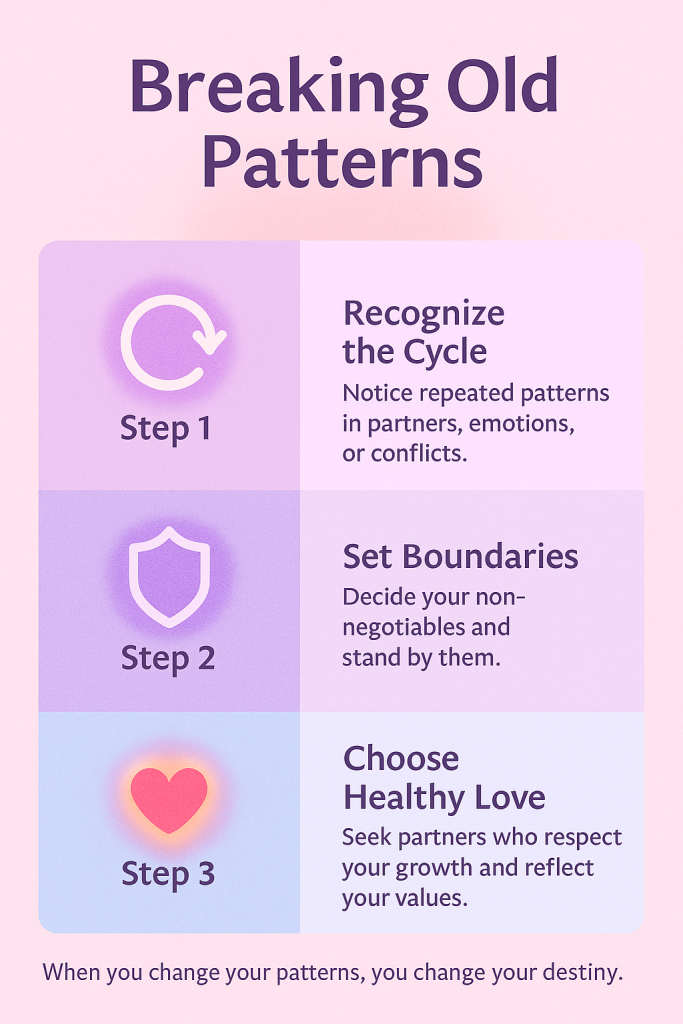
If similar problems keep appearing across relationships, look for patterns you can actually observe. Maybe you move too quickly, avoid difficult conversations, choose partners who say they do not want commitment, or stay after repeated boundary violations.
This does not mean you manifested the pattern through bad energy. It means some habits, expectations or circumstances may be worth examining.
6. Do Not Confuse Chemistry With Compatibility
Attraction can be immediate. Compatibility takes longer to evaluate. Pay attention to values, communication, reliability, conflict style, lifestyle and shared goals.
For a deeper comparison, see Chemistry vs. Compatibility.
7. Keep a Life Outside the Relationship
Healthy partnership leaves room for friendships, hobbies, work, rest and individual interests. Independence is not evidence that a relationship lacks love.
Maintaining your own life can also reduce pressure on one person to meet every emotional and social need.
8. Work With Texting Anxiety
If you find yourself rereading messages, checking for replies constantly or assuming silence means rejection, try slowing the cycle.
- Send the message you actually mean.
- Avoid sending multiple follow-ups from panic.
- Give the other person reasonable time to respond.
- Look at the overall pattern rather than one delayed text.
If anxiety is persistent or affects daily functioning, professional support can help.
9. Know What You Want
You cannot evaluate a relationship well if you do not know what matters to you. Write down:
- your relationship goals;
- important values;
- non-negotiable boundaries;
- areas where you can be flexible;
- behaviors that make you feel respected.
10. Be Willing to Leave Poor Fits
Becoming a better partner does not mean becoming more tolerant of harmful relationships. Sometimes the healthiest relationship skill is recognizing that two people are incompatible or that repeated mistreatment is not improving.
You do not need a karmic explanation, aura reading or angel number to justify leaving.
Where Spiritual Reflection Can Fit
If tarot, meditation or another spiritual practice helps you reflect, keep the questions centered on yourself:
- What relationship skill am I avoiding?
- Where could I communicate more clearly?
- What boundary needs attention?
- What pattern would I like to change?
A psychic reading cannot objectively identify energetic blocks, soul contracts or a future partner’s private intentions.
Therapy and Relationship Skills
Therapy can be useful for attachment concerns, trauma, communication patterns, anxiety or repeated conflict. Spiritual guidance can remain separate if it is meaningful to you, but it should not replace qualified mental-health care.
What a Better Partner Is Not
Being a better partner does not mean:
- never having needs;
- staying calm at all times;
- accepting disrespect;
- healing another person;
- becoming more attractive so someone chooses you;
- taking responsibility for another person’s harmful behavior.
Final Thoughts
The strongest version of “be the person you want to be with” is not a manifestation rule. It is a relationship-skills principle.
Practice the honesty, respect, accountability and boundaries you hope to receive. That will not guarantee who enters your life, but it will make it easier to recognize, build and protect healthier relationships when they do.
Frequently Asked Questions
Does becoming a better partner attract better people?
It may change your choices and relationship behavior, but it does not control who you meet or how others behave.
What relationship skill matters most?
Clear communication combined with respect and accountability is a strong foundation.
How do I break a repeating dating pattern?
Identify the observable pattern, decide what boundary or behavior you can change, and track whether your choices actually change over time.
Does low confidence cause people to mistreat me?
No. Other people are responsible for their own harmful behavior.
Can tarot help me improve as a partner?
It can provide reflection prompts, but it cannot diagnose hidden energetic causes or predict another person’s behavior.
How do I know when to leave instead of work harder?
Repeated dishonesty, coercion, threats, boundary violations or fundamental incompatibility are reasons to take leaving seriously.
Can therapy help relationship patterns?
Yes. Therapy can help with communication, attachment, trauma, anxiety and recurring relational difficulties.
Do I need to be fully healed before dating?
No. People can grow while dating; the goal is enough awareness and responsibility to treat yourself and others well.


