
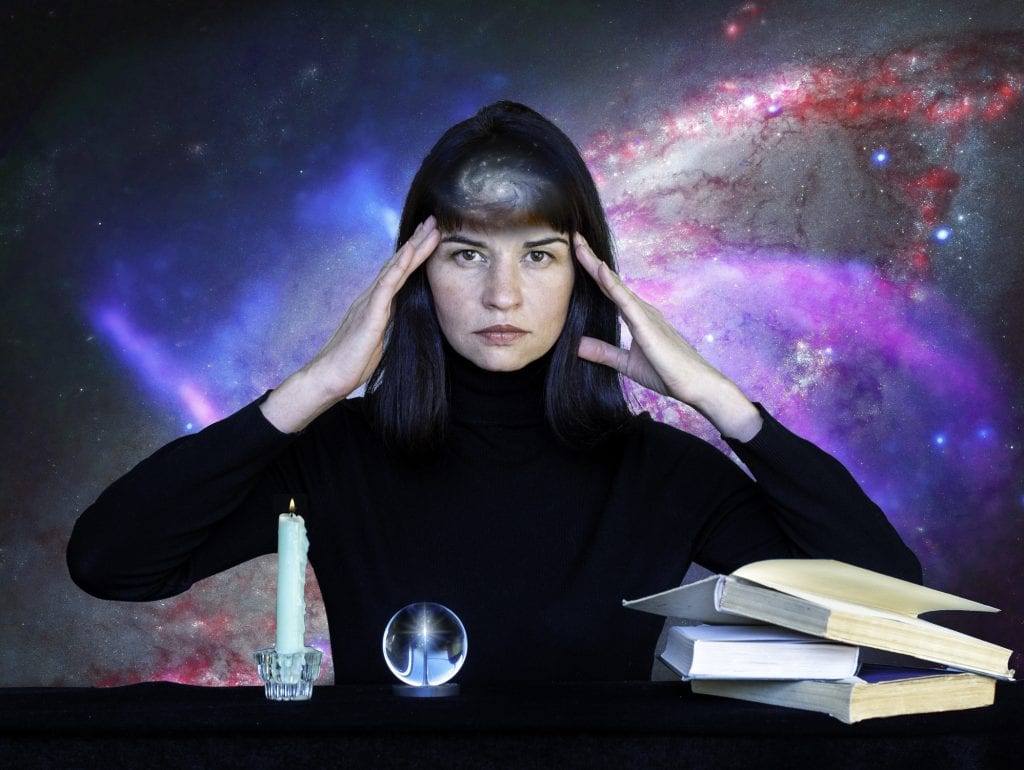
Working on your clairvoyant giftings is easier to talk about than actually doing it. No one has a real answer about how to get this gift working at its best but there are some exercises that you can do to increase these giftings.
Here is a list of exercises to try if you want to be more clairvoyant:
Visualization
Using your imagination or visualization can help you to increase your Third Eye. This can help you to know more things about yourself and others and to be more accurate. Put something in front of you and try to smell it or see it in your mind and use your senses to guess what it is. Take in as much detail as you can and let the answers flood your mind.
Dreaming
When you are sitting around, take time to focus on your Third Eye and to take time for daydreaming. Write down what you see and let your mind show you what it wants you to know.
Spirit Guides
Talk to your spirit guides each day and ask them to come and be with you. If you haven’t talked to your spirit guides for a while, take time to do this. This can help you to grow with them.
Thank your spirit guides for being with you and ask them to help you make good decisions in your life. They will be there and hear you and it is important for you to treat them like they are a friend to you.
Pay attention to things that go through your mind when you talk to them and even take time to write these things down in your journal.
Good Intentions
Make sure that you have good intentions when you talk to your spirit guides and learn to communicate in a way that is healthy and good. Talk to them and do not be shy about asking them to help you, it is what they want the most for you.
Aura
Try to see the aura of yourself and others. By practicing this, you can increase your clairvoyant powers. Stand in front of a white wall or a mirror and see what you see. Measure out your aura with a tape measure and pay attention to each layer and the colors that surround you.
Meditation
Meditate each day so that you can calm your mind and get the good from the universe. Meditating at least 5 minutes a day can give you inner power that you never imagined.
Write it Down
Take time each day to journal and to write down things that have happened to you. This can help you to go back and look at what has happened over time. Write down anything out of the ordinary that happened to you.
Give Readings
Even if you are not good at giving readings yet, practice doing it. Let your friends or your family members use you for this and see if you are right. Keep practicing and never give up.
Crystals
Use crystals as part of your meditation. These can help you to be more open. Wear them as jewelry or sleep with them close by to cleanse your area. Find out what the different crystals do and how they can help you.
Rosemary
Use different scents such as rosemary or essential oils to open up your chakras. This can help to increase your clairvoyant powers and develop your senses.
Healthy Eating
Eat foods that are healthy such as leafy greens and other vegetables. Use organic foods and this can strengthen your sight and your aura.
Activate
Wake up your senses and activate your Third Eye. When you feel your head tingle between your eyes and on your forehead, your clairvoyant powers are opening up.
Classes
Take psychic classes that can help you to learn. Get a mentor that can teach you and help you develop your giftings.
Meditation with Crystals
Use crystals on your third eye to help open it up. Some important ones are:
- Opal
- Fluorite
- Aquamarine
- Amethyst
- Tiger’s Eye
- Moonstone
Cards
Use Zener cards to practice your telepathy and use the images to open up your clairvoyance gifts. You can also use Tarot or Oracle cards to practice.
Dream Journal
Keep a journal of the dreams that you have so that you can notice if you keep having the same dream or if you see patterns or symbols in your dream. Write down every dream you have and don’t miss out on any.
Know Others
Take time to find other psychics or mediums and get to know them. If you have none in your area, look online.
Turn it On
Turn on your gifting and you can control this. Use images to open it up and exercises to make it stronger. Use your imagination to help you and call on your guides and angels.
Turn it Off
Turn off your gifting when you are not using it. Use it open when you are practicing and then turn it off so that it does not overwhelm you.
Expectations
Allow things to just happen. Get rid of expectations that you have and let things flow naturally. Something might be symbolic or different for you than others.
Third Eye
Focus on your Third Eye because this is where your clairvoyant gifting comes from. Put crystals where your Third Eye is and activate it.
Conclusion
Use these exercises if you want to increase your clairvoyant giftings. Remember, the first thing to do is to connect with the spirit, be open, meditate, focus on opening and closing your Third Eye and be open minded.



The emphasis on crystals and essential oils is interesting, but it would be helpful to have more detailed explanations of how each specific item aids in developing clairvoyance.
What a load of nonsense! Talking to spirit guides and measuring your aura? People should focus on real, tangible skills instead of wasting time on these baseless practices.
The article provides a comprehensive list of exercises to enhance clairvoyant abilities, but it would be beneficial to have some scientific references to support these methods.
While the article offers practical tips, I wonder about the psychological impact of these practices over time. Some guidance on mental health considerations would be useful.
Ah, yes! Because my day isn’t complete without activating my Third Eye and having a chat with my spirit guides. This article is the perfect blend of fantasy and wishful thinking!
The suggestion to keep a dream journal is intriguing. It could be an effective way to track progress and notice patterns. However, a more detailed guide on interpreting these dreams would be appreciated.
Adding a section on common symbols and their meanings might help readers make more sense of their dream journals.
I agree with Stephanie. Interpreting dreams can be quite subjective, and without proper guidance, it might lead to confusion rather than clarity.
What an enlightening article! The comprehensive list of exercises provided could be incredibly beneficial for those looking to hone their clairvoyant abilities. The emphasis on visualization, meditation, and maintaining good intentions resonates deeply with me. Incorporating these practices into daily life seems like a wonderful way to not only develop one’s psychic skills but also to foster a greater sense of self-awareness and connection with the universe. Kudos to the author for such detailed and practical guidance!
The exercises mentioned hold some merit in terms of mental focus and relaxation. Visualization and meditation are widely accepted practices for mental health. However, the connection to clairvoyance is highly debatable.
Agreed, Sarah. Visualization and meditation can have positive effects on mental health, but attributing these to clairvoyance seems like a stretch.
I think the mental benefits alone might justify attempting these exercises. Whether or not they enhance clairvoyance, they could still be beneficial for personal development.
The article covers many angles, but it might be overwhelming for beginners. A step-by-step guide or a structured program could make it easier to follow.
Absolutely hilarious! I tried putting a crystal on my forehead and now I’m waiting for my superpowers to kick in. Maybe I’ll start by reading my cat’s mind. Thanks for the comedic relief!
The idea of increasing clairvoyance through visualization and meditation is quite fascinating. This article provides a comprehensive guide on how to practice it. I especially appreciate the emphasis on healthy eating and the use of crystals for enhancing these powers.
Comments are closed.