
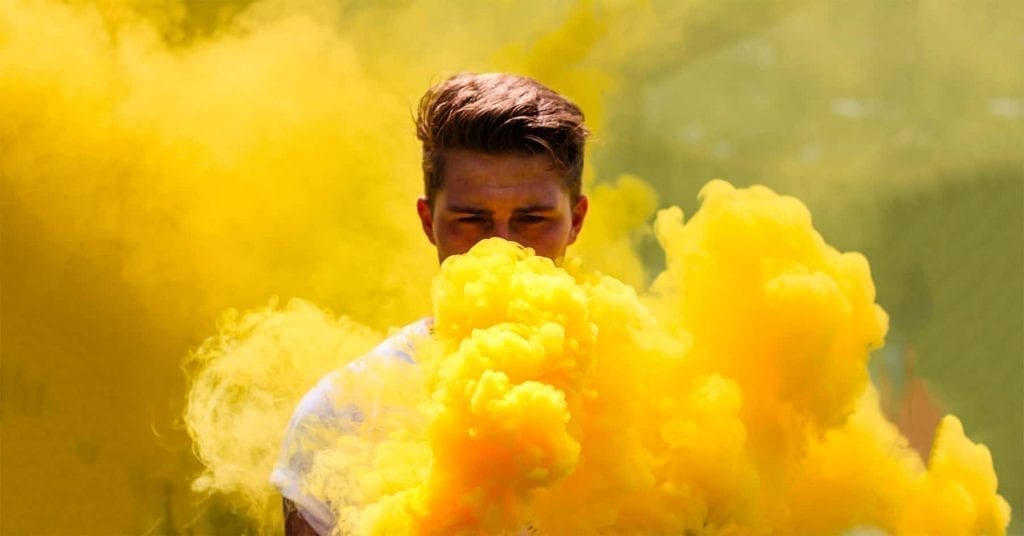
In many spiritual and New Age traditions, an aura is described as an energy field surrounding a person. People may use aura language to talk about mood, presence, sensitivity, intuition or the feeling they get in a room. These ideas can be meaningful as spiritual symbolism, but they should not be confused with established measurements of a person’s health, thoughts or private emotional state.
There is no reliable way to measure an aura as extending a specific number of feet from the body, and aura color should not be treated as proof of what someone is hiding, whether they are truthful, or whether they are safe to trust.
Why People Talk About “Feeling Someone’s Energy”
People often notice tone of voice, facial expression, posture, pace of speech, eye contact, tension and other social cues before they consciously analyze them. That can create a strong impression that someone feels warm, guarded, anxious, calm or intense.
Spiritual traditions may describe these impressions as sensing an aura. A grounded approach leaves room for both interpretations: you can treat the experience as spiritually meaningful while remembering that it may also reflect ordinary perception, context and your own emotional state.
Aura Colors as Symbols
Many aura systems assign symbolic themes to colors. For example, green may be associated with growth or compassion, blue with communication or calm, and purple with intuition or imagination. These associations vary between teachers and traditions; they are not objective personality tests.
For a broader color guide, see Aura Colors and Their Spiritual Meanings Explained.
Can Your Aura Affect Other People?
In spiritual language, people sometimes say their aura “fills the room” or that another person’s energy feels heavy. In practical terms, our moods and behavior can absolutely influence social environments. Irritability, warmth, enthusiasm, fear, confidence and stress can affect how other people respond to us.
That does not mean one person’s invisible field is physically entering another person’s body. It is more useful to focus on observable interaction: what was said, how people behaved, whether boundaries were respected, and how you felt before and after the encounter.
Emotional Contagion Is Not Mind Reading
People can become tense around tension or relaxed around calm people. This kind of emotional influence does not mean you can read another person’s mind or know their private feelings with certainty.
If you think someone is upset, ask rather than assume. If a spiritual reading gives you an impression about another person, treat it as a possibility—not evidence that overrides what they say or do.
Empaths and Aura Beliefs
People who identify as empaths often describe being highly affected by social environments. That experience can be real and intense without proving that they literally absorb another person’s aura.
If crowded spaces, conflict or caregiving leave you drained, practical tools such as breaks, boundaries, sleep, hydration, quieter environments, journaling and professional support can help. You can also use visualization or spiritual cleansing rituals if they are meaningful to you, as long as they are treated as reflective practices rather than medical treatment.
Fear, Stress and Aura Language
Some spiritual systems describe fear as darkening or shrinking the aura. A safer interpretation is symbolic: fear can make people withdraw, become more vigilant, sleep poorly or feel less connected. Those are ordinary human responses that do not need an aura diagnosis.
Nightmares, panic, persistent anxiety or major changes in mood can have many causes. Spiritual practice can provide comfort, but recurring or disruptive symptoms deserve appropriate medical or mental-health attention.
The National Center for Complementary and Integrative Health advises against using an unproven complementary approach to replace conventional care or delay evaluation. An aura interpretation should not be used to diagnose another person or explain persistent symptoms.
Can Someone Hide Their Aura?
No reliable spiritual method can prove that someone is hiding emotions or lying by looking at aura color. People sometimes smile while upset, stay quiet while angry or appear calm while anxious. The respectful approach is to avoid assuming you know what another person feels better than they do.
When trust matters, rely on patterns of behavior, honest conversation and evidence over psychic certainty.
A Simple Aura Reflection Exercise
If aura symbolism interests you, try using it as a journaling prompt rather than a diagnostic tool:
- Notice how you feel before entering a social setting.
- Notice what changes during the interaction.
- Write down specific behaviors or events that affected you.
- If a color comes to mind, ask what that color symbolizes to you personally.
- Separate what you observed from what you inferred.
This keeps spiritual reflection connected to real-world context.
Protecting Your “Energy” in a Grounded Way
Energy protection can be translated into practical boundaries. You might limit time with draining people, avoid repeated conflict, take recovery time after intense social situations, reduce doomscrolling, or practice a short visualization before stressful events.
The goal is not to fear other people’s energy. It is to notice your limits and make choices that protect your attention, safety and well-being.
Aura Readings and Privacy
Aura readings are belief-based interpretations. They should not be used to diagnose illness, identify trauma, determine whether someone is dangerous, reveal sexuality, expose secrets, or claim certainty about another person’s intentions.
A responsible reading stays focused on the client’s reflection and choices rather than making unverifiable claims about third parties.
Aura FAQ
Is an aura scientifically measured around the body?
There is no established scientific measurement showing a spiritual aura extending a fixed distance from the body.
Can aura colors reveal someone’s hidden emotions?
No. Aura color interpretations are spiritual symbolism and cannot reliably reveal another person’s private feelings.
Can another person’s aura make me physically sick?
Physical symptoms can have many causes and should not be assumed to come from another person’s energy. Persistent symptoms deserve appropriate medical evaluation.
Why do some people feel draining to be around?
Stressful conversation, conflict, sensory overload, caregiving, poor boundaries and other social factors can all contribute. Some people also describe this spiritually as feeling another person’s energy.
Can meditation protect my aura?
Meditation or visualization may help you feel calmer and more intentional. It should be understood as a reflective practice, not proof of a physical shield.
Can psychics see whether someone is lying from their aura?
No reading can verify deception with certainty. Use evidence, behavior and direct communication when trust is important.
Are aura readings dangerous?
A reflective aura reading is generally low risk when it avoids fear, diagnosis and certainty claims. Be cautious of anyone who uses aura language to threaten you or sell expensive cures.
Can I enjoy aura symbolism even if I am skeptical?
Yes. You can use color and energy language as metaphors for self-reflection without treating them as objective facts.
Related Aura Guide
For the broader color system and its spiritual meanings, see Aura Colors and Their Spiritual Meanings Explained.


