
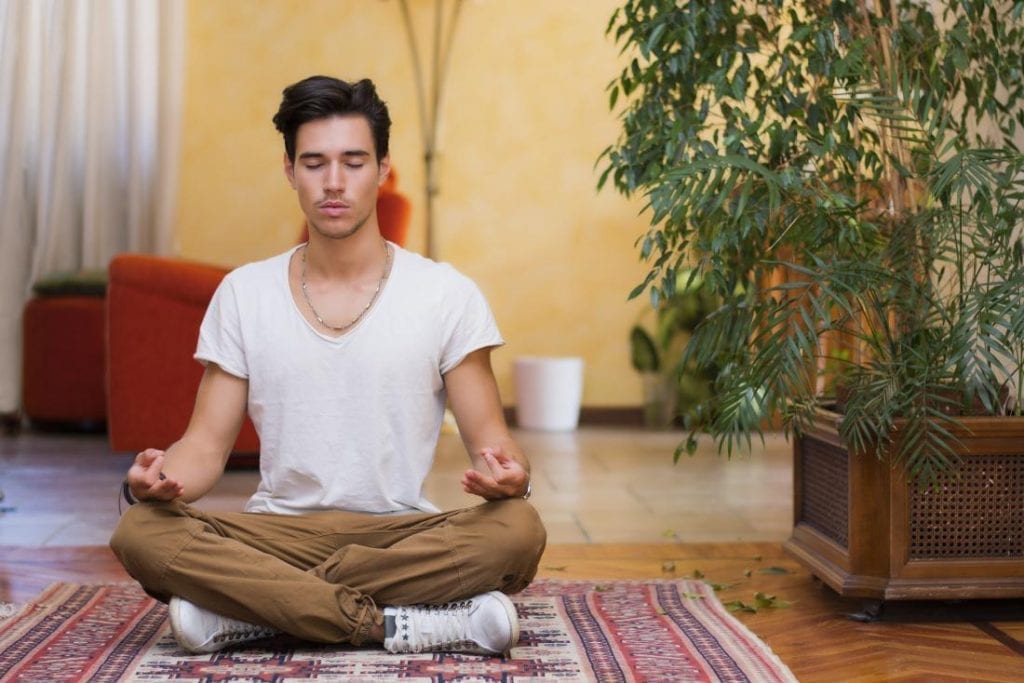
You notice a thought, realize your attention has wandered and return to a sound or the room around you. That small movement of attention is part of mindfulness meditation. You do not need a silent mind or a special experience to begin. Some people use it for stress, focus or self-awareness. Others include it within a religious or spiritual practice.
Research suggests mindfulness-based approaches may help some people with stress, anxiety, depression and sleep quality, but results vary by program, condition and study quality. Meditation is not a cure-all, and it is not risk-free for everyone.
What Mindfulness Actually Involves
Mindfulness does not require emptying your mind. Thoughts will continue to appear. The practice is noticing what is happening—breath, sounds, body sensations, emotions or thoughts—and returning attention without treating every thought as a command.
Potential Benefits
People may use mindfulness to:
- slow down before reacting;
- notice stress patterns;
- practice attention;
- observe thoughts without immediately believing them;
- create a deliberate pause in a busy day;
- support broader stress-management or therapy work.
The National Center for Complementary and Integrative Health notes that mindfulness approaches have been studied for anxiety, depression, pain, sleep and other concerns, but the evidence is mixed and sometimes interpreted too optimistically.
Mindfulness Is Not the Same as Avoiding Thoughts
You do not need to push away painful thoughts or politely order them to leave. Trying too hard to suppress thoughts can make meditation more frustrating.
A simpler approach is: notice the thought, name what is happening if helpful, and return attention to your chosen focus.
Can Mindfulness Connect You With Angels or Spirits?
Some people interpret images, memories or impressions during meditation as spiritual messages. That interpretation belongs to personal belief.
Meditation itself does not establish that a thought came from an angel, guide, deceased loved one or outside intelligence. Vividness and emotional intensity are not proof of an external source.
Can Meditation Reveal Your Life Purpose?
Meditation can create quiet space to reflect on values, priorities and what feels meaningful. It cannot guarantee a hidden purpose or predetermined life path.
If purpose is the question, pair reflection with real-world experiments: volunteering, classes, conversations, creative work or new responsibilities. See Finding Your Life Purpose: Values, Meaning and Next Steps.
How to Start Mindfulness Meditation
- Choose a reasonably quiet place.
- Choose a brief period, perhaps a few minutes or less. You can stop early; no duration is a safety guarantee.
- Sit, stand or lie down in a position that is safe and comfortable.
- Choose a focus such as natural breathing, sounds or physical contact with the chair or floor.
- When attention wanders, notice it and return.
- Stop when your planned time ends.
There is no requirement to work up to an hour. A short practice can be enough.
What If Your Mind Feels More Chaotic?
That can happen. Sitting quietly may make thoughts or emotions more noticeable because there are fewer distractions.
You do not have to “push through” distress. Shorten the practice, open your eyes, move around or stop. If meditation repeatedly increases panic, dissociation, depression or other distress, discuss it with a qualified health professional.
Mindfulness and Sleep
Some research suggests mindfulness may improve sleep quality for some people, but it is not the strongest established treatment for chronic insomnia. Cognitive behavioral therapy for insomnia (CBT-I) has stronger guideline support.
If sleep problems are persistent, severe or affecting daytime function, consider discussing them with a healthcare professional rather than relying only on meditation.
Mindfulness and Mental Health
Mindfulness may be useful as part of care, but it should not replace evidence-based treatment when treatment is needed. If you are experiencing severe depression, panic, trauma symptoms, hallucinations, suicidal thoughts or difficulty functioning, seek appropriate professional help.
Spiritual Practice Without Overclaiming
You can still use mindfulness spiritually. Prayer, gratitude, compassion practices or symbolic reflection may fit naturally into your routine. Keep the distinction clear between what the practice means to you and what it can establish as fact.
Final Thoughts
Mindfulness can be a practical way to train attention and create space around thoughts and emotions. It does not need to be mystical to be meaningful, and it does not need to be treated as a treatment for every problem.
Start small, notice how it affects you and use it alongside—not instead of—the practical or professional support your situation requires.
A Brief Mindfulness Cycle You Can Adapt
- Orient: notice something you can see or hear, using whichever sense is available and comfortable.
- Anchor: choose breath, feet, hands or an external sound.
- Notice: when a thought, emotion or sensation pulls attention, name it briefly—“planning,” “worry,” or “tightness.”
- Return: gently return to the anchor without trying to erase the experience.
- Choose: at the end, name one practical next action.
The skill is noticing and returning, not producing a blank mind. A session can be useful even when it feels busy.
Use Mindfulness for Contact, Not Avoidance
Mindfulness can help create a pause before action. It becomes avoidance when “being present” is used to postpone a necessary conversation, ignore a bill, tolerate unsafe behavior or suppress grief. After practice, ask: What fact still needs attention? What action or support does this situation require?
Match the Practice to Your Nervous System
If internal focus increases panic, dissociation or flashbacks, keep your eyes open, use movement or external sound, shorten the timer and remain near a trusted environment. Stop if symptoms worsen. A qualified trauma-informed clinician or teacher can help adapt practice.
The NIH/NCCIH evidence and safety review describes mixed research quality across conditions and notes reported negative experiences. Mindfulness may complement care; it should not replace medical or mental-health treatment or delay a needed evaluation.
Keep Spiritual Meaning Optional
Some people interpret calm, imagery or a sense of connection spiritually. That interpretation can be personally meaningful without proving contact with angels, spirits or a predetermined life purpose. Record impressions, then use ordinary evidence for high-stakes decisions.
For more, see Meditation Benefits and Safe Beginner Practice and Are You Over-Meditating?.
A Free Thought-to-Action Practice Note
After a short practice you chose to try, write three lines. You may use an external sound or an open gaze rather than focusing inward.
| Line | Example |
|---|---|
| What drew my attention? | I remembered a message I have not answered. |
| How did I respond? | I noticed “planning” and returned to the sound near the window. |
| What needs action now? | I will read the message and decide whether it needs a reply today. |
Read your result: noticing a thought and returning are parts of the practice. A repeated thought is not a failure, a verified spiritual message or an instruction you must obey. Your last line names a practical task the meditation has not completed for you.
If the exercise makes you more distressed or disoriented, put the note aside and stop. Seek qualified support for persistent or severe effects. You do not need to complete the cycle to earn permission to leave it.
When a Thought Is a Task and When It Is a Story
“The bill has a due date” points to information you can check. “This worry proves something terrible will happen” adds a prediction. You can acknowledge the worry while checking the actual task.
If spiritual imagery appears, you can write it down separately and consider its personal meaning later. Keep urgent practical needs and health concerns with the appropriate action or support.
Frequently Asked Questions
1. What is mindfulness meditation?
It is the practice of noticing present-moment experience with less automatic judgment and returning attention when it wanders.
2. Do I need to stop thinking?
No. Thoughts will occur; noticing them and returning to an anchor is part of the practice.
3. How long should I practice?
Try a brief period, perhaps a few minutes or less, and stop earlier if needed. Adjust or stop according to comfort, distress and daily function; no fixed duration is right for everyone.
4. Can mindfulness reduce stress?
It may help some people, but effects vary and research quality differs across programs and conditions.
5. Can mindfulness make anxiety worse?
Yes, internal focus can worsen symptoms for some people. Modify or stop and seek qualified support when distress persists.
6. Is walking mindfulness valid?
Yes. Attending to safe, slow steps and external sensations can be a useful alternative to sitting.
7. Does meditation reveal my life purpose?
It may help you reflect on values, but it cannot objectively prove a predetermined purpose or future.
8. When should I choose action instead of meditation?
Use direct action for urgent safety, health, legal, financial or relationship problems; meditation can support clarity but not replace the response.


