

Heartbreak cannot always be prevented. People change, relationships end and sometimes information appears only after trust has already formed. But you can reduce avoidable confusion by paying attention to consistency, clarity and whether both people actually want the same kind of relationship.
The goal is not to become “heartbreak-proof” or learn to psychically detect hidden motives. It is to recognize patterns sooner and act on information that is available.
What Emotional Unavailability Can Look Like
A person may be emotionally unavailable when they repeatedly avoid vulnerability, clarity or mutual commitment. One behavior by itself does not prove a pattern, so look for consistency over time.
The Love Is Respect relationship spectrum distinguishes healthy, unhealthy and abusive dynamics through recurring behaviors such as communication, trust, equality, control and respect. Use patterns over time—not a psychic impression or a single label—to evaluate the relationship.
- They say they do not want a relationship while behaving romantically enough to keep you invested.
- Future plans stay vague even after you have asked directly.
- Contact becomes intense and then disappears repeatedly.
- They avoid conversations about expectations or exclusivity.
- Your needs are treated as pressure rather than something to discuss.
- Words about commitment are not matched by behavior.
Believe Clear Statements About Commitment
If someone says, “I am not looking for anything serious,” the safest interpretation is the literal one. Do not date the future version of that person you hope will appear.
They may eventually change their mind, but you do not have to wait for that possibility if you want commitment now.
Situationships Are About Agreement
A casual or undefined relationship is not automatically unhealthy. It becomes painful when the two people want different things but avoid acknowledging the mismatch.
Ask directly:
- What are you looking for right now?
- Are you dating other people?
- What does exclusivity mean to you?
- Do you see this becoming a committed relationship?
A difficult answer usually creates more clarity than months of guessing.
Use Behavior, Not “Energy,” to Evaluate Availability
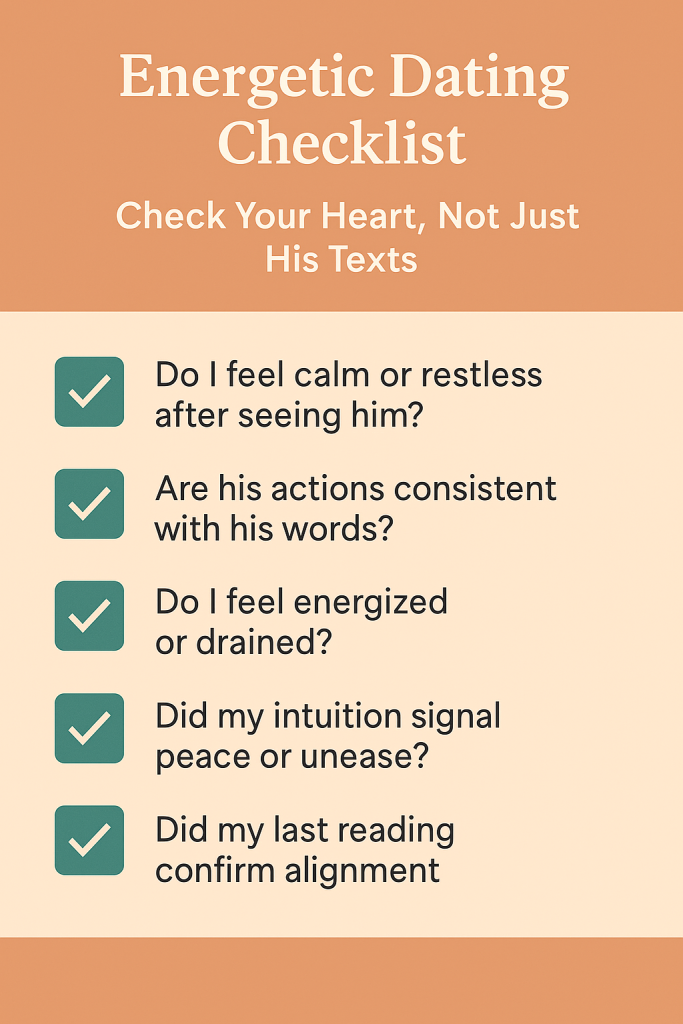
The existing checklist can be translated into observable questions:
- Do I feel respected after spending time with this person?
- Do their actions generally match their words?
- Can we discuss a problem without punishment, disappearing or contempt?
- Do I know where I stand, or am I constantly decoding clues?
- Is effort reasonably mutual?
Feeling anxious can be useful information about your experience, but anxiety does not prove what another person is secretly thinking.
Intuition Can Help—But It Is Not Evidence
Intuition may reflect subtle pattern recognition. You may notice inconsistency before you can put it into words. It can also be influenced by past hurt, hope, fear or assumptions.
If something feels off, investigate rather than declare it true. Ask a question, observe behavior and look for evidence.
Do Not Diagnose a Partner From Attachment Language
Attachment theory can offer useful concepts, but internet labels such as “avoidant” are often applied too casually. A person who does not want commitment may simply not want the same relationship you do.
You do not need a psychological diagnosis to decide that inconsistency or incompatibility does not work for you.
Love-Bombing vs. Ordinary Early Excitement
Strong early interest is not automatically manipulation. More concerning patterns may include intense idealization combined with pressure, boundary violations, rapid demands for exclusivity or control, followed by withdrawal or devaluation.
Focus on the total pattern rather than assuming flowers, frequent texts or strong attraction are inherently suspicious.
What Psychic Readings Can and Cannot Do
Some people use Tarot, astrology or psychic readings to reflect on relationships. A reading may help you articulate fears, hopes or questions you have avoided.
A psychic cannot verify another person’s private thoughts, prove whether they are over an ex, guarantee fidelity, establish future commitment or tell you with certainty who your future partner will be.
If a reading conflicts with observable behavior, direct communication and safety information, prioritize the evidence.
Tarot for Self-Reflection, Not Surveillance
Instead of asking cards “What are their hidden intentions?” try questions such as:
- What am I overlooking in this relationship?
- What boundary needs clarification?
- What am I afraid to ask directly?
- What would mutual commitment look like to me?
This keeps the reading focused on choices you control.
Astrology Cannot Determine Commitment Readiness
Venus, Saturn, Moon or Sagittarius placements cannot establish whether someone wants a long-term relationship. A birth chart should not override what a person tells you or how they behave.
Build Resilience, Not “Heartbreak Immunity”
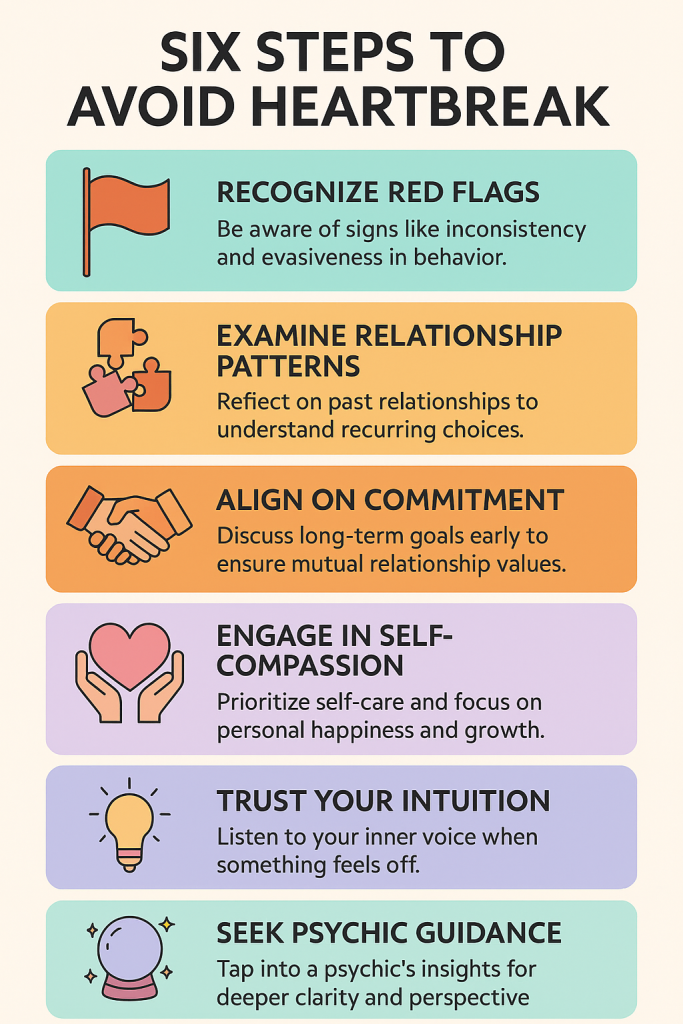
No technique can make you immune to grief. A healthier goal is resilience: knowing that disappointment will hurt but will not require you to abandon your standards or self-respect. If you are already recovering from a painful ending, see What Heartbreak Can Teach You—Without Calling It Destiny.
Helpful practices can include:
- maintaining friendships and routines outside dating,
- not rushing commitment before enough behavior is visible,
- journaling what actually happened instead of only what you hope will happen,
- setting limits on repeated uncertainty, and
- seeking counseling when old patterns or fear make relationships difficult to navigate.
Why We Sometimes Repeat the Same Pattern
Repeated dating patterns can come from familiarity, social environment, limited boundaries, fear of being alone, attraction to particular traits or simple coincidence. They do not mean your “vibration” is attracting emotionally unavailable people.
Ask what you can change in selection and boundaries rather than blaming yourself for another person’s choices.
A Commitment Compatibility Check
Before investing more deeply, compare these areas:
- relationship goals,
- communication frequency,
- exclusivity expectations,
- sexual boundaries,
- children or family goals,
- money and lifestyle expectations,
- location and career priorities, and
- how each person handles conflict.
Chemistry matters, but compatibility requires more than chemistry. For a closer look at how preferences, reassurance needs and expectations affect fit, see High Maintenance? Needs, Preferences and Compatibility.
When to Step Back
Consider stepping back when the same problem remains after clear discussion, when your needs are repeatedly dismissed, or when you spend more time interpreting mixed signals than building an actual relationship.
You do not need psychic confirmation to honor a boundary.
How Psychics Can Help Protect Your Heart
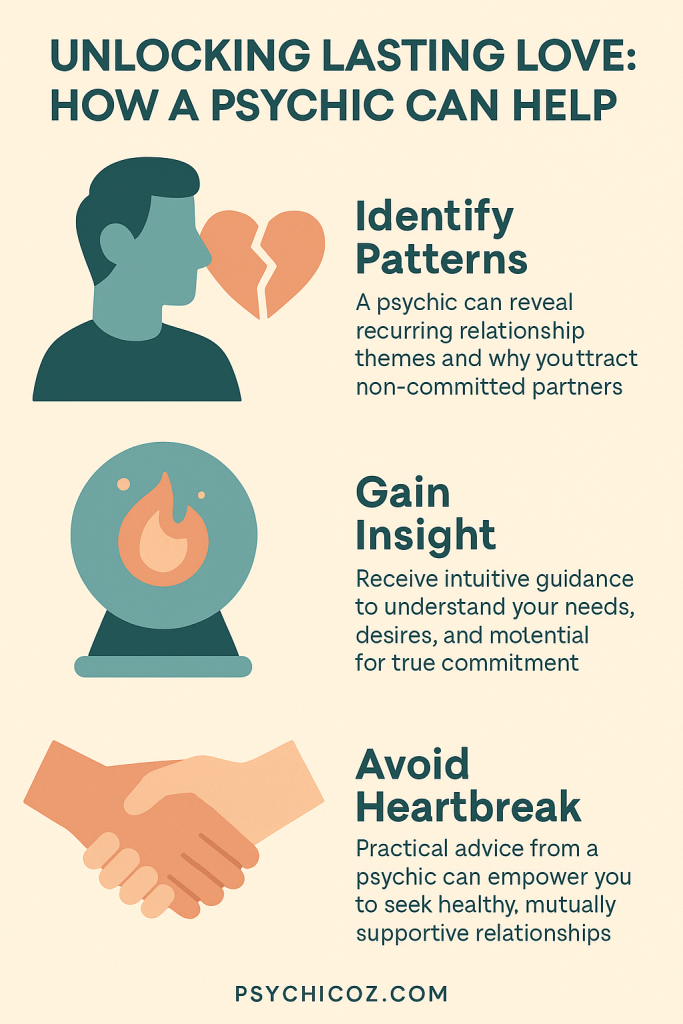
The safest way to interpret this graphic is that a reading can provide another reflective perspective. Protection still comes from your boundaries, choices, support network and attention to behavior—not from a reader detecting another person’s hidden energy.
Frequently Asked Questions
How can I spot a non-committed partner early?
Listen to what they say they want and watch whether their behavior is consistent with it.
Can someone eventually become ready for commitment?
Yes, people can change, but you are not required to wait if your needs are different now.
Should I trust my gut over someone’s words?
Use a gut feeling as a reason to look closer, not as proof. Consider both direct statements and observable behavior.
Can a psychic tell whether someone is over an ex?
No. A reading cannot verify another person’s private emotional state.
Can Tarot tell whether a relationship will last?
No. Tarot can support reflection but cannot guarantee a relationship outcome.
Can astrology show whether someone will commit?
No. Chart placements cannot establish another person’s willingness to commit.
Why do I keep dating unavailable people?
There may be several reasons, including familiarity, environment, boundaries or attraction patterns. It is not proof that your energy is causing it.
What is the best protection against repeated heartbreak?
Clear standards, direct communication, gradual trust, strong boundaries and attention to consistent behavior.


