
Quick answer: Albert Einstein did comment on telepathy research and met psychic performer Gene Dennis, but the historical record is more cautious than claims that he broadly endorsed psychics. Treat spiritual interpretations as optional reflection rather than verified facts or substitutes for professional advice.
Albert Einstein’s name is sometimes used to suggest that one of history’s most famous physicists believed in psychics, telepathy, clairvoyance, or supernatural powers. The real historical record is more interesting—and much more cautious.
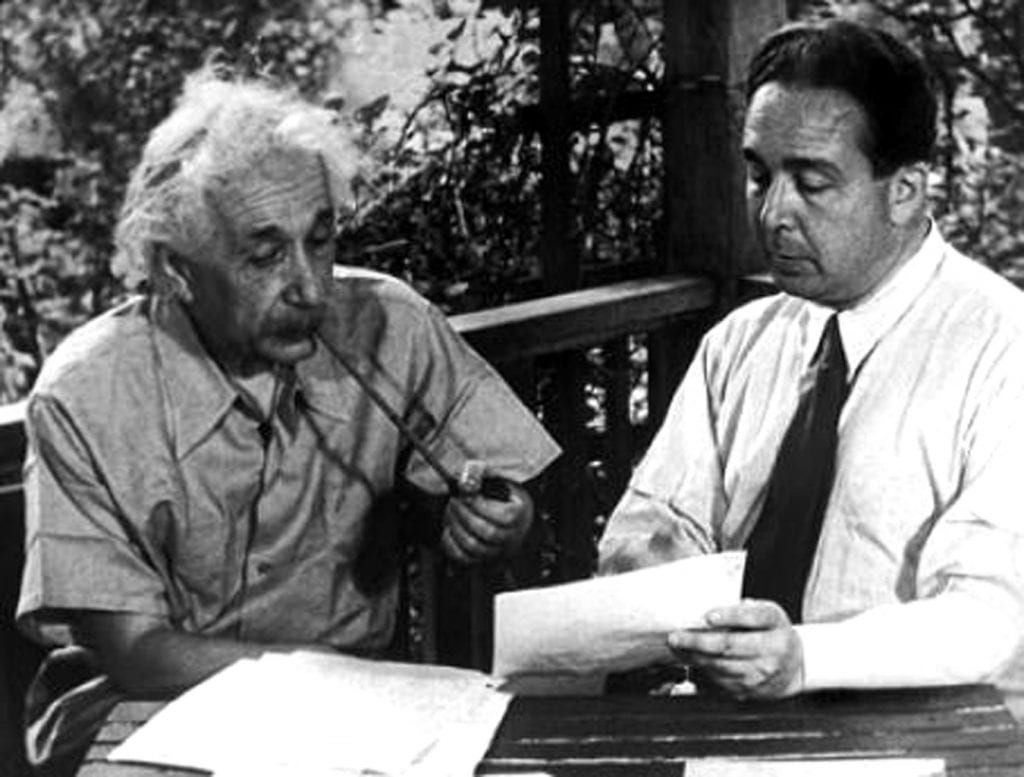
Einstein did show enough interest in unusual psychological claims to comment on them. He wrote a short preface for Upton Sinclair’s 1930 book Mental Radio, which described experiments Sinclair believed supported telepathy. Einstein also met the American psychic performer Gene Dennis in California in the early 1930s, an encounter that generated sensational newspaper coverage.
Neither episode proves that Einstein accepted psychic phenomena as established science. The strongest conclusion supported by the surviving sources is that he was willing to consider unusual claims without automatically treating them as proven.
Why This Einstein Psychic Story Exists
Several different stories have been blended together over time:
- Einstein’s friendship with writer Upton Sinclair
- Sinclair’s experiments with his wife, Mary Craig Sinclair, which he interpreted as telepathy
- Einstein’s preface to Mental Radio
- Einstein’s 1932 meeting with psychic performer Gene Dennis
- Press reports that portrayed Einstein as endorsing Dennis
- Later retellings that expanded these episodes into a broad claim that Einstein “believed in psychics”
To evaluate the story fairly, these events need to be separated.
What Was Upton Sinclair’s Mental Radio?
Upton Sinclair, best known for novels such as The Jungle, published Mental Radio in 1930. The book described informal experiments involving his wife, Mary Craig Sinclair, who attempted to reproduce drawings or impressions that another person was concentrating on.
Sinclair interpreted the results as evidence for telepathy. The experiments became part of the early twentieth-century discussion of psychical research, when writers, psychologists, scientists, spiritualists, and skeptics were all debating whether unusual mental phenomena could be studied experimentally.
The experiments were not conducted according to the kind of tightly controlled, preregistered research standards expected in modern experimental science. That matters when evaluating claims that the book “proved” telepathy.
What Einstein Actually Wrote About Mental Radio
The strongest primary evidence connecting Einstein to telepathy is not a rumor. A dated preface signed by Albert Einstein appears in Mental Radio. The surviving text is dated May 23, 1930.
Einstein wrote that Sinclair’s book deserved serious attention and that he considered Sinclair a conscientious observer. But his wording was notably cautious. He did not declare that telepathy had been scientifically proven. He explicitly raised the possibility that the reported results might have another psychological explanation, mentioning an unconscious influence between people.
The full historical text can be read in the Project Gutenberg edition of Mental Radio.
That distinction is central: taking a claim seriously enough to investigate is not the same as endorsing the claim as fact.
Did Einstein Believe Telepathy Was Real?
The Mental Radio preface shows that Einstein did not simply dismiss Sinclair’s report. It also shows that he was not presenting telepathy as an established physical law.
His comments are better described as openness to further psychological investigation. He acknowledged that the reported observations were unusual and worth examining, while leaving their cause unresolved.
Using that preface to say “Einstein proved telepathy” or “Einstein knew psychic powers were real” changes the meaning of the source. For a broader evidence-focused overview of modern telepathy claims, see Can Psychics Read Minds? Telepathy Claims, Intuition and Boundaries.
Einstein’s Meeting With Gene Dennis
Gene Dennis was an American psychic performer who attracted significant publicity in the 1920s and 1930s. Einstein and his wife Elsa were photographed with Dennis in California in January 1932, so the encounter itself is not merely a later legend.
Contemporary press reports presented Dennis as having impressed Einstein with information she supposedly could not have known. A March 9, 1932 article in The New Republic discussed the controversy around what newspapers were calling Einstein’s endorsement.
Archival photograph captions also preserve a statement attributed to Einstein saying Dennis told him things connected with work he had been doing. That shows how the story was circulating at the time, but a press caption is not the same thing as a scientific publication, controlled test, or carefully documented statement of belief.
Did Einstein Endorse Gene Dennis?
The safest historical answer is: contemporary publicity portrayed the meeting as an endorsement, but the strength and meaning of that endorsement are uncertain.
Einstein was a public figure whose casual remarks could become headlines. Dennis was a professional performer whose reputation benefited from association with one of the world’s most famous scientists. The resulting publicity should therefore be read critically.
There is evidence that Einstein met Dennis and apparently found the encounter interesting. That is different from evidence that he verified her claimed powers under controlled conditions or adopted clairvoyance and fortune-telling as scientifically established phenomena.
What About Claims That Einstein Saw Dennis’s Aura?
Some later accounts include stories about Dennis describing Einstein’s aura, sparks of color, or other psychic impressions. Those claims describe Dennis’s interpretations, not observations independently established by Einstein.
They should therefore be presented as part of the history of psychic performance and publicity, not as evidence that Einstein scientifically validated aura reading.
Einstein, Science and Unexplained Claims
Science does not require rejecting every unfamiliar idea before examining it. It requires that claims be tested in ways that reduce alternative explanations, error, bias, selective reporting, and chance.
Einstein’s Mental Radio preface is interesting precisely because it shows a scientist saying that an unusual report deserved attention while still leaving open what caused it. That posture is compatible with scientific curiosity.
It does not follow that every paranormal claim is therefore scientifically supported. The same distinction between personal experience, pattern recognition and scientific evidence also matters in our guide to premonitions and what science shows.
Why Famous-Scientist Endorsements Can Be Misleading
Appeals to famous names can make a claim sound stronger than the evidence. Even when a quotation is authentic, several questions still matter:
- What exactly did the person say?
- Was the statement public, private, formal, casual, or reported secondhand?
- Was the claim tested under controlled conditions?
- Did the person endorse the phenomenon, or only further investigation?
- Did later retellings remove qualifications from the original statement?
- Does modern evidence support the claim independently of the famous person?
This is especially important with Einstein because his name is frequently attached to quotations and ideas that he either did not say or that become distorted when removed from context.
Did Relativity Support Psychic Phenomena?
No direct line runs from Einstein’s theory of relativity to telepathy, clairvoyance, precognition, mediumship, or fortune-telling. Relativity transformed physics by describing relationships involving space, time, motion, gravity, and energy. It does not provide scientific validation for psychic readings.
Historians of science have noted that Einstein was sometimes asked to comment on attempts to connect relativity with paranormal ideas. Those discussions are historically interesting, but they should not be used as if relativity itself predicts psychic ability.
What the Historical Record Supports
Based on the strongest available sources, it is reasonable to say:
- Einstein knew Upton Sinclair and read Mental Radio.
- Einstein wrote a preface dated May 23, 1930.
- He considered Sinclair’s reported experiments worthy of serious psychological attention.
- He did not state in that preface that telepathy had been scientifically proven.
- Einstein met Gene Dennis in California in 1932.
- The meeting generated press claims that Dennis had impressed or received Einstein’s endorsement.
- The evidence does not justify turning those episodes into the broad claim that Einstein scientifically validated psychics in general.
What Remains Uncertain
Historical reporting around celebrities and psychic performers can mix direct evidence, publicity, recollection, quotation, and later embellishment. Specific dramatic details about private conversations should therefore be treated cautiously unless supported by a traceable contemporary source.
This is why the Mental Radio preface is more valuable than a later anecdote: the preface survives as Einstein’s own dated text.
Final Thoughts
Albert Einstein did not fit neatly into the simple story that he either “believed in psychics” or rejected every paranormal claim without consideration. He was willing to look at unusual reports and, in the case of Mental Radio, publicly said they deserved attention.
But curiosity is not confirmation. The historical evidence supports saying that Einstein engaged with claims about telepathy and met a psychic performer. It does not support saying that he proved psychic powers, validated clairvoyance, or established a scientific basis for psychic readings.
FAQs About Einstein and Psychics
1. Did Albert Einstein write about telepathy?
Yes. He wrote a short preface for Upton Sinclair’s Mental Radio, dated May 23, 1930.
2. Did Einstein say telepathy was scientifically proven?
No. His preface said the reported experiments deserved serious attention while explicitly leaving open a non-telepathic psychological explanation.
3. Did Einstein meet psychic Gene Dennis?
Yes. The meeting was photographed and reported in the press in January 1932.
4. Did Einstein scientifically test Gene Dennis?
There is no evidence that their encounter constituted a controlled scientific test establishing her claimed psychic abilities.
5. Does relativity support psychic abilities?
No. Einstein’s relativity theories do not provide scientific proof of telepathy, clairvoyance, mediumship, or fortune-telling.
6. Why is Einstein often described as endorsing psychics?
His cautious preface to Mental Radio and sensational publicity around his meeting with Gene Dennis have often been simplified in later retellings.


