

Pets can bring couples closer, but they can also become a source of disagreement. Sleeping arrangements, training, vet bills, feeding, travel and attention can expose differences in expectations very quickly.
What a pet cannot do is reliably tell you whether your partner is trustworthy, whether a relationship is “energetically wrong,” or whether a breakup is coming. Animals respond to behavior, routine, scent, tone, movement, past learning and their own physical needs.
Why Pets React to Relationship Tension
Dogs and other animals can notice changes in human voice, posture, movement and scent. Some research also suggests dogs can distinguish human stress-related odors under experimental conditions.
That is different from saying an animal reads an aura or secretly knows the truth about a relationship. A pet may react when voices rise because loud conflict is stressful—not because the animal has psychically diagnosed incompatibility.
Common Pet-Related Conflicts Between Couples
- Sleeping arrangements: whether the animal sleeps on the bed or in the bedroom.
- Care workload: feeding, walking, grooming, cleaning and appointments.
- Money: food, insurance, training, boarding and veterinary expenses.
- Training rules: jumping, furniture, barking, table feeding or off-leash behavior.
- Attention: one partner may feel that the pet always comes first.
- Allergies or sensory needs: fur, odors, noise or sleep disruption can become real compatibility issues.
These are practical relationship topics. They usually improve through clear agreements rather than psychic interpretation.
What If My Pet Dislikes My Partner?
A dog barking, hiding or avoiding one person can have many explanations:
- unfamiliar movement or voice,
- previous negative experiences,
- poor socialization,
- fear,
- resource guarding,
- the person’s clothing, scent or equipment,
- pain or illness, or
- a history of reinforcement around the behavior.
Do not treat the animal’s reaction as proof that the person is dangerous or dishonest. If you independently observe controlling, threatening or abusive behavior from a partner, respond to those human behaviors directly.
Sudden Behavior Changes Need Practical Attention
If a normally calm pet suddenly becomes aggressive, hides, urinates outside the usual area, paces, stops eating or shows other new behavior, consider a veterinary assessment. Pain, urinary problems, neurological issues and other conditions can change behavior.
After medical causes are considered, a qualified trainer or veterinary behavior professional can help identify triggers and build a plan.
The Merck Veterinary Manual’s guidance on diagnosing animal behavior problems likewise starts with history, observation and assessment of possible medical causes before a behavior plan is chosen.
Pets Can Still Be Useful “Mirrors”
You can use a pet’s reaction as a reminder to observe the household without pretending the animal knows why the tension exists.
If your dog consistently hides during arguments, for example, the useful message may simply be: our conflict is affecting the environment, and we need a calmer way to handle it.
That conclusion comes from the observable pattern, not from a claim that the dog is translating hidden energy.
When the Pet Becomes the Battlefield
Arguments about an animal often reveal a more general issue:
- Who carries invisible household labor?
- Are financial decisions shared?
- Can each person set reasonable boundaries?
- Does one partner dismiss the other’s needs?
- Can the couple negotiate without contempt?
The pet may be the topic, while fairness or respect is the real problem.
Build a Pet Agreement
A simple agreement can prevent repeated arguments. Decide together:
- who handles each daily task,
- how veterinary costs are paid,
- where the animal can sleep,
- what training rules everyone follows,
- how travel and boarding will work, and
- which decisions require both partners’ agreement.
Do Not Use Crystals or Smoke to Treat Pet Behavior
Crystals on collars can become choking or ingestion hazards depending on size and attachment. Smoke from incense, sage or other burning materials may irritate animals’ respiratory systems.
If you like spiritual rituals, keep them physically safe and separate from animal treatment. They should not replace veterinary care, behavior work or environmental changes.
Can Meditation Help a Household?
A couple may benefit from taking a pause before difficult conversations, breathing slowly or using a short mindfulness routine. A calmer household can also be easier on a pet.
The benefit does not require the idea that everyone’s energy fields are synchronizing. People are simply changing their behavior and emotional regulation.
What About Pet Psychic Readings?
Some people enjoy animal-intuitive or pet-psychic readings as spiritual reflection. Treat the impressions as subjective.
Do not use a reading to diagnose pain, determine whether a pet needs medication, locate a missing animal instead of conducting a practical search, or decide that a partner is abusive or unfaithful.
Cultural Animal Symbolism
Animals have rich symbolic roles in many religious and cultural traditions. Those traditions are specific and should not be collapsed into a generic claim that all cultures regard pets as psychic relationship guides.
If an animal symbol matters in your own spiritual practice, use it as a reflection theme rather than a factual assessment of your relationship.
When Relationship Help May Be Useful
If pet conflict is part of a larger pattern of resentment, repeated arguments or unequal responsibility, couples counseling or another appropriate relationship resource may be more useful than trying to decode the pet.
If there is intimidation, coercion, threats or violence, focus on human safety rather than pet symbolism.
The Pet–Love Triangle
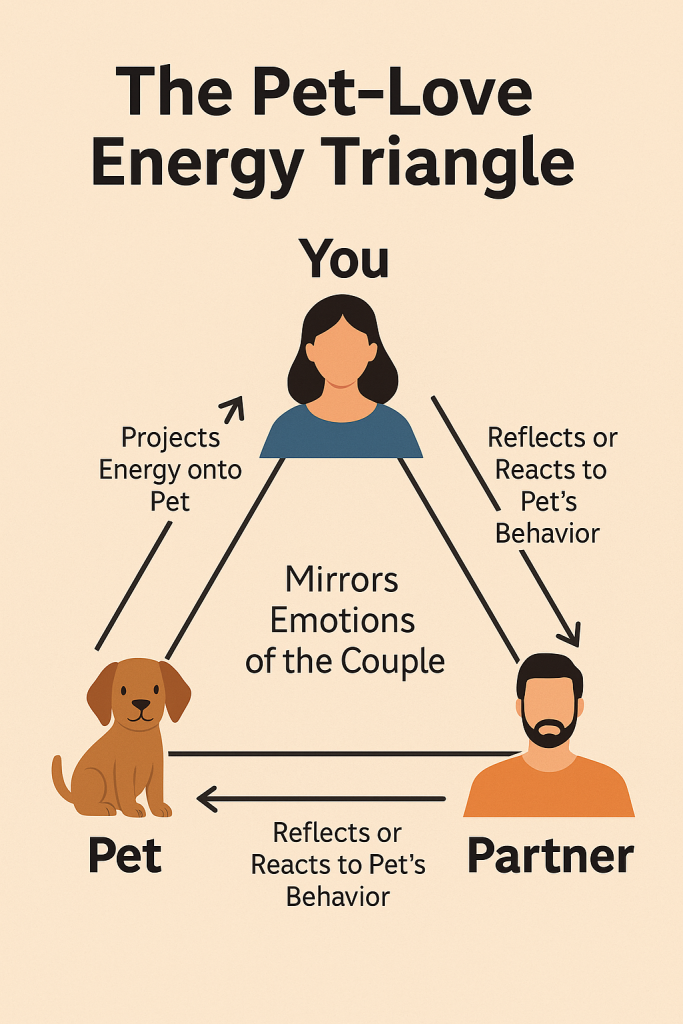
The infographic can be read as a relationship-reflection model: pet needs, partner needs and shared household responsibilities all interact. It should not be interpreted as proof of an invisible energy triangle.
Frequently Asked Questions
Can my pet tell if my partner is a bad person?
No. Animal reactions can have many behavioral and environmental causes and are not reliable character tests.
Why does my dog bark when we argue?
Loud voices, fast movement and tension can be stressful or arousing to a dog.
What if my pet suddenly behaves differently?
Consider medical causes first, especially with sudden aggression, hiding, elimination changes or appetite changes.
Can pets sense human stress?
Animals can respond to behavioral, vocal and olfactory cues associated with stress, but that is not the same as psychic mind-reading.
Should I use my pet’s behavior to decide whether to break up?
No. Evaluate the relationship through the partner’s actual behavior, communication, safety and shared values.
Can a pet psychic diagnose behavior?
No. Use veterinary and qualified behavior professionals for diagnosis and treatment.
Can meditation help pet-related conflict?
It can help people pause and regulate before discussing conflict, which may create a calmer environment.
What is the best first step when a pet causes arguments?
Define the specific problem and make a concrete agreement about care, money, training or boundaries.
Related Guides
For the animal-behavior side of the issue, see how to understand your pet through behavior, routine and bonding. For the relationship side, review relationship boundaries, values and dealbreakers.


