

If you want to take your relationship to a deeper level, asking the right questions can help open up meaningful conversations and make emotional intimacy stronger. This can let you understand your partner beyond a surface-level connection.
If you’ve been in a stable relationship for a while but wonder about long-term compatibility, you’re in an important part of your relationship. Attraction alone doesn’t keep the relationship strong at this stage; emotional depth has to get deeper. This is where you begin to notice patterns and ask more questions, paying attention to how the connection is working. You might want to know things like:
- Do we understand each other in a deep way?
- Are we able to grow together when changes come?
- Are we emotionally aligned with each other?
These questions don’t just create a stronger relationship but create a stronger future.
Understanding Emotional Intimacy
Emotional intimacy is about being able to share your fears, thoughts, desires, and even your past experiences with someone who responds with understanding. This goes beyond simple conversation and creates a sense of really knowing each other.
In order to create this kind of connection, there has to be intention and awareness. This isn’t just about expressing yourself, but about being willing to understand, listen, and care for your partner’s emotions. As time goes on, this openness creates a deep bond that increases trust in the connection.
Why Emotional Intimacy is Important
Emotional intimacy can cause the relationship to feel grounded and secure. You’re not always second-guessing how your partner feels about you, but there is confidence in the connection. This allows you to:
- Be vulnerable without fear of rejection.
- Communicate what you’re feeling even when the topic is hard.
- Build trust that doesn’t fade.
- Work through challenges together.
If the relationship doesn’t have emotional intimacy, even a strong attraction can feel empty. Conversations can be there, but misunderstandings might grow, and the relationship can feel disconnected even if you’re physically close to each other.
How Deep Questions Help
Every couple will disagree, but the way you deal with conflict shows more about how compatible you are than anything else. Having deep conversations can help you see how you both approach conflict, with either openness or defensiveness.
By asking deep questions, you start to notice patterns and listen to how you both react. You might see how your partner seeks resolution, or if they withdraw from difficult conversations. These patterns show the long-term health of your relationship and can help you decide whether challenges will create distance in your relationship or bring you closer.
Do Values Align?
Asking deep questions helps you understand your own and your partner’s core values. It helps you know what matters to each of you, not just what you say, but how you live your life.
You might find that you feel the same about things like personal growth, lifestyle, family, and long-term goals, or you might find that you have differences that need compromise or conversation. Whatever you discover, this kind of clarity stops future misunderstandings and helps you make better decisions.
Building Trust
By asking the right questions, you can build trust. When you share personal experiences, fears, and thoughts, you see how your partner responds to them.
Does your partner listen with empathy, respect your openness, or do they create a place where you feel safe to be honest? These situations build deeper levels of trust that cannot be created through surface-level conversations.
Long-Term Commitment
Having deep conversations shows if you’re both ready for a serious relationship. It shows if you are aligned and if your intentions are about moving forward, or if you’re moving at different paces.
The incentive of just assuming what your relationship is gives you an understanding of whether the relationship has long-term potential or not.
Asking Deep Questions
In order to ask deep questions, you need to:
Creating a Safe Space
Start by creating a distraction-free and calm space where you both feel open and relaxed. Conversations need a space where neither person feels pressured or rushed.
You can have this conversation if you are out for a walk or if you are spending a quiet evening at home. The goal is to create a place where meaningful conversation can unfold naturally.
Don’t Follow a Script
Don’t ask questions like you’re reading off a checklist, but let your curiosity guide the conversation.
Listen carefully to how your partner responds and allow their answers to lead you into a new conversation. The best type of conversation happens when you are present and you are not trying to control the communication.
Be Vulnerable
If you want your partner to open up, you have to open up too. Start by sharing your feelings and your thoughts to create a sense of safety and encourage honesty. Being vulnerable doesn’t make you weak, but it’s a foundation of emotional intimacy.
Allow Pauses
Not every person will process emotions the same way that you do. There are some people who need time to reflect before they share in a meaningful conversation. Allow there to be pauses and spaces, and don’t rush responses. Sometimes silence can lead to deeper and more thoughtful answers.
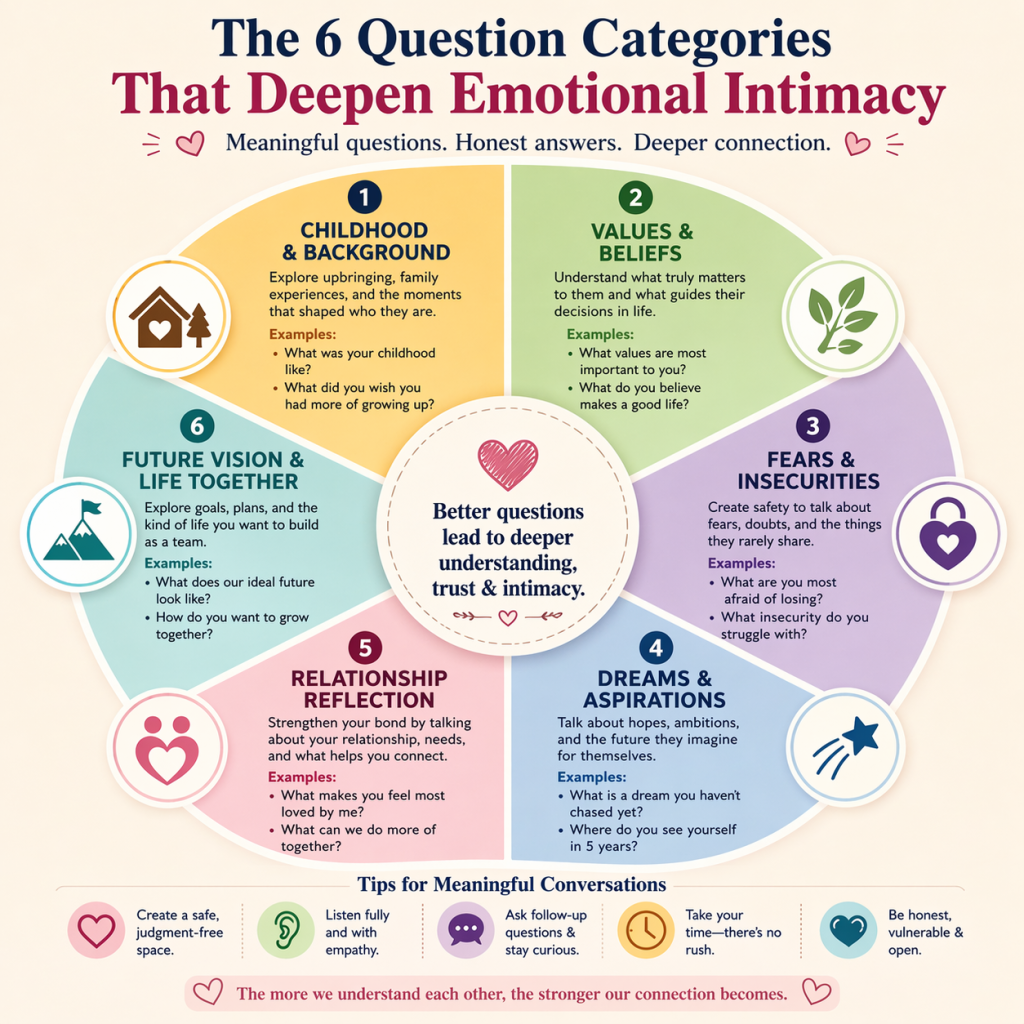
Questions to Build Emotional Intimacy
Here are some questions to build emotional intimacy:
- What does trust mean to you?
- How do you react when someone breaks trust?
- What experiences shaped who you are?
- When do you feel vulnerable?
- What helps you to be open emotionally?
- What are you working on in yourself?
- How do you want to be supported during challenging times?
- What mistakes taught you to be yourself?
- How do you process emotions?
- What does emotional safety look like to you?
- What do people usually misunderstand about you?
- How do you handle stress in life?
- What past experiences are affecting your life today?
- What does forgiveness mean to you?
- What makes you feel emotionally secure?
- When do you feel that you’re misunderstood?
- What’s something you don’t usually share with others?
- How do you rebuild trust?
- What helps you to feel safe with someone?
Future and Life Direction
- What does your ideal life look like in five years?
- What dreams do you have?
- How do you balance work and life?
- What does family look like to you?
- What kind of home do you want?
- How do you imagine your future relationship?
- What is financial security to you?
- Where do you plan to live in the long-term?
- How do you grow as a person?
- What are you passionate about?
- What’s something you would want to experience together?
- How do you balance independence and partnership?
- What are some traditions that matter to you?
- What does partnership mean to you?
- How do you make big life decisions?
- What does success mean to you?
- What kind of lifestyle do you want in the long-term?
- How important is stability to you?
- What makes you want to keep growing?
- What kind of adventure excites you?
Values and Personal Growth
- What’s the biggest lesson life has taught you?
- How have your priorities changed?
- What beliefs have you changed about?
- How important is personal growth?
- What’s your strongest quality?
- What do you want to improve?
- What makes you feel like your real self?
- What family patterns would you change?
- How do you handle differences?
- What gives you meaning in life?
- How do you want to be remembered?
- What are you working on improving?
- How do you support growth in your relationships?
- What challenges changed your mindset?
- What makes you decide things?
- What inspires you to be better?
- How do you deal with failure?
- What does personal fulfillment mean?
Love and Emotional Connection
- What makes you feel most loved?
- How do you show love?
- What small things matter most to you?
- How do you want to be comforted?
- What’s your strongest memory of love?
- How do you deal with disagreements?
- What kind of affection do you like?
- How do you celebrate meaningful times?
- What does quality time mean to you?
- How do you like to get feedback?
- What makes you feel disconnected from someone?
- How do you show someone you care?
- What support feels meaningful?
- How do you reconnect after there’s a distance?
- What does emotional presence look like?
Conflict and Emotional Resilience
- How was conflict handled in your family?
- What’s the first reaction you have to criticism?
- How should someone come to you when you’re upset?
- What helps you to calm your emotions?
- What does an apology mean to you?
- How do you handle disagreements?
- What’s your biggest fear in a relationship?
- Do you prefer space or immediate resolution?
- What helps you feel understood during disagreements?
- How do you repair your relationship after an argument?
Final Thoughts: Growing Emotional Intimacy
You can grow emotional intimacy by being curious, putting in effort, and having meaningful communication. This isn’t about asking every question, but about asking the right questions at the right time.
Start by asking one question, then stay present and listen to what your partner says. The best kind of relationship doesn’t resist deep questions; it grows stronger because of them.
Frequently Asked Questions
1. What is emotional intimacy in a relationship?
Emotional intimacy is the feeling of being deeply known, understood, accepted, and emotionally safe with your partner. It grows when both people can share their thoughts, feelings, fears, hopes, and personal truths without feeling judged or dismissed.
2. Why do questions help build emotional intimacy?
Thoughtful questions invite honesty, vulnerability, and deeper understanding. Instead of staying on the surface, they help couples explore what truly matters to each other, which can strengthen trust and create a stronger emotional bond over time.
3. Can asking the right questions really improve a relationship?
Yes. Meaningful questions can open conversations that might not happen otherwise. They help couples learn more about each other’s inner world, which often leads to greater empathy, closeness, and emotional connection.
4. What kinds of questions deepen emotional intimacy the most?
The most powerful questions usually explore feelings, memories, fears, needs, values, dreams, relationship experiences, and hopes for the future. These topics help partners move beyond small talk and into more emotionally meaningful conversations.
5. Is emotional intimacy different from physical intimacy?
Yes. Emotional intimacy is about closeness through understanding, trust, and vulnerability, while physical intimacy involves touch and sexual connection. The two often influence each other, but emotional intimacy can grow through conversation even without physical contact.
6. When is the best time to ask deep relationship questions?
The best time is usually when both partners are calm, present, and not distracted. Deep questions tend to work better during quiet, comfortable moments rather than in the middle of stress, conflict, or emotional shutdown.
7. Should couples ask deep questions every day?
Not necessarily, but regular emotional check-ins can be very helpful. Some couples enjoy asking one thoughtful question a day, while others prefer setting aside time once or twice a week for deeper conversation.
8. What if my partner is not comfortable opening up right away?
That is normal. Emotional intimacy usually grows gradually, not instantly. It helps to start with gentler questions, listen without pressure, and create a safe space where your partner feels respected instead of pushed.
9. Can emotional intimacy be rebuilt after distance?
Yes. Many couples rebuild emotional intimacy by slowing down, becoming more intentional, asking meaningful questions, listening more carefully, and showing consistent emotional presence. Repair often begins with small moments of honesty and safety.
10. What should I avoid when asking deep questions?
Avoid asking in a way that feels like an interrogation, debate, or trap. It also helps to avoid interrupting, judging, dismissing feelings, or turning vulnerable answers into criticism later. The goal is connection, not control.
11. How can I make my partner feel safe answering vulnerable questions?
You can make your partner feel safer by listening calmly, showing empathy, avoiding quick judgment, and giving them time to think. A gentle tone and genuine curiosity often make a deeper conversation feel much more inviting.
12. Can emotional intimacy questions help new couples too?
Yes. These questions can help new couples learn about each other more meaningfully and build a strong foundation early on. They can also help long-term couples reconnect by exploring things they may have stopped asking about over time.
13. What if a deep question leads to an emotional conversation?
That can be a healthy sign. Emotional intimacy often grows when people feel safe enough to be honest about sensitive feelings. The key is to stay present, listen with care, and avoid rushing to fix or shut down the emotion too quickly.
14. Can deep questions help couples communicate better overall?
Yes. They encourage more intentional listening, more thoughtful responses, and more openness. Over time, this can improve everyday communication because both partners become more aware of each other’s feelings, perspectives, and emotional needs.
15. Are fun questions still useful for intimacy?
Absolutely. Fun questions can create warmth, laughter, and comfort, which also support closeness. Emotional intimacy does not always have to feel heavy. Lighthearted questions can make deeper connection feel easier and more natural.
16. What if we do not always agree on the answers?
Agreement is not the main goal. Understanding is. Emotional intimacy grows when partners can share honestly and still feel respected, even when their feelings, memories, or perspectives are different.
17. How long does it take to deepen emotional intimacy?
It depends on the relationship, the level of trust, and how consistently both people show up with openness and care. For some couples, connection deepens quickly. For others, it grows more slowly through repeated safe and meaningful conversations.
18. Can emotional intimacy questions help during difficult relationship seasons?
Yes, if they are asked gently and with real care. During difficult seasons, thoughtful questions can help couples reconnect with each other’s feelings, understand what has changed, and create space for honesty and repair.
19. What are the signs that emotional intimacy is growing?
Signs often include feeling safer together, having more open conversations, sharing more personal thoughts, feeling more understood, showing more empathy, and experiencing a stronger sense of trust and closeness in the relationship.
20. What is the first step to using intimacy questions well?
The first step is asking with sincerity. Choose one thoughtful question, create a calm space, listen fully, and stay curious about the answer. The real power is not just in asking the question, but in how lovingly the conversation is held.




This is good. I like the list and how it feels simple to start. I can ask my partner one question each day and not overwhelm anyone. Small steps build trust and make sharing easier over time. Thanks for making these ideas feel doable and kind. 😊
Surprised by how many thoughtful questions there are—plenty to keep a couple busy for months in the best way! I’ll start with something easy like “what makes you feel most loved” and work up to the tougher ones later. Positive, hopeful advice that feels manageable and kind. Nice compilation! 😄
As someone who coaches couples, I can say these strategies are spot on. Integrating regular check-ins and normalizing vulnerability reduces shame around difficult topics. Encourage partners to name when they need pause or space, then return to the conversation with curiosity. Consistent practice builds sustainable intimacy, clearer boundaries, and a shared sense of responsibility. 🏅
This article is nice and simple, exactly what I needed. I like how it reminds people to be vulnerable and ask questions without overthinking. I plan to share one thing I usually keep quiet and then ask my partner a related question back. Hoping it helps us feel closer and more understood. 😊
This post is so helpful and uplifting! I never thought to bring up some of these deeper questions, but they seem like they could really change things for the better. I’m going to pick three to ask over coffee this week and see how our talk goes—excited and a little nervous in a good way. ✨
Really appreciate this guide—practical and kind. Asking thoughtful questions like these can reshape how partners listen to each other and handle conflict, creating a steadier future. I plan to try a couple this week during a quiet walk and see how our conversation deepens. Thank you for the prompts! 😊
This list makes me smile—simple steps that really matter. I love the idea of asking what makes someone feel loved and safe because it feels doable to start tonight and doesn’t need to be heavy. Small talks that go deeper can change how close you feel, and I’m excited to try a few with my partner. 😊
I appreciate the emphasis on creating a calm, distraction-free space. In my experience, even turning phones off for thirty minutes can change the tone of a conversation dramatically. These questions are great prompts to slow down, listen more closely, and invite thoughtful sharing that strengthens trust over time. 🌿
What a lovely collection of questions—so many feel tender and encouraging. I can picture cuddling on the couch and gently asking one, then listening with my whole heart. Little rituals like this keep love alive and make ordinary evenings feel special. These prompts are a sweet way to deepen connection. 🥰
The way this piece ties vulnerability to long-term compatibility is insightful and encouraging. I especially appreciated the future-oriented prompts about values and life direction; they help couples align emotionally and practically. These conversations can act as a compass for shared decision-making and sustained growth—definitely bookmarking this to revisit. ✨
This article captures an important truth about relational growth: emotional intimacy is cultivated, not accidental. The emphasis on creating safe spaces and allowing pauses resonates deeply, since complex feelings often require reflection. The practical question prompts offer a scaffold for curiosity and honest exchange that can transform everyday interactions into meaningful connection.
Such useful advice! I especially value the reminder not to follow a script and to let curiosity lead the conversation. That makes exchanges feel authentic instead of staged. Trying a few of these in relaxed moments might help couples open up more often and learn how to support each other with honesty and kindness. 💖
I love the pragmatic framing here. From a psychological perspective, these inquiry-based practices facilitate reflective functioning and can enhance attachment security when practiced consistently. Pairing thoughtful questions with active empathetic listening creates a feedback loop that strengthens mutual understanding and resilience. A wonderful resource for intentionally building relational depth. 🧠