

Can You Find a Soulmate?
Many people wonder if it is possible for them to find a soulmate, and if the answer is yes, how do they know if they have found one? These are the kinds of questions that people have been asking for years, blending personal beliefs with romance and psychology.
While some think that a soulmate is someone who perfectly completes their life, real-life relationships show that love evolves over time. Instead of love just happening fast, love is often shaped by growth, shared experiences, and the way people show up for each other as time goes on.
The Powerful Idea of a Soulmate
Most people can remember how exciting their first crush felt. That was an intense emotional pull that also added a familiarity that felt like destiny. Even adults have the desires to:
- Be chosen.
- Feel understood.
- Have lasting emotional safety.
These are human desires, and they usually decide how people approach relationships. The problem is that having early feelings can sometimes create unrealistic expectations. When the intensity of the relationship starts to fade, some people start wondering if they picked the right person. Instead of looking at the relationship as a chance to grow, they look at it as an initial attraction that they think should not fade.
What a Soulmate Really Means
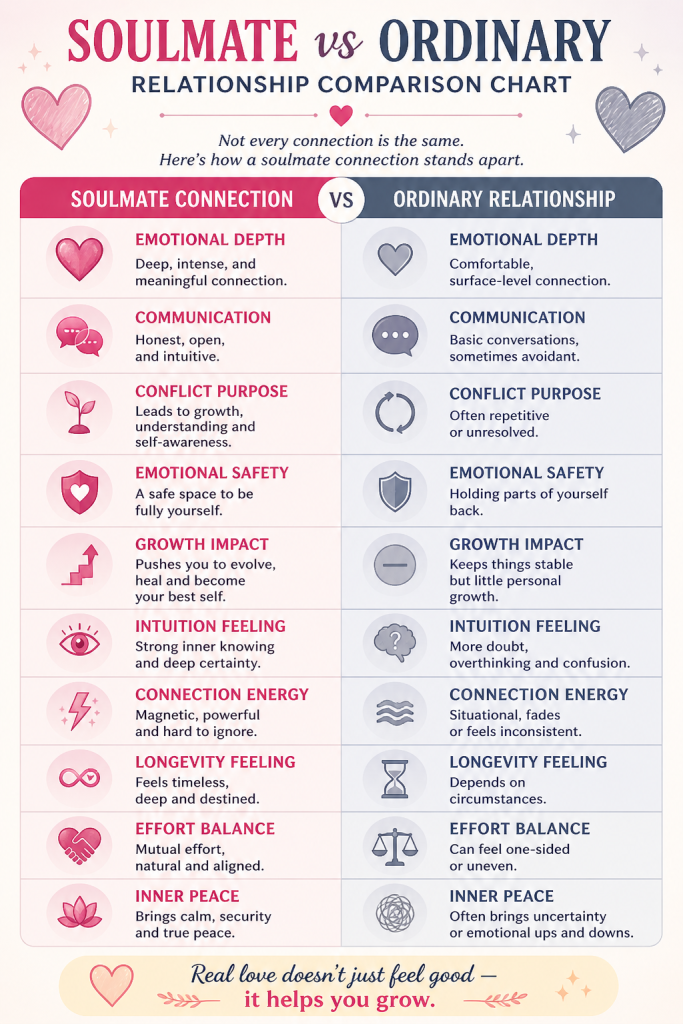
The traditional idea behind the soul mate tells us that there’s just one perfect person meant to be with you forever. The problem is that this belief creates pressure and disappointment when reality doesn’t match this idea.
Instead of trying to find the perfect person, changing the way that you look at a soul mate might be more important. This could be someone who:
- You grow over time.
- Someone who accepts you for who you are.
- Someone who wants to live life with you.
A good relationship isn’t about finding someone perfect; it’s about creating a meaningful life together, even through imperfections. By looking at love this way, it allows room for mistakes, change, and growth, which are important for long-term commitments.
The Perfect Partner Mindset
Some people have a checklist of what they think their ideal partner should be. This mental template can create unrealistic expectations that no person can meet. When reality doesn’t meet this, it creates:
- Disappointment.
- Doubts.
As time goes on, this mindset can stop people from appreciating the partner they have. By learning to change your expectations and seeing what a real partner is, people can move toward deeper and more sustainable love.
3 Phases of Finding a Soulmate
The Three Phases of Soulmate Love
Love isn’t something that stays the same, but it changes as the relationship grows. Understanding the different phases can help you figure out where you are and what your relationship might need next.
1. The Beginning Phase: “This has to be my person.”
This is the stage where everything feels exciting and almost unreal in a good way. The connection feels strong right away, and being around each other feels easy and natural.
During this phase, you might notice that:
- Attraction feels strong and immediate.
- You focus more on what you have in common than what’s different.
- The relationship feels effortless and light.
It can feel like everything just fits without trying.
But this stage doesn’t last forever. As time goes on, the newness fades a little, and you start to see the relationship more clearly.
2. The Adjustment Phase: “Wait, is this actually going to work?”
This is where things start to feel more real. Life settles in, routines take over, and the relationship isn’t just about excitement anymore.
You might notice things like:
- Things don’t feel as spontaneous as before.
- Daily responsibilities start to take more of your attention.
- Differences between you become more noticeable.
This stage can feel confusing or even discouraging, especially if you’re expecting things to always feel like they did at the beginning. But this is actually an important point in the relationship.
This is where you move from just feeling something to actually building something. The way you both handle this phase makes a big difference in what comes next.
3. The Deeper Connection Phase: “We’ve built something real.”
If you work through the harder parts together, the relationship usually shifts into something steadier and more meaningful.
In this phase, you might feel things like:
- The connection feels more stable instead of intense.
- You support each other’s growth, not just the relationship itself.
- There’s a stronger sense of trust and emotional security.
It’s not about constant excitement anymore, but it’s about knowing you can rely on each other. This is where love becomes more intentional. It’s built through shared experiences, consistency, and mutual respect.
Why Love Changes as Time Goes On
As time goes on, things in the relationship change, such as the excitement, passion, and emotional intensity. Things like career changes, family responsibilities, and personal growth can also influence how people connect with each other.
When these things happen, it doesn’t mean something’s wrong. It just means the relationship is changing. By understanding this, couples can avoid misinterpreting these regular changes as a sign of incompatibility. They can then focus on growing together in different life stages.
What is a Soulmate?
Instead of just focusing on finding the perfect person, think of the qualities that keep a relationship strong as time goes on, such as:
- Shared commitments.
- Being able to reconnect after challenges and conflicts.
- Mutual respect.
- Understanding.
- The willingness to grow together.
- Emotional support when times are hard.
These things help create a foundation that lets love get deeper even when life is challenging. As time goes on, they become more important than having initial attraction or surface-level compatibility.
Becoming a Team
One important part of a relationship becoming a lasting relationship is when couples go from having an individual mindset to a shared one. This can include things like:
- Putting the relationship as a partnership.
- Supporting each other’s goals.
- Working through challenges together.
When both partners work on contributing to the relationship instead of just receiving, the relationship is more balanced and stronger. This change can be a transition from having a fast attraction to creating everlasting love.
Can Being a Soulmate Happen Over Time?
One idea that some people have is that soulmates aren’t just found, but they’re created. This happens when two people:
- Grow together through challenges.
- Invest in the relationship.
- Pick each other consistently.
When these things happen, a bond is created that is deeper than just a transaction. This kind of connection doesn’t come from a sudden spark, but from something meaningful and lasting.
Final Thoughts: Finding a Soulmate
Your partner won’t be perfect, even if they’re your soulmate. What matters in a relationship is showing up for each other and how you grow together through life and through challenges. As time goes on, love is less about finding a person who completes you and more about building a meaningful life together.
If you look at things this way, a soulmate isn’t someone you find, but someone you become. It shows a connection that happens through effort, commitment, and shared experiences. This kind of connection is just as powerful as the idea of destiny alone.
Frequently Asked Questions
1. How do you know if your partner is truly your soulmate?
You may feel a deep emotional connection, strong trust, natural comfort, and a sense that the relationship helps you grow. A soulmate connection often feels meaningful, but it should also feel respectful, safe, and emotionally balanced.
2. Can a soulmate relationship still have problems?
Yes. A soulmate relationship is not perfect. Even strong connections can face misunderstandings, stress, timing issues, and conflict. The difference is that both people are usually willing to grow, communicate, and repair the relationship.
3. Is a soulmate always romantic?
No. A soulmate can be romantic, but soulmates may also appear as close friends, family members, mentors, or people who deeply influence your life path.
4. What does a soulmate connection feel like?
It often feels familiar, peaceful, emotionally intense, and meaningful. You may feel understood, accepted, and drawn to the person in a way that feels different from ordinary attraction.
5. Can you have more than one soulmate?
Many people believe you can have more than one soulmate. Different soulmates may enter your life for different reasons, such as love, healing, friendship, growth, or spiritual lessons.
6. Is instant chemistry a sign of a soulmate?
Instant chemistry can be one sign, but it is not enough on its own. True soulmate energy should also include emotional safety, respect, consistency, and mutual effort.
7. What is the difference between a soulmate and a toxic attachment?
A soulmate connection should help you feel supported and respected, even during challenges. A toxic attachment often creates confusion, anxiety, control, emotional highs and lows, or a feeling that you are losing yourself.
8. Do soulmates always stay together forever?
Not always. Some soulmate relationships last a lifetime, while others come into your life to teach lessons, encourage healing, or help you grow before each person moves forward separately.
9. Can a soulmate relationship begin as friendship?
Yes. Many soulmate relationships begin as friendship. Emotional trust, shared values, and deep understanding can slowly develop into a romantic bond over time.
10. How important is timing in a soulmate relationship?
Timing can be very important. Two people may have a deep connection, but the relationship still needs emotional readiness, maturity, and life circumstances that allow the bond to grow in a healthy way.
11. Can your intuition tell you someone is your soulmate?
Intuition can play a role. You may feel a strong inner knowing or unusual comfort with the person. However, intuition should be balanced with real-life signs such as trust, kindness, consistency, and shared effort.
12. What are common signs of a soulmate bond?
Common signs include emotional comfort, honest communication, shared growth, strong attraction, deep trust, similar values, meaningful coincidences, and the feeling that the connection has a purpose.
13. Can soulmates break up and come back together?
Yes, some soulmates reconnect after time apart. However, a reunion is healthiest when both people have grown, taken responsibility, and are ready to build a better relationship.
14. Does a soulmate make you feel calm or excited?
A soulmate may make you feel both. There can be excitement, chemistry, and passion, but there should also be calm, safety, and emotional grounding.
15. Is jealousy normal in a soulmate relationship?
Some insecurity can happen in any relationship, but constant jealousy is not a healthy soulmate sign. A strong connection should encourage trust, honest conversation, and emotional security.
16. How do soulmates handle conflict?
Soulmates may still argue, but they usually try to understand each other instead of trying to win. Healthy conflict includes listening, accountability, repair, and a willingness to grow together.
17. Can a soulmate challenge you?
Yes. A soulmate can challenge you by helping you see old patterns, fears, or emotional wounds. The relationship should inspire growth without making you feel unsafe, controlled, or constantly hurt.
18. What if I am unsure whether my partner is my soulmate?
Uncertainty is normal. Pay attention to how the relationship feels over time. Look for consistency, emotional safety, mutual respect, shared values, and whether both of you are growing together.
19. Can a psychic reading help with soulmate questions?
A psychic reading may help you reflect on your feelings, relationship patterns, timing, and emotional clarity. It should be used as guidance, not as a replacement for your own judgment or healthy communication.
20. What is the strongest sign that someone is your soulmate?
One of the strongest signs is that the relationship feels deeply meaningful while also helping you become more honest, loving, and self-aware. A true soulmate connection should feel both powerful and healthy.




This article makes me happy and hopeful. I think finding someone who cares and grows with you is really good. Love can start fun and then get deeper when you help each other, stay kind, and keep choosing each other. 😊
I appreciated the way the piece explained how soulmate ideas change over time. Expecting perfection will only lead to disappointment, so focusing on growth, trust, and everyday care makes sense. This helped me rethink what lasting love looks like. ❤️
This piece is nice and calming to read. I liked the reminder that nobody is perfect and that being a soulmate is more about showing up every day. Small things, like listening and kindness, build trust and real closeness. ✨
This helped me feel hopeful about how love can grow when both people try. It’s good to remember that messy times don’t mean failure; they can be chances to learn about each other and become partners who care and stick together. 🌸
I agree, Cinnamon — the idea of growth over time is so comforting. When both people commit to listening and small acts of care, the relationship develops resilience. Those everyday choices accumulate into a deep, dependable partnership. So reassuring! 💕
I appreciated the balanced treatment here; distinguishing instantaneous chemistry from the labor of bonding is important. The emphasis on repair, mutual accountability, and shared projects reframes soulmate discourse into relational ethics, which feels more actionable and compassionate in practice. 🌟
Great point — seeing soulmate connections as something we cultivate makes relationship work feel meaningful instead of burdensome. The three phases idea is practical: it gives language for normal shifts and encourages patience, forgiveness, and steady effort. Well said! 🌈
The essay elegantly disentangles myth from practice by proposing that soulmate relationships are less metaphysical predestination and more an accrued relational art. This reframing invites ethical commitment, reflective responsiveness, and enduring reciprocity as central criteria for discerning a genuinely transformative partnership. 💫
As someone who thinks about relationships a lot, I appreciated the practical focus on repair, mutual responsibility, and the normalcy of changing feelings. These points reduce shame and encourage skills like active listening and boundary-setting, which really help couples transition between phases. 👍
Wow, this made me smile and hopeful. I like the idea that soulmates can be made, not just found. If you keep being kind, talking, and helping each other, love grows into something strong and nice for a long time. 😊
This article felt realistic and encouraging. I especially liked the three-phase idea — beginning, adjustment, deeper connection — which makes it easier to accept ups and downs as part of building something meaningful. With patience and communication, true partnership can grow. 🌿
I found the perspective here both thoughtful and pragmatic; reframing soulmate notions from destiny to cultivated companionship reduces unrealistic expectations while honoring emotional depth. Emphasizing mutual growth, repair after conflict, and shared values provides a sustainable blueprint for lifelong intimacy. ✨