

Why Passion Can Change Over Time
Passion can change for many reasons, including routine, stress, caregiving, health, medication, unresolved conflict and changing needs. Some couples notice that conversations become focused mostly on tasks and that emotional or physical closeness receives less attention.
Partners can still care deeply about each other while feeling less excitement or closeness than before. For some couples, giving more intentional attention to affection, novelty and communication can help; for others, the underlying issue may involve health, resentment, incompatibility or a difference in desire that needs a different response.
Passion Can Fade
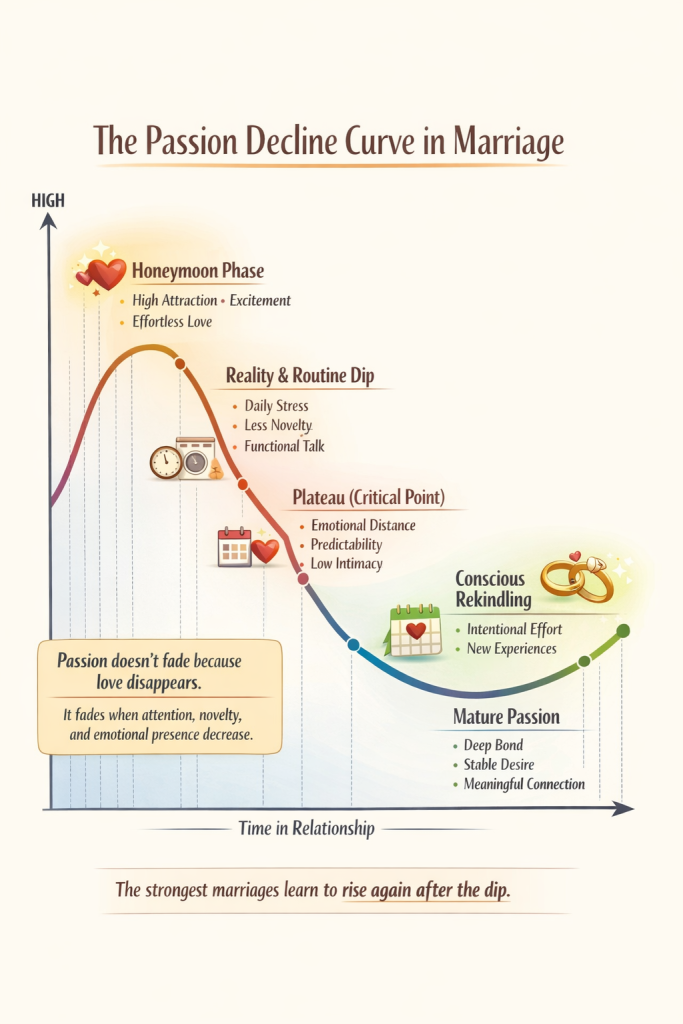
Early relationships can include novelty and strong attraction, but experiences vary widely. Over time, couples may develop interaction patterns that affect closeness. One commonly discussed pattern is:
Pursuer-Distancer Pattern
This is a common thing in relationships that struggle:
- One partner wants more intimacy or closeness.
- The other partner becomes distant or pulls away.
This creates a cycle where:
- The more one partner pushes, the more the other partner withdraws.
- The more one partner withdraws, the more the other pushes.
This kind of pattern can cause emotional and physical intimacy to fade.
Emotional Intimacy Is Important
A relationship that is fulfilling has a strong emotional connection. Without emotional safety, closeness, or trust, though, the physical intimacy gets less. Here is what makes emotional intimacy stronger:
- Listening without being defensive.
- Being able to express needs clearly.
- Having empathy and understanding.
- Turning towards your partner instead of moving away from them.
As emotional connection improves, physical closeness may feel easier for some couples, but desire varies with stress, health, medication, relationship history and individual preference. Emotional intimacy should not be treated as a guarantee of sexual desire.
10 Ways to Bring Passion Back into Your Marriage
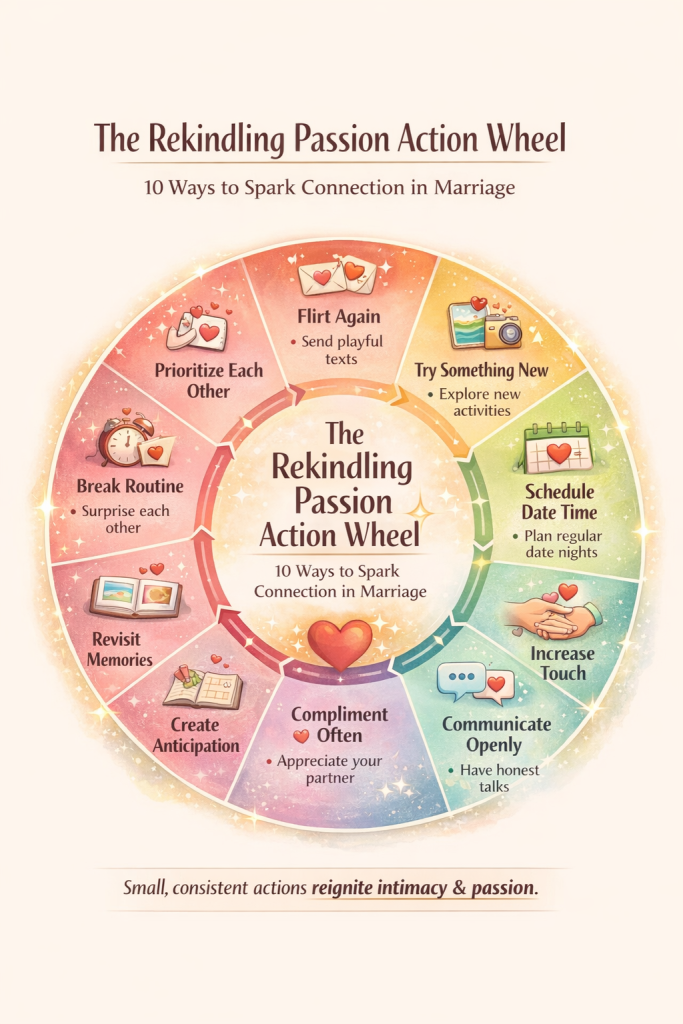
Here are 10 ways to bring passion back into your marriage:
1. Break the Usual Intimacy Pattern
If things have started to feel one-sided or tense, it might be time to shift how you approach each other.
• If you usually pursue, try softening your approach.
• If you tend to pull back, try initiating more often.
Changing the pattern can reduce pressure and create a new kind of energy between you.
2. Offer More Affectionate Touch—When It’s Welcome
Affectionate touch can support closeness for some couples when both people want it. Ask, notice your partner’s response and do not treat touch as an obligation or a guaranteed route to sexual intimacy. RAINN’s consent guidance emphasizes clear, voluntary, ongoing agreement and respect for boundaries.
• Hold hands.
• Hug a little longer.
• Sit closer together.
• Show small signs of affection.
A simple touch may feel connecting or relaxing when it is welcome; if a partner does not want touch at that moment, respect the boundary.
3. Let the Moment Build Naturally
Passion doesn’t always need to be rushed. Sometimes it’s better when it builds over time.
• Slow things down.
• Flirt throughout the day.
• Let emotional and physical connection grow gradually.
Excitement and anticipation can make everything feel more meaningful.
4. Protect Some Time From Logistics—Without Avoiding Problems
It can help to protect some shared time from daily stress and logistics. That does not mean avoiding necessary conversations; address important problems directly, then create separate time for connection when possible. During that connection time, consider reducing:
• Talking about chores in that moment.
• Bringing up problems right before connecting.
• Letting distractions take over.
A calmer environment may make it easier for some couples to be present with each other.
5. Spend Intentional Time Together
Connection grows when you make time for each other outside of routine. Try these things:
• Planning date nights.
• Doing activities together.
• Trying something new.
Shared experiences can add attention, novelty and opportunities to reconnect, though they do not guarantee physical desire.
6. Don’t Overlook Simple Affection
Not all physical touch needs to lead to something more.
• Give a quick massage.
• Rest your hand on your partner.
• Sit close while talking.
These small moments can rebuild comfort without pressure.
7. Open Up More Emotionally
Emotional connection plays a big role in physical closeness. Try sharing things like:
• Your thoughts.
• Your wants and needs.
• Your fears.
• What you’re feeling emotionally.
When both partners feel safe being open, honest conversation may support a deeper sense of connection. A meta-analysis of 93 studies found that sexual communication was positively associated with both relationship and sexual satisfaction, with communication quality showing stronger associations than frequency; this does not mean disclosure or intimacy should ever be pressured.
8. Stay Interested in Each Other
Even in long-term relationships, people continue to grow and change.
• Ask new questions.
• Learn about new interests.
• Stay curious about who your partner is becoming.
This can help a long-term relationship feel less automatic or predictable.
9. Switch Things Up a Little
Doing the same thing over and over can make things feel routine.
• Try a different setting.
• Explore new ways to connect.
• Adjust as your needs change.
Small changes can bring back excitement and interest.
10. Make Connection a Real Priority
It’s easy for intimacy to get pushed aside with everything else going on. Instead, try these things:
• Set aside intentional time together.
• Create a comfortable or relaxing environment.
• Treat connection as something important.
When you prioritize it, it shows your relationship still matters.
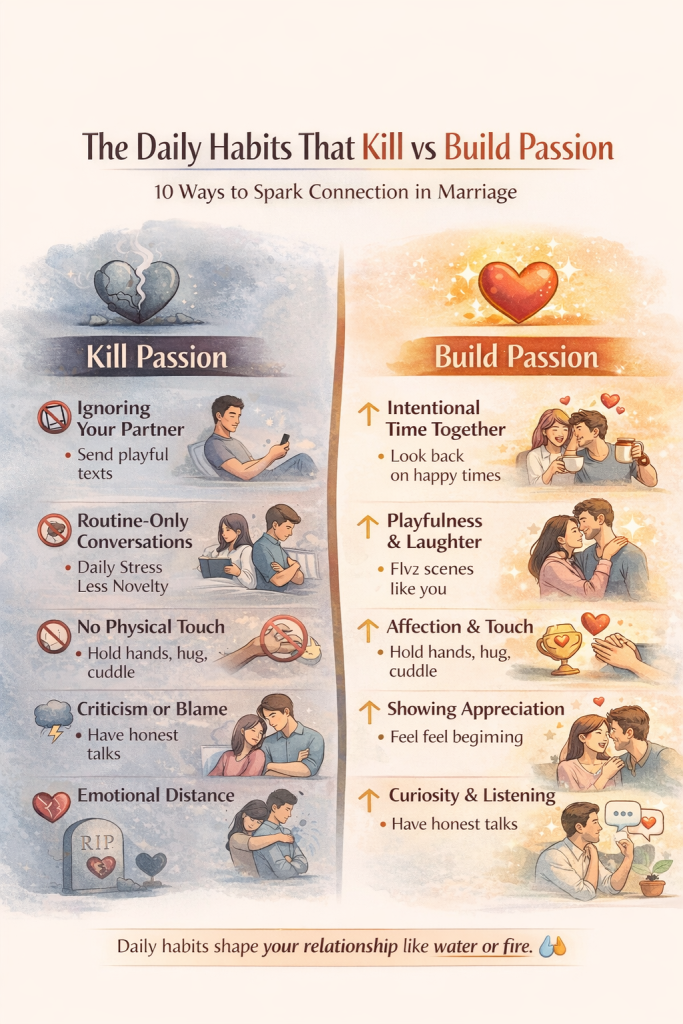
The Truth About Passion
Passion isn’t just about being attracted to each other, but it comes from:
- Friendship.
- Trust.
- Emotional safety.
- Effort.
These qualities can support closeness, but passion and sexual desire still vary over time and are influenced by many individual and relationship factors.
Final Thoughts: Losing Passion
Changes in passion are common. Some couples can rebuild closeness or excitement through mutual effort, communication and practical changes, while others may discover a health issue, unresolved conflict, different desire levels or deeper incompatibility that needs separate attention.
The goal is not to recreate the earliest stage of the relationship. It is to understand who both partners are now and decide together what kinds of closeness, affection and intimacy feel meaningful and sustainable.
Frequently Asked Questions
Why can passion change in a long-term marriage?
Routine, stress, caregiving, health, unresolved conflict and changing needs can all affect emotional or physical closeness.
Can passion come back after it fades?
Sometimes. Reconnection is more likely when both partners want to participate and address the factors creating distance.
Does affectionate touch always need to lead to sex?
No. Hugs, hand-holding and other touch can be meaningful on their own and should remain consensual.
What if one partner wants more intimacy than the other?
Talk about the difference without pressure. Desire can be affected by stress, health, medication, relationship dynamics and individual preferences.
Can novelty help a marriage feel more connected?
New shared experiences can add attention and playfulness, but novelty cannot substitute for resolving resentment, unfair workloads or broken trust.
Is emotional intimacy the same as sexual intimacy?
No. They can influence each other, but a strong emotional bond does not create an obligation or guarantee of sexual desire.
When can couples counseling help?
If both partners feel safe and want to improve the relationship but keep repeating the same patterns, couples counseling may provide useful structure.
What if the relationship is unsafe?
Threats, coercion, stalking or violence are not passion problems. Prioritize safety and appropriate support rather than intimacy exercises.


