

One question people often ask about relationships is what women really want. The truth is that many women are open about their emotional needs, but misunderstandings happen because people communicate and process emotions differently. What feels supportive to one person may feel emotionally distant to another.
In some relationships, men deeply care about their partners but respond in ways that unintentionally leave women feeling alone, unheard, or misunderstood.
For example, when a woman shares a frustrating experience, she may not always want an immediate solution. Instead, she may want:
- Emotional understanding.
- Validation.
- Reassurance.
- Emotional presence.
- Genuine listening.
Different communication styles can create frustration for both partners when those differences are misunderstood.
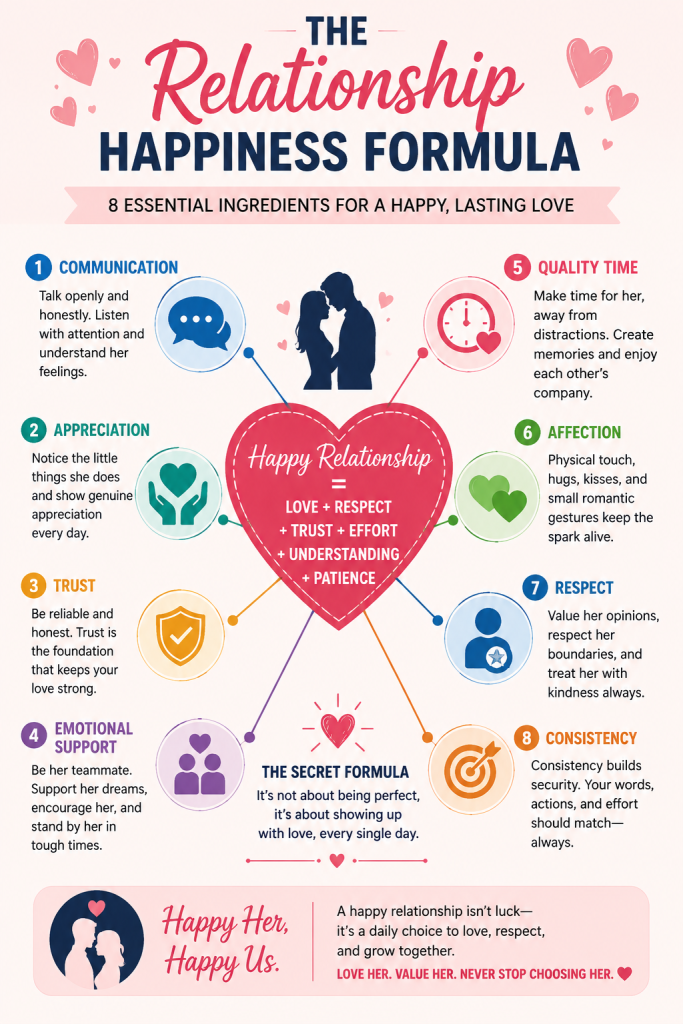
Healthy relationships are not about perfection. They are about emotional awareness, effort, trust, connection, and open communication.
Here are 14 relationship tips that can help create a happier and stronger relationship.
1. Listening Matters More Than Immediately Fixing Things
One of the biggest relationship misunderstandings happens when someone shares emotions, and the other person immediately switches into problem-solving mode.
Many women feel emotionally supported when they feel:
- Heard.
- Understood.
- Emotionally acknowledged.
- Fully listened to.
Sometimes sharing emotions is not about instantly fixing the situation. Sometimes it is simply about feeling emotionally connected and understood.
Healthy listening may involve:
- Making eye contact.
- Staying emotionally present.
- Not interrupting.
- Asking thoughtful questions.
- Listening calmly without rushing.
Questions like these can create a stronger emotional connection than simply offering fast solutions:
- “How did that make you feel?”
- “What upset you the most?”
- “What do you need from me right now?”
2. Emotional Safety Is Extremely Important
Many women want to feel emotionally safe in their relationships. Emotional safety may involve:
- Feeling respected.
- Feeling emotionally supported.
- Being able to express emotions openly.
- Knowing vulnerability will not be mocked or dismissed.
- Feeling emotionally secure during conflict.
People usually become more emotionally open when they feel emotionally safe instead of emotionally judged.
3. Consistency Builds Emotional Trust
Trust is usually built through consistency over time. This may involve:
- Keeping promises.
- Being emotionally dependable.
- Communicating honestly.
- Following through on commitments.
- Staying reliable during stressful times.
Consistency helps relationships feel emotionally stable instead of emotionally unpredictable.
4. Attention and Presence Matter More Than People Think
Small behaviors often communicate emotional importance in relationships.
Things like these can make someone feel unimportant, even if it is unintentional:
- Looking at your phone constantly.
- Half-listening.
- Multitasking during conversations.
- Dismissing concerns too quickly.
Giving your undivided attention often communicates:
- “You matter to me.”
- “I care about what you’re feeling.”
- “You’re important to me.”
Presence usually strengthens emotional intimacy more than people realize.
5. Appreciation Should Be Expressed Regularly
Many people quietly crave appreciation within relationships.
Simple statements can strengthen emotional connection dramatically over time, including:
- “I appreciate you.”
- “Thank you for everything you do.”
- “I notice how hard you try.”
- “You make my life better.”
Feeling emotionally valued can reduce resentment and help people stay emotionally connected.
6. Open Communication About Intimacy Matters
Physical intimacy usually becomes healthier when couples communicate honestly about:
- Attraction.
- Emotional needs.
- Boundaries.
- Preferences.
- Comfort levels.
- Emotional connection.
Many couples avoid these conversations because they feel awkward or emotionally vulnerable, but healthy communication often improves intimacy significantly.
7. Emotional Connection Often Strengthens Attraction
For many women, attraction is strongly connected to emotional closeness and emotional context.
Feeling emotionally supported, appreciated, relaxed, connected, and desired outside the bedroom often strengthens physical intimacy naturally.
Small emotional moments can build attraction too, including:
- Flirting.
- Compliments.
- Affection.
- Shared laughter.
- Emotional support.
- Thoughtful gestures.
Emotional intimacy and physical intimacy often work closely together.
8. People Want to Feel Emotionally Important
Most people want to feel like they genuinely matter to their partner emotionally.
This may involve:
- Making time for the relationship.
- Emotionally checking in regularly.
- Prioritizing important conversations.
- Sharing meaningful experiences together.
- Being emotionally available during difficult times.
Relationships often weaken when someone consistently feels placed behind work, stress, distractions, or outside priorities.
9. Avoid Minimizing Emotions
Many people unintentionally dismiss emotions when emotional intensity makes them uncomfortable.
Statements such as these can create emotional distance and make a partner feel invalidated instead of safe:
- “You’re overreacting.”
- “You’re too sensitive.”
- “It’s not a big deal.”
Healthy couples usually try to understand emotions before judging them. Even when people do not fully agree, emotional validation still helps partners feel respected and emotionally safe.
10. Vulnerability Creates Deeper Emotional Intimacy
Strong relationships are usually built through emotional openness and honesty.
Healthy vulnerability may involve:
- Admitting fears.
- Expressing insecurities.
- Saying “I’m sorry.”
- Asking for reassurance.
- Communicating emotional needs honestly.
Vulnerability often creates a much deeper emotional connection than defensiveness or emotional withdrawal.
11. Small Daily Habits Shape Relationships Over Time
Relationship happiness is often shaped more by small daily interactions than occasional dramatic gestures.
Healthy habits may include:
- Hugging goodbye.
- Sending thoughtful messages.
- Asking about each other’s day.
- Spending device-free time together.
- Saying thank you.
- Showing affection consistently.
Small emotional investments repeated consistently often build a strong long-term emotional connection.
12. Every Woman Has Different Emotional Needs
Every person experiences love, connection, and emotional support differently.
Some women may value:
- Quality time.
- Affection.
- Verbal reassurance.
- Emotional depth.
- Independence.
- Shared experiences.
- Practical support.
Healthy relationships usually become stronger when people stop assuming and start asking questions instead.
Helpful questions may include:
- “What helps you feel loved?”
- “What makes you feel emotionally connected?”
- “What kind of support means the most to you?”
Curiosity often strengthens intimacy significantly.
13. Relationships Feel Stronger When Couples Work as a Team
Healthy relationships usually work best when couples approach life together instead of acting like emotional opponents.
Strong couples often focus on:
- Solving problems together.
- Supporting each other emotionally.
- Sharing responsibilities fairly.
- Communicating respectfully.
- Working toward shared goals.
Feeling emotionally supported by your partner can reduce stress and strengthen emotional stability significantly.
14. Kindness and Respect Matter During Difficult Times Too
Long-term love is rarely maintained through attraction alone.
Relationships often stay emotionally healthy when kindness remains present during:
- Stress.
- Conflict.
- Frustration.
- Disagreements.
- Difficult seasons of life.
Simple things such as patience, empathy, emotional warmth, and respect often become the emotional foundation that keeps couples connected long term.
Harvard Health Publishing discusses the importance of emotional support, communication, empathy, and connection in healthy relationships.
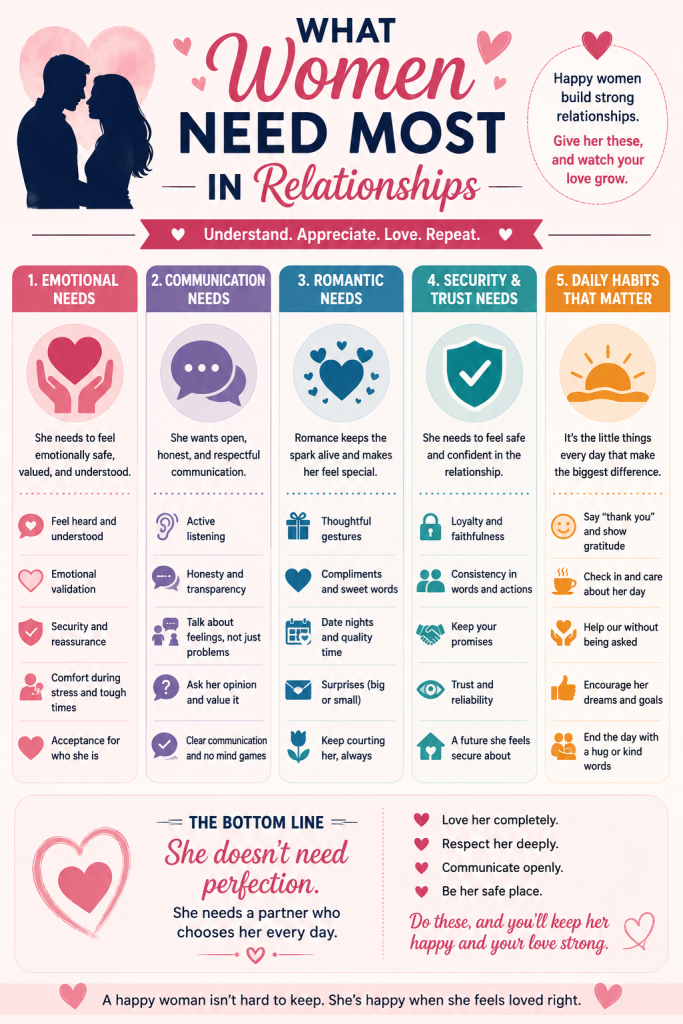
Final Thoughts: Keeping Relationships Healthy
Keeping a relationship healthy is not about having perfect responses or avoiding every disagreement.
It is about creating trust, emotional safety, appreciation, understanding, and connection over time.
Women do not normally just want problems solved. They often want to feel emotionally valued, safe, understood, and connected to the person they love.
The strongest and healthiest relationships happen when both partners feel respected, desired, supported, heard, and emotionally important to each other.
Frequently Asked Questions
1. What makes a woman happy in a relationship?
A woman often feels happiest when she feels loved, respected, heard, supported, and emotionally safe. Consistent effort matters more than perfect words.
2. Is communication really that important?
Yes. Honest, calm, and respectful communication helps prevent misunderstandings and keeps both partners emotionally connected.
3. How can I make her feel appreciated?
Notice what she does, thank her sincerely, compliment her, and show through your actions that you do not take her for granted.
4. What are small gestures that matter?
Checking in during the day, helping without being asked, remembering details, giving compliments, and showing affection can mean a lot.
5. How do I build more trust with her?
Keep your promises, be honest, stay consistent, and make sure your actions match your words.
6. What should I avoid if I want a happier relationship?
Avoid dismissing her feelings, ignoring her needs, lying, being inconsistent, or only showing effort when there is a problem.
7. How can I support her emotionally?
Listen without rushing to fix everything, validate her feelings, encourage her goals, and be present during stressful moments.
8. Does romance still matter in a long-term relationship?
Yes. Romance helps keep the connection alive. It does not have to be expensive; thoughtfulness matters most.
9. How can I improve emotional intimacy?
Share honestly, ask deeper questions, listen with care, and create space where both partners feel safe being vulnerable.
10. How important is quality time?
Quality time is very important because it helps couples reconnect, enjoy each other, and feel prioritized.
11. What if she says I do not listen?
Slow down, avoid interrupting, repeat back what you heard, and ask what she needs from you in that moment.
12. How can I make her feel secure?
Be dependable, communicate clearly, avoid mixed signals, and show loyalty through everyday choices.
13. Should I ask her what she needs?
Yes. Asking directly shows maturity and care. Every woman is different, so open conversation is better than guessing.
14. How do I keep the relationship from becoming routine?
Try new experiences together, plan simple dates, surprise her occasionally, and keep showing curiosity about her life.
15. What role does respect play?
Respect is essential. It means valuing her opinions, boundaries, time, emotions, and individuality.
16. How can I handle disagreements better?
Stay calm, avoid insults, listen to understand, take responsibility when needed, and focus on solving the issue together.
17. Do compliments really matter?
Yes. Genuine compliments help her feel noticed, desired, and valued, especially when they are specific and sincere.
18. How can I show love without saying much?
Use actions: help her, protect her peace, spend time with her, remember what matters to her, and be consistent.
19. What is the biggest mistake men make in relationships?
One common mistake is becoming comfortable and stopping the effort that helped build the relationship in the first place.
20. Can a psychic reading help with relationship clarity?
A relationship reading may help you reflect on emotional patterns, communication issues, and possible next steps, but healthy action still matters.




I liked this post a lot. It reminds me that listening is more important than fixing. Sometimes I just want to be heard and hugged, not handed solutions right away. Small habits like eye contact and appreciation really make me feel loved and seen. Thanks for the practical reminder! 😊
Clear, helpful, and compassionate advice that navigates the gap between feeling heard and seeking solutions. I especially like the practical prompts — “How did that make you feel?” and “What do you need from me right now?” — which create space for honest sharing. Useful, encouraging, and worth bookmarking for future conversations. 👍
This thoughtful compilation elegantly outlines relational fundamentals: attunement, consistent responsiveness, and the humility to prioritize emotional presence over immediate solutions. The emphasis on curiosity and respectful inquiry as bridges to deeper intimacy is especially valuable. Practicing these principles can meaningfully shift patterns and cultivate long-term emotional security in relationships. 🙏
Really solid advice that I can actually use. I started checking in with a quick “how are you feeling” and it opened up more honest talks without drama. Small changes like eye contact and appreciation messages made us feel closer. Simple, real, and encouraging — thanks for sharing! 🙂
This reads like a gentle roadmap for keeping love alive: small courtesies, steady presence, and brave vulnerability. The reminder that consistency builds trust and that kindness during hard times matters most struck a chord. I’ll bring these suggestions into my daily life and hold conversations with more tenderness. 🌺
Such a balanced set of tips — practical, compassionate, and easy to start using today. I appreciate the focus on small daily habits and emotional validation. It’s reassuring to be reminded that relationships grow through tiny consistent actions rather than perfection. I’m excited to try a few of these ideas and see the difference. 🌟
This article captures the essence of relational repair: prioritizing presence over premature problem-solving, validating emotions, and sustaining kindness during conflict. Those behaviors cultivate attachment security and mutual respect. I especially value the point about curiosity — asking “what helps you feel loved” is a deceptively powerful practice that opens meaningful dialogue. 👏
Wow, love this! The tips feel practical and not scary. Asking simple questions and showing appreciation daily makes my relationship so much better. I try hugs and little thank-yous every day, and it really works. Feeling more connected and happy now! 😊
This article is super helpful. I always thought giving solutions showed I cared, but learning to listen and just be present changed our dynamic for the better. Saying simple things like “I hear you” and putting phones away makes a big difference. Appreciated these practical, no-nonsense tips that actually work. 💪
I really appreciate how this piece highlights emotional safety and validation over quick fixes. Those little moments of empathy build trust in ways that bigger gestures can’t always achieve. Asking what someone needs in the moment is a small habit with huge payoff. Thank you for this thoughtful and actionable post! 🌼
These fourteen points synthesize critical elements of attachment and communication in a remarkably accessible way; emphasizing that listening, emotional safety, and consistent responsiveness build trust, while minimizing and problem-first responses erode connection. Applying these practices deliberately can transform everyday interactions into reliable sources of intimacy and resilience. Well done.
Totally agree with the emphasis on emotional safety and consistent responsiveness — those subtle daily choices accumulate into deep trust over time. I try asking “what do you need from me” more often and it changes conversations into closer, warmer exchanges. Nice reminder! 💖
Great advice here. I learned to stop jumping into fix mode and instead ask questions and stay present, which made my partner happier and our fights calmer. Small habits like phone-free time and checking in help a lot. Thanks for sharing these easy, helpful steps! 🙂
Concise, useful, and actionable. Focusing on presence, consistency, and asking clarifying questions removes a lot of guesswork in relationships. The checklist of small habits like device-free time and appreciation is perfect for busy people who still want meaningful connection. I’ll be sharing this with a friend and trying these steps myself. 👌
This was such a sweet post! The tips are easy to try and feel so warm. I started leaving little notes and saying thank you more, and my partner lights up. Listening more and fixing less has made our talks softer and nicer. Love these ideas and will keep trying them every day! 💕