

- Overthinking text messages.
- Analyzing every interaction.
- Constantly checking your phone.
- Making the other person the center of your world.
- Authenticity.
- Confidence.
- Independence.
- Presence.
- Emotional balance.
- Self-worth.
Why Anxiety Changes Dating
When anxiety becomes the center of dating, the focus shifts from connection to validation. Instead of asking whether you genuinely enjoy the person you are getting to know, you may start asking:- “Do they still like me?”
- “Why haven’t they texted?”
- “Did I say something wrong?”
- “What if they lose interest?”
- Over-pursuing.
- Self-abandonment.
- People-pleasing.
- Exhaustion.
- Clinginess.
What Makes Someone Irresistible?
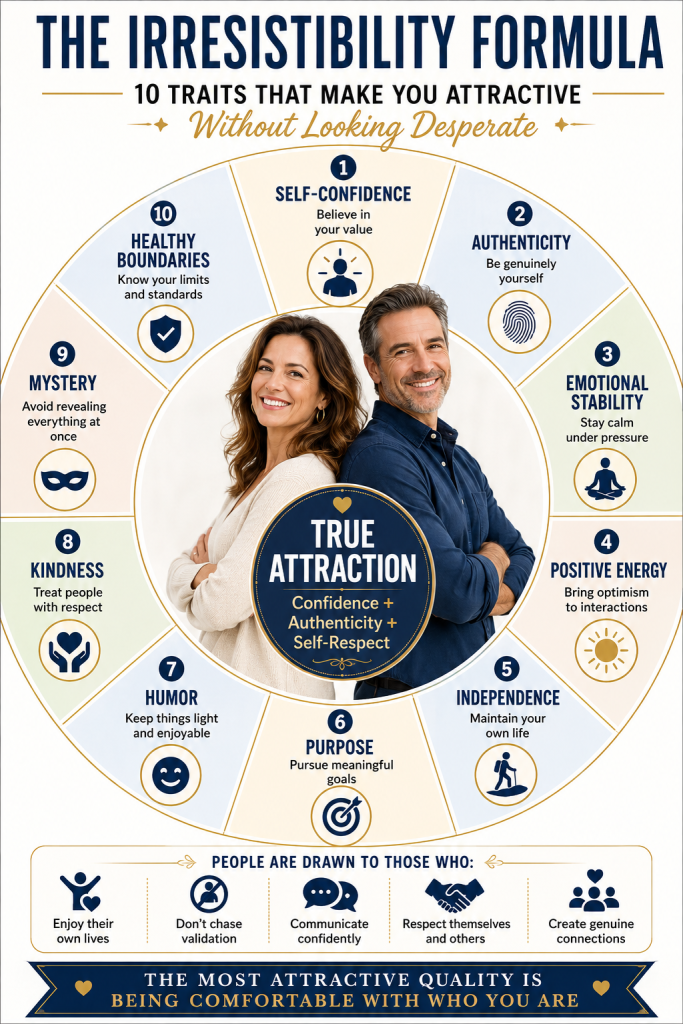 Some people assume irresistible people are:
- Emotionally detached.
- Flawless.
- Perfect.
- Exceptionally charismatic.
- Emotionally stable.
- Purpose-driven.
- Grounded.
- Confident.
- Authentic.
- Boundaried.
- Warm.
- Self-respecting.
1. Stop Making Dating the Emotional Center of Your Life
One of the healthiest ways to become more emotionally attractive is to stop making dating the center of your entire world. When people become consumed by finding love, they often neglect:- Emotional recovery and self-reflection.
- Friendships.
- Hobbies.
- Purpose.
- Personal growth.
- Confidence-building experiences.
- Improving physical health.
- Learning new skills.
- Exploring creativity.
- Strengthening friendships.
- Healing emotionally.
- Advancing a career.
- Traveling.
- Building self-esteem and confidence.
2. Anxiety Makes Dating Hyper-Focused on Yourself
Dating anxiety often creates excessive self-focus. Common thoughts may include:- “What does this person think of me?”
- “Did I ruin this?”
- “Am I enough?”
- “Will I be rejected?”
- “Who is this person really?”
- “Do I feel emotionally safe around them?”
- “Do our values align?”
- “How do I honestly feel after spending time with them?”
3. Fantasy Projection Creates Attachment Too Quickly
Many people become emotionally attached to imagined futures before genuine compatibility exists. This may involve imagining:- Commitment.
- Marriage.
- Soulmate narratives.
- Long-term certainty.
- Future fantasies.
4. Healthy Relationships Should Add to Your Life
Emotionally attractive people usually maintain full, meaningful lives outside of dating. Healthy people are often drawn to those who:- Maintain friendships.
- Protect routines.
- Pursue goals.
- Value their own time.
- Maintain emotional independence.
5. Do Not Shape-Shift to Be Liked
One of the biggest dating mistakes is becoming whoever you think someone else wants. This may include:- Hiding opinions.
- Pretending to enjoy things you dislike.
- Suppressing emotional needs.
- Being overly agreeable.
- Constantly trying to appear effortless.
6. Emotional Uncertainty Is Part of Healthy Dating
Many people try to eliminate uncertainty immediately. This often leads to:- Excessive texting.
- Reassurance-seeking.
- Emotional chasing.
- Controlling behavior.
7. Internal Validation Can Reduce Dating Pressure
Many people unknowingly rely on romantic attention to feel worthy. Internal validation means reminding yourself:- “I know my value.”
- “I deserve consistency.”
- “Someone’s inability to choose me does not define my worth.”
8. Over-Giving Too Early Can Create Imbalance
Many anxious daters try to earn love through:- Excessive emotional labor.
- Constant support.
- Gifts.
- Over-availability.
- People-pleasing.
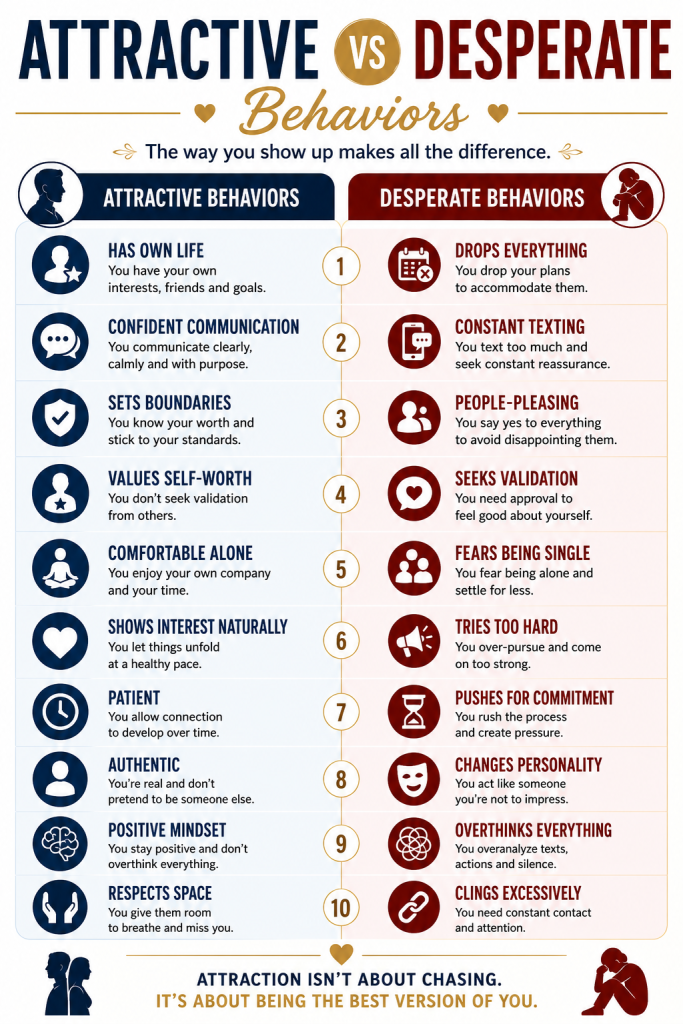
9. Emotional Boundaries Protect Your Wellbeing
Emotionally healthy people are not emotionally unavailable. They simply maintain healthy standards. This may include:- Communicating needs clearly.
- Protecting your time, needs and boundaries.
- Leaving inconsistent situations.
- Avoiding emotionally unavailable people.
- Recognizing red flags early.
10. Emotional Presence Matters More Than Performance
Many people date from a performance mindset. This may involve:- Trying to impress constantly.
- Trying to seem perfect.
- Avoiding mistakes.
- Trying to appear endlessly desirable.
- Authenticity.
- Emotional honesty.
- Warmth.
- Vulnerability.
- Emotional steadiness.
- Emotional congruence.
How to Become More Irresistible
The secret is not learning how to make someone choose you. It is becoming grounded enough to know that your worth does not depend on being chosen. That mindset changes your confidence, standards, emotional stability, and dating decisions all at once. Reducing validation-chasing can make dating feel more stable and help you notice mutual effort more clearly.Final Thoughts: Being Irresistible Is Not About Manipulation
Being irresistible is not about perfection, manipulation, or emotional unavailability. It is about becoming emotionally secure enough to be yourself, maintain your standards, protect your peace, and connect without abandoning who you are. Healthy dating does not require stress, desperation or performance. Mutual attraction can coexist with authenticity, self-respect, emotional steadiness and genuine connection, but no set of traits can guarantee another person’s feelings. A stronger connection to your own values and needs may make it easier to step back from dating situations that are not mutual.Healthy Attraction FAQ
1. What builds attraction without manipulation?
Attraction is more likely to grow through genuine interest, confidence, shared experiences, respect, emotional availability and room for both people to choose freely.
2. Can I make a specific person become attracted to me?
No method can guarantee another person’s feelings. You can communicate interest and create opportunities for connection, but their response remains their choice.
3. What is the difference between confidence and playing games?
Confidence means acting from self-respect and communicating clearly. Games use delay, jealousy, ambiguity or pressure to control another person’s reaction.
4. How can I tell whether interest is mutual?
Look for consistent reciprocal effort, voluntary contact, clear enthusiasm, respect for boundaries and willingness to make concrete plans.
5. Do affirmations or manifestation create attraction?
They may help clarify your intentions or confidence, but they cannot override consent or cause a particular person to want a relationship.
6. When should I stop pursuing someone?
Stop when they say no, repeatedly avoid plans, do not reciprocate effort, ask for space, or when pursuing them is harming your wellbeing.
7. Can boundaries make me more attractive?
Boundaries are valuable because they protect wellbeing and clarify compatibility, not because they are a tactic for making someone chase you.
8. What is the strongest sign of healthy attraction?
Both people can show interest openly, accept each other’s limits and move at a pace that feels voluntary and safe.
For a practical relationship-health check, see relationship red flags, boundaries and safety.


