

Every relationship goes through ups and downs. Sometimes couples feel deeply connected, emotionally safe, and energized by each other. Other times, routines, stress, misunderstandings, and daily responsibilities can slowly create emotional distance without either partner fully realizing it.
The good news is that healthy relationships are not built only through grand romantic gestures. Emotional closeness usually grows through small daily habits, emotional awareness, open communication, and emotional care over time.
Healthy relationships need more than love. They also need:
- Presence.
- Curiosity.
- Compassion.
- Emotional safety.
- Communication.
- Respect.
- Appreciation.
- Intentional effort.
When couples actively nurture their connection, relationships often become more secure, supportive, and emotionally fulfilling.
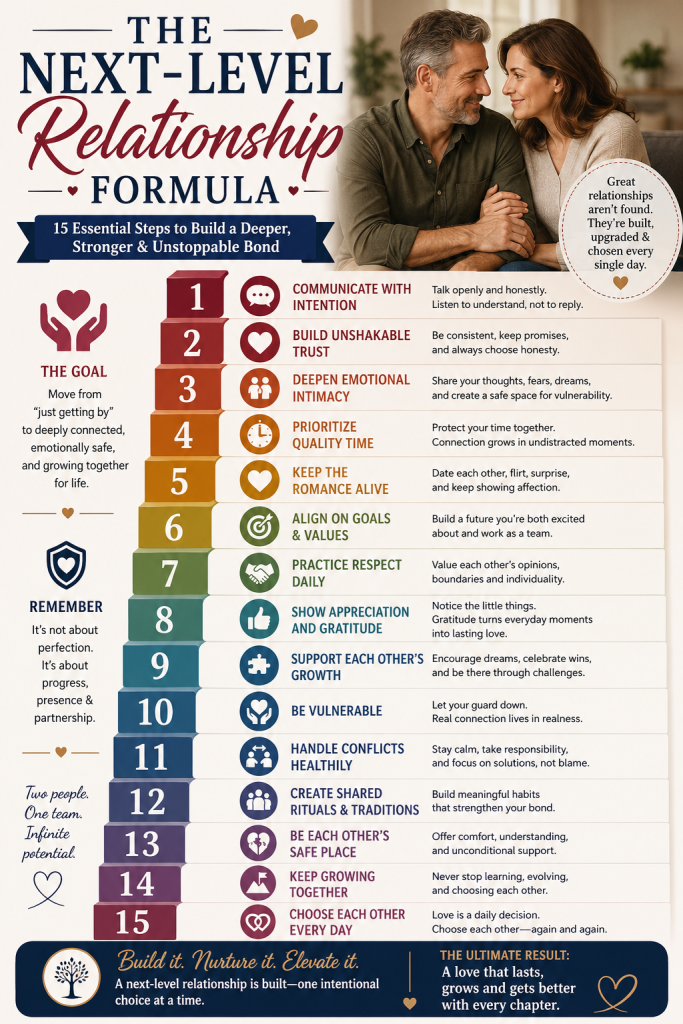
Here are 15 ways couples can strengthen their relationship and build deeper emotional intimacy.
1. Accepting Your Partner Creates Emotional Safety
One of the healthiest relationship shifts happens when people stop trying to completely reshape their partner into someone else.
Healthy love usually involves accepting:
- Personality differences.
- Emotional styles.
- Imperfections.
- Strengths and weaknesses.
- Individual preferences.
Acceptance does not mean tolerating unhealthy behavior. It means recognizing that emotional intimacy grows stronger when people feel emotionally safe being themselves.
Many people feel most loved when they feel accepted instead of constantly evaluated or criticized.
2. Keeping Emotional Score Usually Creates Resentment
Some relationships slowly become emotionally transactional over time.
Scorekeeping may sound like:
- “I always do more.”
- “You never appreciate me.”
- “I did this for you, so now you owe me.”
Constant emotional scorekeeping often creates:
- Resentment.
- Emotional distance.
- Competition.
- Frustration.
Healthy relationships usually feel stronger when kindness, affection, and support are given freely instead of being treated like emotional currency.
3. Staying Emotionally Open Matters
Many people create emotional distance by assuming they already know how their partner will disappoint them.
Negative assumptions often come from:
- Past emotional hurt.
- Fear.
- Previous relationships.
- Emotional insecurity.
When couples stay emotionally open instead of emotionally guarded, they usually create more room for healing, growth, and healthier communication.
Curiosity often creates a stronger connection than emotional certainty.
4. Give Your Partner the Benefit of the Doubt Sometimes
Everyone becomes overwhelmed, distracted, stressed, or emotionally exhausted sometimes.
Healthy couples usually avoid immediately jumping to:
- Harsh conclusions.
- Character attacks.
- Worst-case assumptions.
Instead, emotionally healthy partners often ask:
- “What happened?”
- “Can you help me understand?”
- “Was something stressful going on?”
Giving people space to explain themselves usually strengthens emotional trust significantly.
5. Listening With Real Curiosity Strengthens Intimacy
One of the biggest relationship complaints people have is feeling emotionally unheard.
Many people listen while:
- Preparing responses.
- Defending themselves internally.
- Half-paying attention.
- Thinking about unrelated stress.
Healthy listening usually involves:
- Staying emotionally present.
- Asking thoughtful questions.
- Making eye contact.
- Reflecting understanding.
- Not interrupting immediately.
Feeling emotionally understood often strengthens emotional intimacy deeply.
The American Psychological Association frequently discusses how emotional validation and healthy communication improve relationship satisfaction.
6. Respect Your Partner’s Emotional Energy Too
Many people automatically vent stress without considering whether their partner emotionally has the energy to absorb it at that moment.
Healthy emotional boundaries may involve asking:
- “Do you have the energy to listen right now?”
- “Can I vent for a minute?”
- “Is this a good time to talk?”
This shows emotional respect and consideration for your partner’s mental state too.
7. Distraction-Free Time Matters More Than People Realize
Modern relationships constantly compete with:
- Phones.
- Social media.
- Work stress.
- Streaming entertainment.
- Notifications.
- Mental overload.
Strong emotional connection often requires intentional, uninterrupted time together.
This might involve:
- Device-free dinners.
- Walks together.
- Date nights.
- Shared hobbies.
- Quiet evenings together.
- Meaningful conversations.
Presence usually creates emotional intimacy more than people realize.
8. Appreciation Helps Relationships Feel Emotionally Secure
Many people underestimate how emotionally important appreciation is.
Simple statements can strengthen emotional connection dramatically over time, including:
- “I appreciate you.”
- “Thank you for everything you do.”
- “I notice how hard you try.”
- “I’m grateful for you.”
Feeling emotionally valued often reduces resentment and strengthens emotional security.
9. Emotional Safety Helps People Open Up Honestly
People usually communicate more openly when they feel emotionally safe.
Emotional safety often involves:
- Feeling respected.
- Feeling heard.
- Feeling emotionally accepted.
- Being free from ridicule or humiliation.
- Being able to express vulnerability safely.
Emotionally safe relationships usually encourage openness instead of emotional self-protection.
10. Compassion Matters Most During Difficult Times
Everyone experiences:
- Stress.
- Fear.
- Emotional exhaustion.
- Insecurity.
- Anxiety.
- Emotional struggles.
Compassionate partners often:
- Offer patience.
- Stay emotionally supportive.
- Avoid unnecessary harshness.
- Try to understand emotional pain.
- Stay emotionally present during difficult times.
Compassion often strengthens emotional trust deeply over time.
11. Fun and Playfulness Keep Relationships Emotionally Alive
Long-term relationships still need joy, laughter, and emotional lightness.
Playfulness may involve:
- Laughing together.
- Inside jokes.
- Flirting.
- Shared adventures.
- Trying new experiences.
- Being spontaneous together.
Couples who continue having fun together often maintain a stronger emotional connection long term.
12. Emotional Connection Requires Intentional Effort
Healthy relationships rarely stay emotionally strong automatically forever.
Intentional couples usually prioritize:
- Communication.
- Affection.
- Quality time.
- Emotional check-ins.
- Shared experiences.
- Emotional repair after conflict.
Intentional effort usually helps emotional intimacy stay strong over time.
13. People Experience Love Differently
Not everyone feels loved in the same way emotionally.
Some people feel most connected through:
- Affection.
- Words of affirmation.
- Acts of service.
- Quality time.
- Emotional support.
- Physical touch.
Healthy couples usually stay curious about what helps each other feel emotionally loved, emotionally connected, and emotionally secure.
14. Healthy Couples Repair Conflict Instead of Avoiding It
Strong couples are not couples who never experience conflict. They are usually couples who learn how to reconnect emotionally afterward.
Repair may involve:
- Sincere apologies.
- Reassurance.
- Clarifying misunderstandings.
- Emotional reconnection.
- Accountability.
Repair usually strengthens emotional resilience within relationships.
Harvard Health Publishing discusses how emotional support, empathy, and communication contribute to healthier long-term relationships.
15. Express Love While You Still Can
One of the most meaningful relationship habits is expressing love openly and consistently.
Many people assume, “They already know how I feel,” but hearing affection, admiration, appreciation, and love still matters emotionally.
Even simple words can become powerful emotional memories over time.
Most people do not regret expressing too much love. They regret waiting too long to say it.
Final Thoughts: Attraction and Chemistry
Healthy relationships are not built through chemistry or attraction alone.
They are built through communication, emotional safety, appreciation, compassion, effort, and emotional presence over time.
Strong couples understand that emotional intimacy grows through small daily actions such as:
- Showing kindness.
- Reassuring their partner.
- Spending meaningful time together.
- Listening.
- Being curious.
- Repairing emotional disconnection.
The best relationships are the ones where both people feel valued, accepted, supported, and understood.
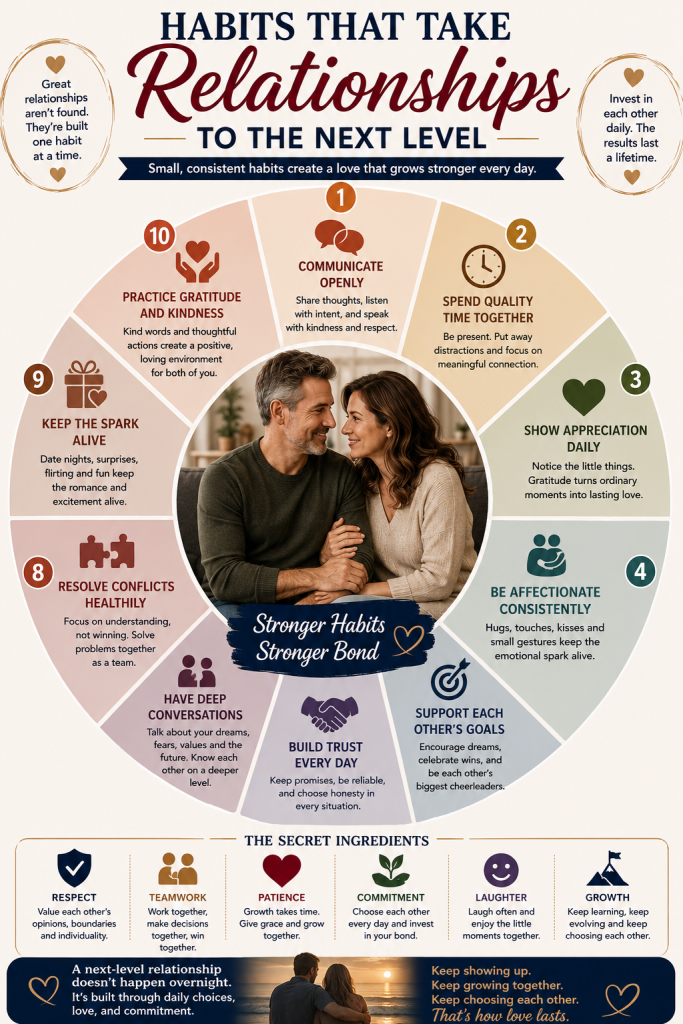
Frequently Asked Questions
1. What does it mean to take a relationship to the next level?
Taking a relationship to the next level means building deeper trust, stronger communication, emotional intimacy, shared goals, and a healthier long-term connection.
2. How do I know my relationship is ready to grow deeper?
Your relationship may be ready when both partners communicate openly, respect each other’s boundaries, support each other’s goals, and feel emotionally safe together.
3. What is the most important habit for a stronger relationship?
Consistent communication is one of the most important habits because it helps couples avoid confusion, solve problems faster, and stay emotionally connected.
4. How can couples build more emotional intimacy?
Couples can build emotional intimacy by sharing feelings honestly, listening without judgment, asking meaningful questions, and creating a safe space for vulnerability.
5. Why is quality time important in a relationship?
Quality time helps couples reconnect, reduce emotional distance, and remind each other that the relationship is a priority.
6. How can I make my partner feel more appreciated?
You can show appreciation by saying thank you, noticing small efforts, giving sincere compliments, and showing through your actions that you value your partner.
7. What daily habits can improve a relationship?
Helpful daily habits include checking in, showing affection, listening carefully, expressing gratitude, helping each other, and ending the day with kindness.
8. How do couples keep romance alive long-term?
Couples can keep romance alive by planning dates, surprising each other, flirting, showing affection, and continuing to make each other feel chosen.
9. What role does trust play in relationship growth?
Trust creates emotional security. Without trust, it is harder for couples to be open, vulnerable, and confident about the future together.
10. How can couples handle conflict in a healthier way?
Healthy conflict means staying respectful, listening to understand, avoiding insults, taking responsibility, and focusing on solutions instead of blame.
11. Why do some relationships stop growing?
Relationships often stop growing when partners become emotionally distant, avoid difficult conversations, stop making effort, or take each other for granted.
12. How can shared goals strengthen a relationship?
Shared goals help couples feel like a team. They create direction, purpose, and a stronger sense of partnership.
13. What does vulnerability mean in a relationship?
Vulnerability means being honest about your feelings, fears, needs, and hopes while trusting your partner to respond with care and respect.
14. How can I be more supportive of my partner?
Encourage your partner’s dreams, listen during stressful moments, celebrate wins, offer help when needed, and show that you are on their side.
15. Can small changes really improve a relationship?
Yes. Small, consistent changes often create the biggest results because they build trust, warmth, and emotional closeness over time.
16. How often should couples have deep conversations?
There is no perfect schedule, but couples benefit from regular, honest conversations about feelings, needs, goals, stress, and the future.
17. What are the signs that a relationship is becoming stronger?
Signs include better communication, more trust, emotional safety, healthy conflict resolution, shared planning, and stronger affection.
18. How do you avoid taking your partner for granted?
Stay intentional. Say thank you, keep showing affection, notice their efforts, make time for them, and continue doing thoughtful things.
19. Can a relationship recover after emotional distance?
Yes, many relationships can improve when both partners are willing to communicate honestly, rebuild trust, and make consistent changes.
20. Can a psychic reading help with relationship clarity?
A relationship reading may help you reflect on emotional patterns, timing, and possible next steps, but lasting improvement still depends on honest communication and real action.




What a thoughtful read — the emphasis on emotional safety and curiosity is so important. I especially appreciated the reminder to give the benefit of the doubt and to repair after conflict. Those practices build trust over time and create real closeness.
This post warms my heart so much! I love the reminder that small daily things really matter for keeping love alive. Simple acts like listening, saying thank you, and holding hands can change everything. So inspiring and hopeful 😊
I don’t usually gush, but this article makes a solid point about being present and appreciating the little things. It’s realistic without being preachy, and the tips about listening and pausing to ask questions really hit home. Useful and practical advice.
A remarkably balanced and humane approach to cultivating intimacy. The piece deftly integrates behavioral suggestions with emotional insight, highlighting acceptance, validation, and the reparative routines that sustain relationships. I found the emphasis on curiosity over certainty especially resonant and practically useful.
Loved this — it makes relationships feel doable again. The tips about listening with curiosity and giving the benefit of the doubt are so kind and practical. Little acts of appreciation and device-free time feel like simple gifts that matter a lot 😊
Clear, kind, and practical — this article offers real steps couples can use right away. The focus on emotional safety, appreciation, and intentional time together feels grounded and hopeful. I appreciate the encouragement to express love openly and not assume it is always known ❤️
Such a nice reminder that love is active work and not just a feeling. I appreciated the clear list of behaviors like presence, appreciation, and curiosity. It’s motivating to see simple practices that can be woven into daily life to strengthen connection.
This piece beautifully captures how emotional intimacy is cultivated through consistent, intentional habits rather than dramatic gestures. The sections on acceptance, curiosity, and compassionate repair stood out to me as foundational for sustainable connection, and they offer a clear roadmap for everyday practice.
A thoughtful synthesis of relational science and everyday wisdom. Emphasizing emotional safety, validation, and intentional repair aligns with attachment-informed approaches and evidence-based communication strategies. The practical suggestions are accessible yet grounded, offering couples concrete pathways toward deeper, more resilient intimacy over time.
I really liked how simple the suggestions are and how doable they feel. Things like device-free dinners and saying thank you are easy to try right away. It gives hope that small changes can make relationships feel warmer and safer 😊
Thanks for this helpful guide. The idea that you don’t need grand gestures but steady effort is reassuring. I’ll try to be more present, listen without planning responses, and say I appreciate you more often. Feels like a good plan to build closeness.
This article is smart and clear — it respects complexity without getting bogged down in jargon. I particularly valued the attention to boundaries around emotional energy and the encouragement to ask before venting. Those small habits protect both partners and deepen trust.