

There are some dreams that feel like stories that happened while we’re asleep, while others feel like true encounters. When a deceased loved one comes in your dream, it usually happens with clarity, or it can leave you with peace that lasts forever. If your loved one brings you calmness and speaks directly to you, the experience might be a spiritual visitation dream.
People who believe in psychic gifts and psychic dreams feel that sleep can open the intuitive doors in your life. When the conscious mind isn’t so busy, and there are no distractions, it’s easier for spiritual messages to be received. Dreaming of a loved one who passed away might use this peaceful sleep state to give comfort, forgiveness, guidance, or a reminder that the connection is still there.
Not all dreams about someone who’s passed away are visitations. Some are created from emotions and memories, but memory and spiritual contact don’t always have to be on opposite sides. A loved one might appear in familiar places, experiences, or personal symbols so that you can recognize a message.
Why Deceased Loved Ones Come to Our Dreams
Love is an energetic connection that stays even after a person’s physical life ends. Even though you can’t communicate with a deceased loved one in the same way, the spiritual bond might stay in intuition, dreams, or signs. You might suddenly, out of nowhere, feel their presence around you. A deceased loved one might come to you when:
- You’re grieving and need reassurance.
- You’re trying to make an important decision.
- A birthday or anniversary is close.
- Your family is going through a major change.
- You have been quietly asking for a sign.
- You need to release guilt or an old disagreement.
- You are entering a new stage of spiritual growth.
Part of the message is about the timing of the dream. You might dream about your grandfather, for example, before you take a new job because you’re still connected with him and his confidence and wisdom. His appearance might be a spiritual way to encourage you to recognize your own inner strength.
Having a Visitation Dream
Most of the time, visitation dreams feel calm and clear and are different than ordinary dreams. Instead of going through different, strange scenes, you might be in a peaceful place with your loved one. Some common signs of a visitation dream include things like:
- The dream feels more real than usual.
- Your loved one looks healthy and peaceful.
- Their personality feels just like you remember it.
- Communication is easy, clear, and meaningful.
- You understand each other without talking.
- The dream includes something like a memorable hug, smile, or touch.
- You wake feeling comforted or spiritually renewed.
- The experience remains vivid for a long time.
Having a spiritual visitation dream has a different kind of energy. You might not remember every detail, but you always remember the feelings that you had. That kind of feeling can stay with you throughout the day and might change how you look at your own grief.
According to a study published through the National Library of Medicine, research shows that dreams of deceased loved ones are meaningful and common, and that people who are grieving often experience these dreams to comfort them, and they are spiritually important.
Is it a Visitation Dream or a Memory?
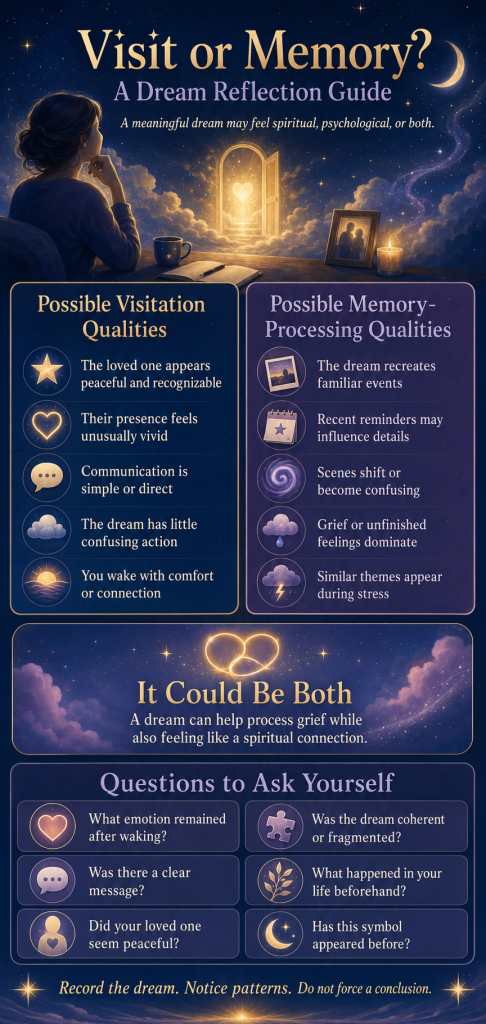
Having a regular dream can mix past events with people that are unrelated and happen in places you might not remember. These kinds of dreams also often have worries, whereas a visitation dream is more focused. Your loved one might come for a clear reason, even if the reason is just to let you know that they’re at peace.
Having a memory dream can recreate something like a family dinner, just like it happened before, where a visitation dream can take place at the same table, but includes a meaningful object, a direct message, or a feeling that’s not part of the normal memory. Ask yourself these questions:
- Did the dream have a clear beginning and ending?
- Did the person seem aware that they had passed?
- Was their presence peaceful and natural?
- Did they share a message that felt loving and wise?
- Did you wake with a sense that a meeting truly occurred?
- Did the dream answer a private question?
You don’t need to try to prove the experience you have with anyone because spiritual dreams are personal. The meaning of the dream will become clearer through symbols, emotions, and changes that happen inside of you.
Common Visitation Dreams and Their Meanings
Here are some common visitation dreams and their meanings:
Your Loved One Says They Are Okay
This is one of the clearest forms of reassurance. The person may tell you that they are safe, peaceful, or no longer experiencing physical difficulty. Sometimes they communicate this only through a calm smile.
Such a dream may arrive when you have been worrying about their transition into the spiritual world. Its purpose may be to release fear and help you trust that their spirit is at peace.
Dreaming About Your Deceased Loved One Hugging You
Dreaming about your deceased loved one hugging you can symbolize comfort, emotional healing, and acceptance. You might be dealing with a lot of stress and need to feel supported.
From a spiritual point of view, the hug can mean that you have protective energy surrounding you. It can also be a reminder to be kind to yourself, and if you’ve been caring for everyone else, the dream might be pointing out that it’s time for someone to care for you. They could be telling you that they’re still connected to you.
Your Loved One Gives Advice
A loved one who is deceased (like a parent, friend, grandparent, or even a partner) might come when you need direction in your life. They might show you an object, guide you toward a certain place, or speak to you clearly.
You should look at dream advice thoughtfully instead of without question. A good spiritual message should encourage you to have compassion, patience, responsibility, and healthy choices. This kind of dream should not create pressure or panic in your life.
Dreaming That Your Deceased Loved One Is Silent
Silence can have different meanings, and it can symbolize distance, unanswered questions, and companionship. This has to come through observation instead of words. Pay attention to the expression they have and your surroundings. A kind expression can suggest reassurance, and a serious expression can encourage patience. If they point toward something like a door, person, or a road, that might hold part of the message.
Silence can also tell you to trust yourself, and you might already know the answer you’re waiting for someone else to confirm. Silence doesn’t mean anything is wrong, and if they are beside a doorway and smiling, it can mean peace and transition.
Your Loved One Appears Younger
When spirits come in visitation dreams, they often seem more energetic, healthier, and younger than they were when they passed away. Some people think that this means the soul is coming in its restored spiritual form.
The age they pick when they pass away can connect with your happiest or strongest memories of them.
Your Loved One Walks Away
If you dream that your deceased loved one walks away, it can be emotional, but it doesn’t mean that they’re abandoning you. Walking away can show that their visit is ending or that you’re ready to continue with your own life and on your own journey. The spiritual bond will stay even after the dream ends.
The Spiritual Language of Symbols
A deceased loved one can communicate with you through personal symbols, and these symbols often come from experiences that you shared together. Here are some things that you might notice:
- Birds may represent freedom or spiritual presence.
- Doors can symbolize transition or a new beginning.
- Flowers may express love, remembrance, and renewal.
- Light can represent peace, clarity, or spiritual protection.
- Water may reflect healing, emotion, or cleansing.
- Familiar music can reconnect you with a shared memory.
- A family home may represent belonging and continuing bonds.
Even though a dream dictionary can be helpful, personal meaning is more important. A red rose might mean romance to one person, but it could symbolize the garden that you and your grandmother worked in together.
Why the Dream May Happen Years After Their Passing
Not everyone has a visitation dream right after their loved one passes away. Grief can make dreams confusing and hard to remember, so a visitation might happen later, when you feel calmer and your emotions are more prepared to receive the dream.
The visit can also happen when something changes in your life now. Maybe you’re moving, having a child, getting married, or changing careers. Your loved one might come because their wisdom is still relevant in your life.
Time works differently in the spiritual world, and what feels like an eternity to you isn’t limited by the connection of your souls.
Interpreting the Message
After you wake up, ask yourself these spiritual questions:
What did I feel?
The most important thing is the emotional energy. Peace can mean reassurance, and urgency might invite you to pay more attention to a matter in your life that’s not been resolved.
What stood out?
Pay attention to anything that stood out, like a statement, color, gesture, or an unusual object. The symbol might contain the message that you’re needing to hear.
Why did the dream happen now?
Have you recently made decisions, prayed, or had any kind of emotional changes? The timing can explain the purpose of the visit.
Don’t force every detail to be interpreted, because visitation dreams are easy to understand because they contain a message that has a presence of love with it.
What to Do After the Dream
Take time to write down everything you remember before you get out of bed. Write down the words, emotions, objects, clothing, colors, the setting of the dream, and anything that you can remember about the dream. You can also take time to do these things:
- Thank your loved one quietly for visiting.
- Sit in peaceful reflection.
- Draw or describe an important symbol.
- Share the experience with someone you trust.
- Record related signs that appear afterward.
- Perform a personal remembrance ritual.
- Live out the loving lesson contained in the dream.
Honor the dream by doing something that your loved one valued, like helping a relative, keeping up with family traditions, or visiting a place that was meaningful to both of you.
Can a Memory Have a Spiritual Message?
A memory can have a spiritual message, and the spiritual world can communicate through language that’s already in your heart. A memory can be a bridge that helps you to recognize the visitor and to understand the message they’re trying to give you.
Dreaming about fishing with your father who passed away, for example, might start as a familiar memory. If he gives you a new message about staying patient, then the old setting might have just given you a safe place to have the spiritual communication that you needed.
Having a memory doesn’t make a visitation dream less meaningful, but it might be what helps to make the connection work.
Having an Upsetting Dream
Not every visitation dream is a message from someone who has passed away that you love. Having confusing or scary dreams might come from stress, guilt, grief, or hard memories.
A real visitation dream carries a loving and peaceful message. If the dream feels scary, don’t think that your loved one is predicting something bad is going to happen or is suffering.
According to the National Institutes of Health, grief can affect concentration, emotions, sleep, and even the body. If you keep having recurring dreams that cause you to not get rest, then you should talk to a grief counselor while still respecting your spiritual beliefs.
Frequently Asked Questions
Here are some frequently asked questions:
Are dreams about deceased loved ones real visitations?
Many people believe that peaceful, vivid, and realistic dreams can be true spiritual visitations. While there’s no way to prove this, the comfort and meaning the dream brings can still be very real.
How can I tell if it was a visitation?
Many believers say that visitation dreams often feel incredibly real, peaceful, and easy to remember. Your loved one might appear healthy, happy, and calm, and they may share a simple message or simply let you know they’re okay.
Why didn’t my loved one speak in the dream?
Not every spiritual message needs words. Sometimes a smile, a hug, a feeling of peace, or even a meaningful object can communicate everything you need to know.
Can deceased loved ones answer questions in dreams?
Some people believe they can offer guidance, reassurance, or meaningful symbols related to something you’ve been wondering about. It’s always a good idea to think about the message carefully while also using practical judgment in your daily life.
Why do I keep having the same dream about my loved one?
Recurring dreams might mean there’s a message you haven’t fully understood yet, or they could reflect emotions that you’re still working through. Writing your dreams down can help you notice patterns or small details that change as time goes on.
Why have I never had a visitation dream?
Not having a visitation dream doesn’t mean that your connection with your loved one is gone. Some people simply don’t remember their dreams, while others feel their loved one’s presence through intuition, meaningful coincidences, comforting memories, or a deep sense of peace.
Final Thoughts: Dreaming of a Deceased Loved One
Dreaming of a loved one who passed away can be more than just replaying the past in your mind. It could be a spiritual meeting where the loved one has crossed the boundary between the physical and spiritual world.
Good visitation dreams usually bring peace, recognition, and a message that feels true to the person you once knew. Even though memories can shape what happens in the dream, they can also give language for how the spirit communicates.
Don’t try to force answers, but just stay open-minded. Write down your dream, listen to your intuition, and think about how the message can bring wisdom, love, and peace into your life. Even though the dream might only last a few minutes, the connection can stay in your heart forever!




I loved the practical suggestions here, like writing dreams down and reflecting on feelings afterward. Those small steps can turn a fleeting experience into lasting comfort, and they help honor the message rather than forcing an answer. This felt uplifting and respectful of grief. 🌷
I appreciate the balance between spiritual openness and practical caution in this piece. Suggesting reflection, symbol tracking, and when to seek grief counseling is wise. Those approaches honor subjective experience while acknowledging mental health needs, which is a compassionate, responsible combination. 🌟
Oh yes, keeping a journal helped me a lot when I was grieving. Even simple notes about feelings and one or two details made later dreams make more sense. It feels gentle and hopeful to treat dreams as messages without pressuring myself for proof. 😊
I found the distinction between memory dreams and visitation dreams so helpful for processing grief. It gave me permission to trust the peaceful ones and to let the unsettling ones be part of healing. I love the suggestion to honor the dream with an act that the departed valued. ❤️
What a soothing read — the part about symbols and personal meaning really resonated with me. I lost my aunt years ago and often dream of her garden, which now feels like a place she uses to comfort me. I will start writing down colors and objects to notice patterns.
A thoughtful and compassionate overview that bridges spiritual belief and psychological research nicely. Citing that dreams of deceased loved ones are common in grief underscores how normal these experiences are, and the practical advice about journaling and rituals offers tangible ways to integrate meaning and healing. 🌿
This article made me feel lighter about the dreams I keep having of my dad. The part about hugs and feeling protected really struck home. I plan to be kinder to myself and to pay attention to little signs when I wake up, like a color or a song.
Reading this felt like a warm hug. I appreciate how it distinguishes memory dreams from visitation dreams and gives clear questions to reflect on. It helped me feel less worried about my own dreams and more open to their possible meanings. Thank you for that calm guidance. 💖
Very clear and calming guidance here. I appreciate the balanced tone that neither demands proof nor dismisses the emotional truth of visitation dreams. Practical steps like writing down details, reflecting on feelings, and seeking support if dreams become disruptive are sensible and comforting. Thank you for this roadmap. 🕊️
Such an elegantly written piece that honors both the emotional and symbolic dimensions of dream visitations. The emphasis on personal symbolism and timing is especially useful; it encourages readers to interpret dreams within their unique life context rather than relying on one-size-fits-all dictionaries. Truly comforting and wise. 👑
This resonated with me deeply — I often wake up with a clear sense of comfort after dreaming about my sister. The parts about timing and life transitions made me reflect on why those dreams surface now. I’ll take the advice to record details and honor the message it brought me.
This article brought such gentle comfort — I love the idea that dreams can offer peace and reassurance when we need it most. I plan to keep a little notebook by my bed now so I can write down any visits or meaningful symbols I remember. 😊