

Quick answer: Explore why celebrity vision boards and manifestation routines fascinate audiences, how visual goal-setting can support reflection, and why a collage cannot guarantee success or reveal a celebrity’s private intentions.
Why Celebrity Vision Boards Get Attention
Vision boards sit at the intersection of creativity, goal setting, aesthetics and modern manifestation culture. When a public figure shares a collage, mood board, goal list or visualization routine, audiences often find it relatable because the practice looks simple and personal.
That does not mean every celebrity uses a vision board, that a board caused their success, or that public images reveal what a famous person privately thinks or fears. Public examples should be discussed only when the person has actually shared them.
Vision Board vs. Manifestation Claim
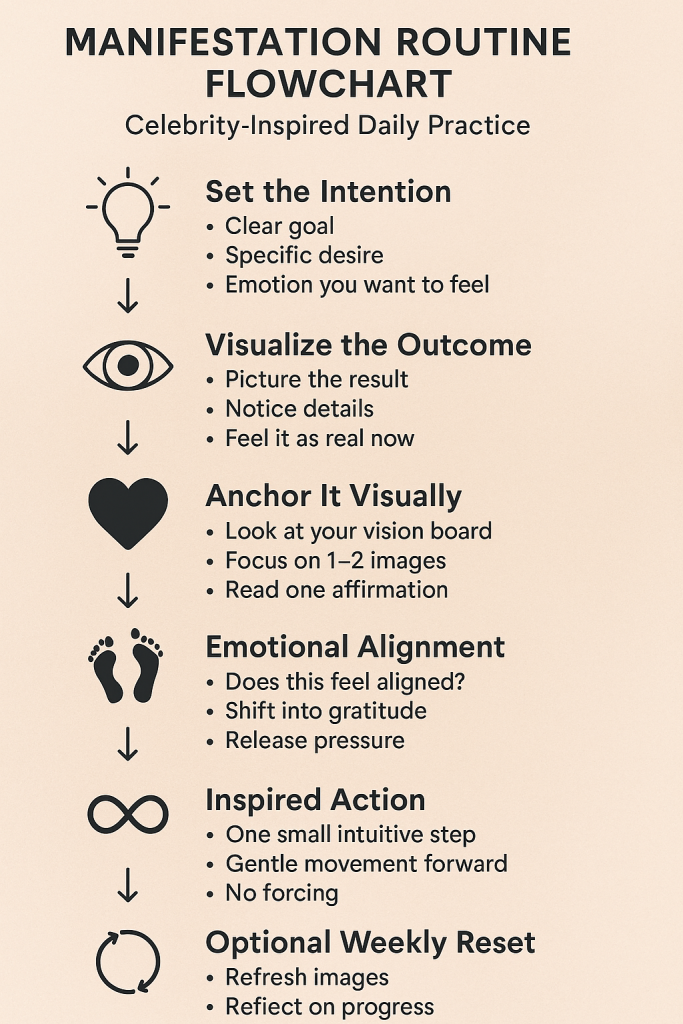
A vision board is a collection of images, words or symbols that represent goals, values or a desired direction. Some people use it within a spiritual manifestation practice. Others use it as ordinary planning or creative inspiration.
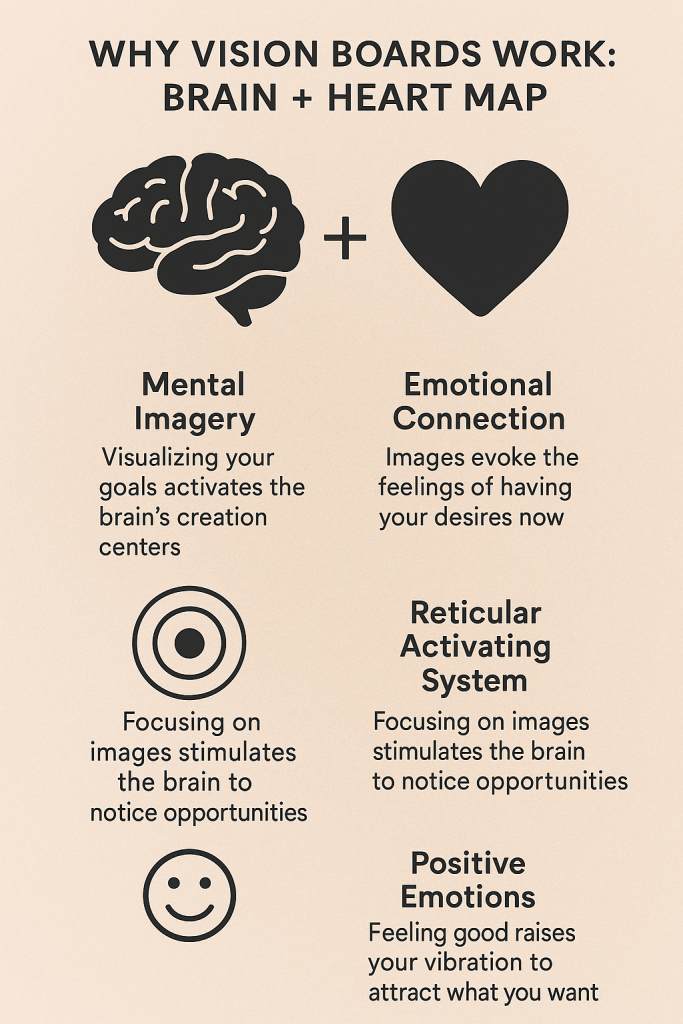
There is no evidence that placing an image on a board causes the universe to deliver the pictured outcome. A board is more defensibly understood as a cue that can keep goals visible and encourage reflection or action.
Why Public Figures Make the Practice More Visible
Celebrity culture can normalize habits quickly. When a public figure openly discusses journaling, visualization or another reflective ritual, fans may become curious about trying it themselves.
That influence is cultural, not proof that the technique produced the celebrity’s career, wealth or relationships. Famous people also have teams, opportunities, resources, training, networks and luck that a collage cannot reproduce.
Parasocial Connection and “Behind-the-Scenes” Rituals
Seeing a public figure share a personal routine can create a sense of closeness. Psychologists use the term parasocial relationship for a one-sided sense of familiarity with a media figure.
The American Psychological Association describes parasocial relationships as one-sided relationships people develop with media figures, including celebrities and influencers. See the APA discussion of parasocial relationships and celebrity attachment.
A vision board can feel intimate because it appears to show aspirations. But audiences should avoid assuming that a curated post is a complete picture of someone’s private goals or emotional life.
What Visualization Can and Cannot Do
Visualization can be useful when it is connected to realistic planning and practice. Athletes, performers and professionals may use mental rehearsal to prepare for tasks. That is different from assuming that imagining an outcome will make an external event happen.
A systematic review and meta-analysis of mental simulation found a modest overall effect on behavior, with results depending on what and how people imagined. Earlier research also distinguishes process-focused mental simulation from simply picturing a successful outcome. See the PubMed systematic review of mental simulation and behavior change. For goal follow-through specifically, experimental meta-analysis also supports monitoring progress rather than relying on visualization alone: PubMed meta-analysis of goal-progress monitoring.
A useful vision board should help answer:
- What matters to me?
- What am I trying to build?
- Which habits support that direction?
- What would progress look like this month?
Mood Boards in Creative Work
Film, design, fashion, advertising and other creative fields often use mood boards. A mood board can communicate color, tone, texture, character, setting or visual direction before the finished work exists.
This professional use is not evidence for manifestation. It shows that images can be practical communication and planning tools.
Why Symbols Can Feel Powerful
An image can carry many associations at once. A mountain may represent challenge, a quiet room may represent rest, and a passport may represent travel. Choosing images can help someone notice themes they have not yet put into words.
The interpretation is personal. A symbol does not objectively reveal your subconscious or predict your future.
Vision Boards and Intuition
Some people describe an image as “resonating” or feeling right. That can be used as a starting point for reflection. It does not mean the image is a supernatural sign or that intuition should override practical evidence.
If an image inspires a major career, relationship or financial decision, use it to generate questions—not to supply the answer.
The Risk of Success Stories
Manifestation stories often work backward: someone becomes successful and later points to a board containing a similar image. That is memorable, but it does not show that the board caused the result. Many goals placed on vision boards never happen, and those misses receive much less attention.
A grounded practice tracks both outcomes and actions.
How to Make a Useful Vision Board
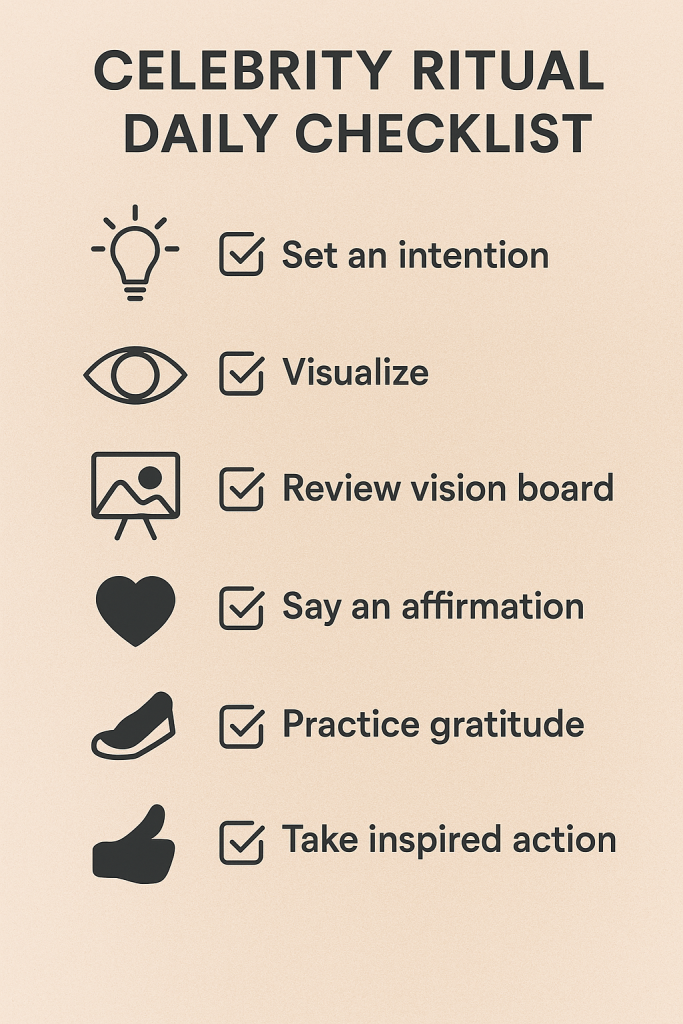
- Choose three to five areas that genuinely matter to you.
- Add images or words that represent values, not only possessions or status.
- Write one concrete action beside each major theme.
- Review the board monthly and update goals that no longer fit.
- Track progress independently of whether an image “manifests.”
Use Process Images, Not Only Outcome Images
If your goal is to write a book, include an image that reminds you to write regularly—not only a bestseller list. If your goal is financial stability, include budgeting, saving or skill-building cues—not only luxury purchases.
This connects the board to behavior.
Vision Boards and Emotional Well-Being
Creative collage-making can feel calming or enjoyable, but a vision board is not therapy and should not be presented as a treatment for anxiety, depression or trauma.
If the practice creates pressure, shame or a sense that every setback is caused by “wrong energy,” step away from the manifestation framing.
What Celebrity Examples Can Responsibly Show
When a public figure has openly described visualization, journaling or mood-board use, that example can illustrate how one person organizes goals or creative ideas. It should not be stretched into claims about their private spirituality, mental state, destiny or the cause of their success.
Likewise, mood boards used by creative teams should not automatically be labeled “manifestation.” Often they are simply professional visual-development tools.
For the broader distinction between manifestation beliefs and practical goal-setting, see Manifestation and Positive Thinking: What Helps, What Doesn’t.
Final Thoughts
Celebrity vision boards are appealing because they turn abstract hopes into visible symbols. Their strongest value is practical and reflective: clarifying goals, supporting creative thinking and keeping intentions visible.
You do not need to believe that images attract outcomes to use a vision board well. Let the board remind you what matters; let your actions, circumstances and evidence guide what happens next.
Frequently Asked Questions
Do vision boards scientifically make goals happen?
No. A board may support focus or planning, but it cannot cause an external outcome.
Are mood boards and vision boards the same?
They can overlap, but mood boards are often used professionally to communicate visual direction, while personal vision boards usually focus on goals or values.
Does visualization help?
Mental rehearsal can support preparation in some contexts, especially when paired with practice and concrete action.
Can a celebrity’s vision board explain their success?
No. Success has many contributing factors, and a board does not establish causation.
Can vision boards reveal the subconscious?
They can prompt reflection about preferences and values, but they are not objective tests of hidden mental content.
Can I use a vision board spiritually?
Yes, as a personal ritual, while keeping manifestation claims separate from evidence.
What makes a vision board more practical?
Add behaviors, deadlines and next actions alongside desired outcomes.
Can vision boards replace therapy or financial planning?
No. They can complement reflection, but they do not replace qualified help or practical planning.
Related Guides
For the broader evidence-aware framework, see Manifestation and Positive Thinking: What Helps, What Doesn’t. For a practical digital version, see Turn Your Social Feed Into a Digital Vision Board Without Magical Thinking.
Also useful: Abundance Journaling: Goals, Gratitude and Practical Progress — for converting vision-board themes into trackable goals and actions.


