
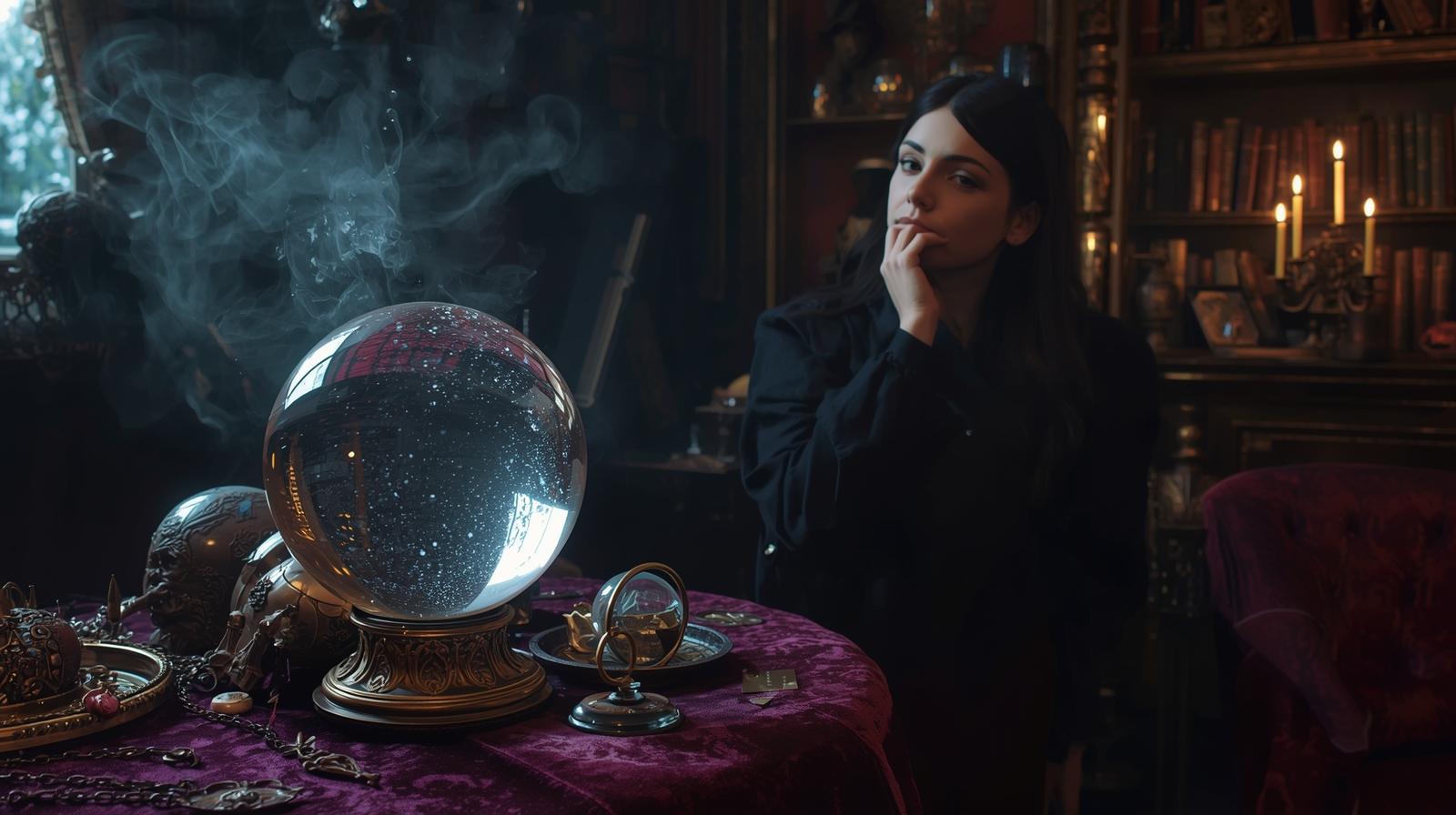
What do you think about when you think about a psychic? Are you someone who thinks about a person who is dressed in wild clothes, stands over a crystal ball, humming, or being in a trance? For many years, this is the image that people had when they thought about psychics. Even the movies have made psychics out to be something that is a little bit outlandish and crazy.
But here’s something you might not know: crystal ball gazing, which is also known as scrying, is coming back and is becoming more popular than ever. This is about meditating and seeing how accurate your visions are.
How Crystal Balls Slipped Out of Sight
Long before they were carnival props, crystal balls were sacred tools. Ancient Druids peered into water and polished stones, believing the reflections carried hidden messages. Over time, smooth spheres of crystal became prized by mystics and monarchs alike. They weren’t meant for show, but they were portals for vision.
That image began to fade as centuries passed. By the time fairs and stage shows picked them up, the crystal ball had been reduced to a joke. Smoke machines and dramatic hand-waving turned it into something theatrical rather than spiritual. Meanwhile, tarot decks, astrology charts, and mediumship found new life in books, magazines, and eventually online platforms. The ball gathered dust, its reputation reduced to little more than a Halloween cliché.
Why People Still Use These
There are different ways that people can use these psychic practices, such as meditation rooms, healing circles, and even social media. Here’s why:
- Space to breathe: Gazing into a crystal demands stillness. In a world where everyone scrolls nonstop, that pause feels like medicine.
- They’re beautiful: A crystal sphere flickering in candlelight is magnetic. It’s both ancient and modern, both spiritual and stylish.
- Immersion: Tarot or astrology give structure, but a crystal ball feels like stepping into a dream, a whole scene unfolding inside the glass.
- The hunger for meaning: With global uncertainty everywhere, people want something that feels bigger than headlines. The ball becomes a way to connect with that unseen thread.
What Really Happens During Crystal Gazing
Using a crystal ball isn’t like the movies, where the room is full of smoke and everything is eerie. Crystal gazing is a quiet thing that takes time. The psychic will soften their gaze, and their mind will drift to a different place. When an image appears, it can be a symbol, a shape, or even a dream.
There might be some who see red, and this can mean passion or it can mean conflict. They might see a shape like a wing that can mean freedom or a journey. The crystal isn’t what gives the answers, but it’s a mirror that can reflect what is going on in the subconscious mind, where a message comes and the psychic translates it.
Psychology echoes this: studies of crystal gazing find that visions arise from memory, imagination, or expectation. It’s a form of dream-work, not psychic revelation.
Famous Examples of Crystal Gazing
Despite its reputation, crystal gazing has shaped real decisions.
- John Dee, adviser to Queen Elizabeth I, famously used a crystal sphere alongside his astrology. His insights influenced politics during her reign.
- Mystics of the Middle Ages turned to crystals during dark times like wars, plagues, and fear, when people longed for signs of hope.
- Modern psychics still bring them into readings, both as a symbol and as a focal point for vision.
The practice never vanished. It only slipped into the background until the moment felt right to return.
Why People Are Falling in Love with It Again
Beyond curiosity, crystal gazing is finding a new role as a calming ritual.
- Eases stress: Fixing your attention on the ball slows the breath and settles the mind.
- Adds clarity: Images bring hidden emotions and tangled questions to the surface.
- Deepens connection: Many people describe feeling closer to loved ones, guides, or simply the universe when they gaze.
One woman described her first session as “like dreamwork mixed with meditation.” She didn’t walk away with predictions so much as peace, and that, she said, was worth more than anything else.
Humor in the Return of Crystal Balls
Crystal balls haven’t been used without there being some humor behind them. Even on TikTok, some psychic readers will joke about using crystal balls to find out “which movie is coming out next,” or “seeing the outline of a cat paw” on the crystal. This happens so that people can see that having fun with a crystal ball can be part of the fun.
Believing in Crystal Balls
When a psychic uses a crystal ball to give you information about your life, and the information is true, it will make you a believer. Even people who are skeptical can see that a psychic who uses a crystal ball can give guidance and can help people to live their best lives.
You don’t just believe in a Psychic because a lightning bolt strikes in front of you, but this is something that is personal for every person. If you go to a Psychic and the crystal ball tells you something personal about your life that’s true, this will be enough evidence to make you a believer.
Final Thoughts: A Revival With Purpose
Crystal ball gazing has been around for centuries, and even though some people think that it’s outdated, the truth is, it’s becoming more popular than ever. In the world that we live in, which is full of technology and is a fast-paced world, people want to have more intuition. A gazing ball can help people to reflect and to have the guidance that they need, which will lead them towards healing.
Next time that you see a crystal ball in a shop or when you see someone holding a crystal ball, don’t dismiss it. Remember that psychics can look into a crystal ball and find out more information about themselves and others that can help people move forward in their life journey.
To see its long arc and enduring value, check out the deeper history of the crystal ball and why contemporary wellness culture is reviving it. For a bigger picture of how crystals are taking on modern significance, here’s a thoughtful look at their wellness resurgence in the New Yorker.
Crystal Ball Gazing – FAQ
Q1. What is crystal ball gazing (scrying), in plain English?
It’s a meditative focus practice using a reflective sphere to surface symbols, feelings, and insights from your intuition. Think mindfulness with visuals.
Q2. Does the crystal show literal future events?
Not like a movie trailer. Most impressions are symbolic. Readers interpret patterns to offer guidance, timing, or likely pathways.
Q3. How do beginners start safely at home?
Choose a quiet space, dim light, and a comfortable seat. Breathe slowly, soften your gaze, and note any colors or shapes. Keep sessions to 10–15 minutes.
Q4. What size and material crystal ball should I choose?
Start with 3–5 inches. Clear quartz or obsidian are common; choose what feels calming and easy to gaze into.
Q5. How do I cleanse and care for a crystal ball?
Wipe with a microfiber cloth. Energetically cleanse by smoke (herbs), sound, moonlight, or intention. Store covered to avoid fingerprints and glare.
Q6. How long does a typical reading take?
Most sessions run 15–45 minutes. Short sessions focus on one question; longer ones explore context, emotions, and timing windows.
Q7. Can I ask practical questions like love, career, or relocation?
Yes. Specific, open-ended questions work best: “What energy surrounds my career shift this fall?” vs. “Will I get the job?”
Q8. What if I don’t see anything?
Totally normal. Try again with softer lighting, slower breathing, or a different time of day. Some people feel sensations before they see images.
Q9. How is crystal ball gazing different from tarot or astrology?
Tarot uses structured archetypes; astrology uses planetary timing; gazing is free-form and symbolic, like guided daydreaming with a mirror.
Q10. When should I book a professional instead of DIY?
When stakes feel high, emotions are heavy, or you want nuanced interpretation. Pros translate symbols, validate themes, and map next steps.
Q11. Are there any etiquette tips for getting a crystal ball reading online?
Arrive with 1–3 focused questions, minimize distractions, and be open. Take notes. If something resonates, ask for deeper clarification.
Q12. How do I integrate messages after a session?
Journal the symbols, link them to real choices, set one small action, and revisit in 7–14 days to track outcomes and refine direction.




I appreciate the practical and compassionate tone of this article. The step-by-step guidance, from selecting a crystal to cleansing and session length, feels doable for someone curious but cautious. I also like the reminder to ask specific open-ended questions and to take notes afterward — solid advice for integrating any insights into real-life decisions. ✨
This article convinced me to give scrying a try. The practical FAQ was especially helpful — choosing a 3–5 inch sphere and keeping sessions short feels manageable. I like that it’s described as a mirror for the subconscious instead of a magic trick, so it feels useful for self-reflection rather than prediction. 🌟
Fascinating read that situates crystal ball gazing within both historical practice and contemporary wellness. The comparison to dream-work and the psychological framing give the practice credibility without overstating its claims. I appreciate the balance: rituals that cultivate attention can yield meaningful introspection and emotional clarity, which is precisely what many people seek nowadays. 🪄
I never thought crystal balls could be calming, but this piece changed my mind. It sounds like a simple way to pause and notice thoughts. The history bit was interesting too, showing it used to be respected, not silly. I might try a short gaze next week and jot down any images I notice. 🙂
I appreciate that the piece emphasizes symbolism over literal prophecy. Seeing colors or shapes and reflecting on them can be a tender way to access feelings. The suggestion to journal afterwards and revisit themes in 7–14 days is practical and grounded, which makes the whole practice more useful for daily life. ✍️
Trying it with a friend sounds fun and less intimidating. The article’s suggestion to keep sessions to 10–15 minutes feels doable. I like the tip to dim the lights and breathe slowly first, then let the mind wander without forcing anything. That gentle approach seems key. 🌙
I love how this piece reclaims the crystal ball as a contemplative tool rather than a caricature. The historical context paired with practical guidance makes it feel like a bridge between ritual and modern mindfulness practices. I appreciate the balance of skepticism and openness — it invites curiosity without demanding belief, which is refreshing. ✨
What a lovely write-up on an old practice finding new life. The way the article links scrying to dream-work and meditation makes it feel safe and creative. I’m curious to try a short session and see what symbols emerge for me. The humor examples from TikTok also make it feel accessible and not scary. 😊
I like the idea of making it fun. The TikTok jokes make the whole thing less weird and more playful, so I feel more comfortable trying crystal gazing with friends. A calm room, a short time limit, and a relaxed attitude sounds perfect to start. ✨
The mention that images can come from memory or imagination was reassuring. That makes me think of guided visualization we did in yoga class, and I could totally see using a small crystal as a focal point to help settle racing thoughts and spark gentle insights. 🌿
This piece makes crystal gazing approachable and not scary at all. The FAQ answers common worries, like what to do if you don’t see anything and how to care for a crystal. I’m inspired to try a short session and keep a small notebook nearby to track any images or feelings that arise. 😊
Beautiful synthesis of ritual and neuroscience. Presenting scrying as a modality of attentional training reframes it elegantly: a reflective surface externalizes internal imagery so symbolic content can be examined safely. The historical lineage tied to contemporary wellness makes its resurgence intelligible, and the meditation-like structure aligns well with therapeutic mindfulness techniques. 🧿
This is neat. I like how it says crystal gazing helps you breathe and slow down. The steps are easy to follow and feel safe. You can try short sessions and write down what you see. It sounds calming and like a good way to notice feelings without pressure. 😊
This article makes crystal gazing sound peaceful and helpful. I like the idea of using a ball to slow down and notice feelings. It seems simple to try at home with dim light and soft breathing. The tips about 10–15 minute sessions and choosing a comfortable size are really useful and friendly. 🙂
I agree, Agnes — the practical steps are what sold me. Starting small and journaling what you see seems smart. It feels like a gentle way to explore imagery that might already be in our minds, and having guidance helps it feel less mysterious and more approachable for beginners. 🌙
I don’t get why people believe in this stuff. It’s just a glass ball, right? Sounds like a bunch of mumbo jumbo to me! Why not just meditate without all the theatrics? 🤷♂️
I absolutely loved this article! It’s fascinating how crystal ball gazing is making a comeback. It feels like a beautiful blend of ancient wisdom and modern wellness. I can’t wait to try it myself! 🌟
‘Crystal balls are back’? Really? What’s next, fortune tellers using magic wands? This trend seems ridiculous; it’s not going to change anything significant in anyone’s life. 🙄
Isn’t it ironic that people who once mocked psychics are now jumping on the bandwagon? Next, we’ll have skeptics hosting crystal ball parties! What a wild twist in modern culture. 😂
Honestly, I think this whole crystal ball thing is just nonsense. People are wasting their time and money on something that has no real basis in reality. It’s all just a gimmick to sell products. 🙄
‘Crystal gazing’ sounds like a fancy term for staring off into space if you ask me! I mean, what’s next? Looking into your coffee cup for life advice? The world has gone mad! 😂
I absolutely loved this article! It’s fascinating to see how crystal ball gazing is making a comeback. I find the idea of using something so ancient for personal reflection really inspiring. The connection to the subconscious is intriguing! 🌟
‘The hunger for meaning’? More like the hunger for distraction from real problems! Instead of staring into crystals, why not focus on practical solutions to life’s challenges? Seems like an escape to me!
‘Return of the Crystal Ball’? Sounds like a cheesy sequel no one asked for! Next, they’ll be selling magic potions at grocery stores. I’ll pass, thanks! 😂
‘Crystal gazing as meditation’? That sounds almost poetic! It’s amazing how people find peace in such unique ways; I might need to give it a shot for some inner clarity!
‘Gazing into a crystal ball’ sounds like a fun activity, but isn’t it just daydreaming? If I wanted clarity, I’d just sit quietly with my thoughts instead of staring at some glass orb! But hey, whatever floats your boat! 😅
This piece provides an insightful look into the history and resurgence of crystal gazing. It’s interesting to see how ancient practices can still hold relevance today in our hectic lives.
Honestly, I think this whole crystal ball thing is just silly. It’s hard to believe people still buy into these outdated practices. Can we please focus on real science instead of mystical nonsense? 😒
‘Psychic revelations’ are often dismissed as nonsense, yet people seek meaning in their lives everywhere! Maybe there’s more truth behind these practices than we realize; they can bring comfort during tough times.
‘Looking into a crystal ball’? Is that where my cat’s lost toy ended up? Haha! Seriously though, it’s amusing how some people take this so seriously when it’s just a piece of glass! 😂
The history of crystal balls and their resurgence is quite informative. It shows how people’s desires for meaning and calmness in chaotic times lead them back to these practices. It’s interesting how trends recycle over time.
‘Informative’? More like ‘fanciful.’ Just because people want meaning doesn’t mean they should rely on crystal balls! There are more rational ways to find peace.