

The word “detox” is often used far beyond its medical meaning. In wellness culture it can mean everything from changing food habits to taking a break from social media. For self-love, a better idea is a reset: reducing the habits, inputs and relationship patterns that leave you feeling depleted while adding practices that support steadiness and self-respect.
Your liver, kidneys, lungs and other organs handle the body’s normal detoxification processes. A spiritual ritual does not remove physical toxins, and emotions are not stored in specific organs in a way that a psychic can diagnose. The National Center for Complementary and Integrative Health reports that research on commercial “detox” and “cleanse” programs is limited and raises safety concerns about some approaches. This guide uses cleansing language only as a metaphor for reflection.
Why Self-Care Can Turn Into Self-Punishment
People sometimes approach improvement as if they must earn the right to feel okay: eat perfectly, exercise perfectly, meditate every day, never feel jealous and never lose motivation. That turns self-care into another standard for self-criticism.
A more sustainable question is: “What would make caring for myself easier this week?” The answer may be sleep, a boundary, a walk, less social media, a medical appointment, a therapy session, a more realistic schedule or simply permission to rest.
Reset Layer 1: Reduce Harsh Self-Talk
Self-love does not require constant confidence. It begins with noticing how you speak to yourself when you make a mistake, feel behind or compare yourself with someone else.
Try a three-step rewrite:
- Write the exact critical thought.
- Ask whether you would say it to someone you care about.
- Replace it with something more accurate and workable.
Instead of “I ruin everything,” try “I made a mistake and I can decide what to repair next.” The goal is not forced positivity; it is fairer language.
Reset Layer 2: Clean Up Your Inputs
Some forms of “energy drain” are easier to identify when you look at your environment. Constant notifications, doomscrolling, comparison-heavy feeds, repeated conflict and lack of quiet can keep attention fragmented.
Try:
- turning off nonessential notifications;
- unfollowing accounts that reliably trigger comparison;
- setting a time limit for news or social feeds;
- keeping part of the morning or evening screen-free;
- creating one space at home that feels calmer and less cluttered.
These changes do not “raise your frequency.” They reduce unnecessary stimulation and give your attention somewhere better to go.
Reset Layer 3: Revisit Your Boundaries
Self-love becomes practical when it changes what you allow. If you routinely say yes while resentful, answer messages when exhausted or tolerate disrespect because you fear disappointing people, the issue may be a boundary rather than an energy blockage.
One useful exercise is to list three situations where you regularly feel depleted. Beside each, write one boundary that would reduce the strain.
Reset Layer 4: Care for the Body Without “Detox” Claims
Regular meals, hydration, movement, medical care and adequate sleep support well-being. You do not need a cleanse, restrictive diet or spiritual protocol to make your body “pure.”
Physical symptoms such as chronic pain, stomach problems, fatigue, headaches or sleep changes can have many causes. They should not be diagnosed as resentment, blocked chakras or negative energy.
If symptoms are persistent or concerning, seek appropriate healthcare.
Reset Layer 5: Use Spiritual Rituals as Symbols
Ritual can make a transition feel intentional. A shower, salt bath, candle, journal entry, prayer or visualization can mark the end of a stressful day or the beginning of a new routine.
Use the ritual for meaning, not as a claim that it physically removes another person’s energy or toxins from your body.
Guilt, Comparison and Self-Love
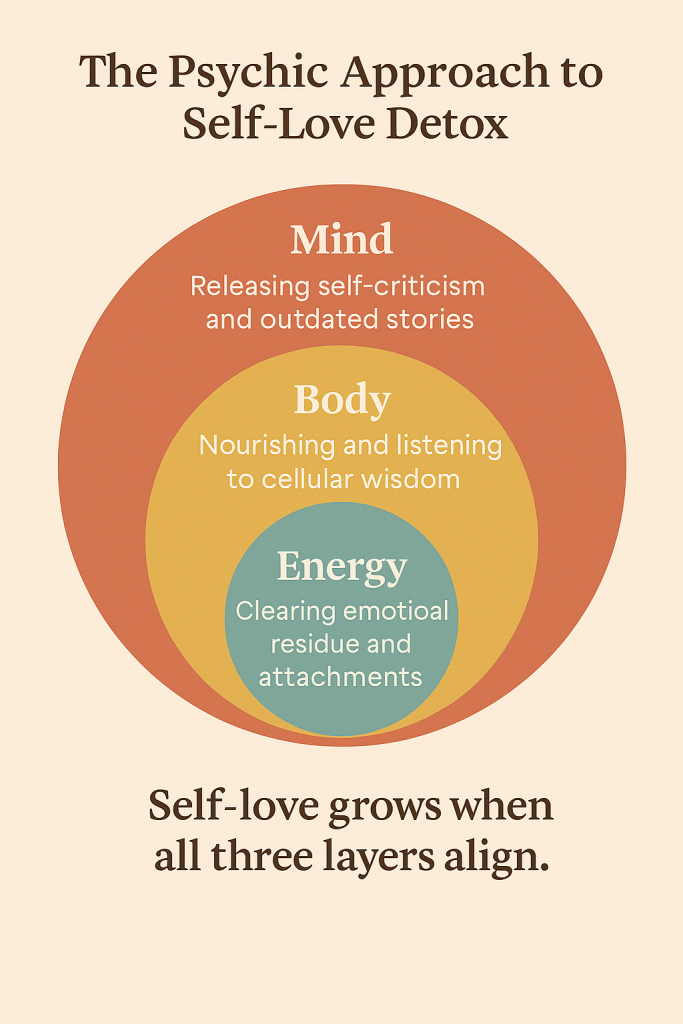
Guilt can be useful when it points toward repair. Comparison can be useful when it reveals what you value. Both become less useful when they turn into constant self-punishment.
For guilt, ask: Did I actually do something that needs repair? If yes, what concrete action can I take? If no, am I holding myself responsible for something outside my control?
For comparison, ask: What exactly am I envying—freedom, recognition, financial stability, creativity, connection? The answer can reveal a goal without requiring you to devalue yourself.
Self-Love Is Not a Constant Feeling
You will not feel confident or peaceful every day. Self-love is better measured through behavior: Do you seek help when you need it? Do you speak to yourself with basic fairness? Do you leave room for rest? Do you protect yourself from repeated mistreatment?
A low mood does not mean your vibration has dropped or that your spiritual work has failed.
A Daily Five-Minute Self-Love Reset
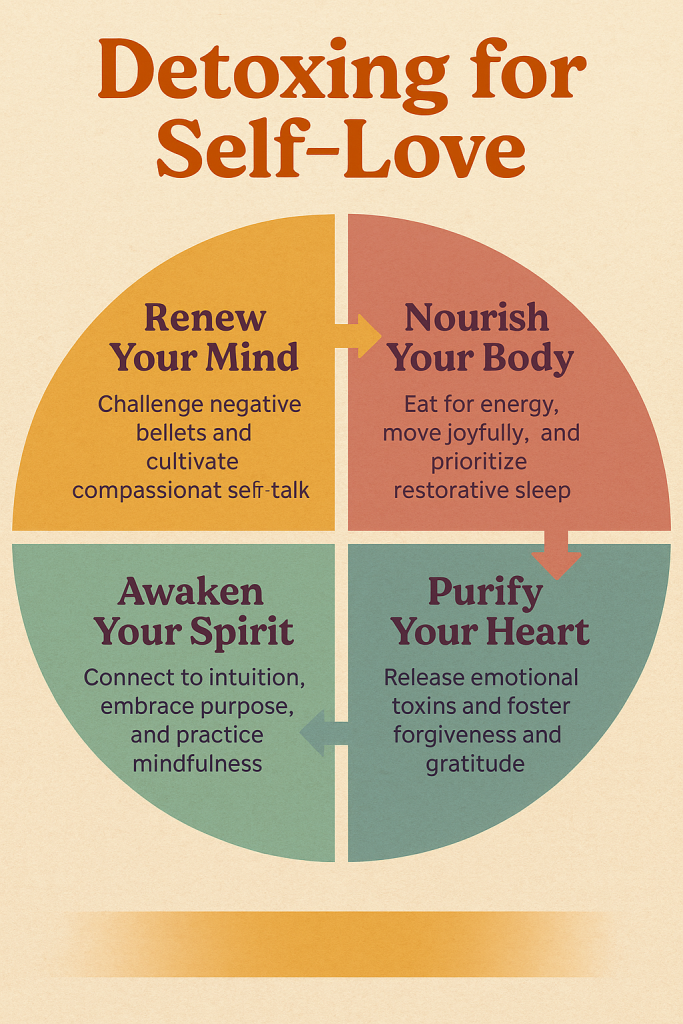
- Take three slow breaths.
- Name one thing you are feeling without judging it.
- Name one thing your body needs today.
- Choose one boundary or supportive action.
- Write one sentence you want to remember.
If you enjoy spiritual language, you can finish with a short intention such as, “I am making room for what supports me.” The value comes from the pause and the action that follows.
When “Self-Love” Becomes Avoidance
Self-love does not mean avoiding accountability, conflict or uncomfortable feedback. Sometimes caring for yourself means apologizing, changing a habit, making a difficult appointment or accepting that something needs work.
Spiritual bypassing happens when positive or energetic language is used to avoid real problems. “I am protecting my energy” should not become an excuse to ignore obligations or dismiss anyone who disagrees with you.
Psychic Readings and Self-Love
A psychic reading can be used as optional reflection if it helps you identify themes, ask new questions or think about boundaries. A reader should not diagnose toxins, blocked organs, trauma, illness or “dark energy.” They also should not tell you that repeated paid sessions are required to cleanse you.
If you are dealing with depression, anxiety, trauma, an eating disorder, chronic pain or another health concern, use appropriate professional care. Spiritual practices may coexist with that support but should not replace it.
Related guidance: How to Forgive Yourself Without Avoiding Accountability and Stress Management: Practical Ways to Reduce Daily Overload.
Self-Love Reset FAQ
Does a spiritual detox remove toxins from the body?
No. Spiritual cleansing is best understood as symbolic. The body’s detoxification is handled by biological systems and medical care when needed.
Can emotions become stored toxins in organs?
Stress can affect the body, but a psychic cannot diagnose guilt in the stomach, anger in the liver or grief in the lungs.
Do salt baths remove negative energy?
They can be relaxing and meaningful as ritual, but they are not proven to remove another person’s energy or illness.
How do I know whether I need a reset?
Look for practical signs such as chronic overcommitment, lack of rest, constant comparison, digital overload or repeated boundary problems.
What if I do not feel self-love every day?
That is normal. Measure self-love through supportive behavior rather than constant positive feelings.
Can a psychic reading improve self-love?
It may offer reflection, but change still comes from your choices, habits, relationships and appropriate support.
Can spiritual practices replace therapy?
No. They can complement therapy or other care, but should not replace professional treatment when needed.
What is the simplest self-love practice?
Notice what you feel, identify one need, choose one supportive action and speak to yourself with basic fairness.


