
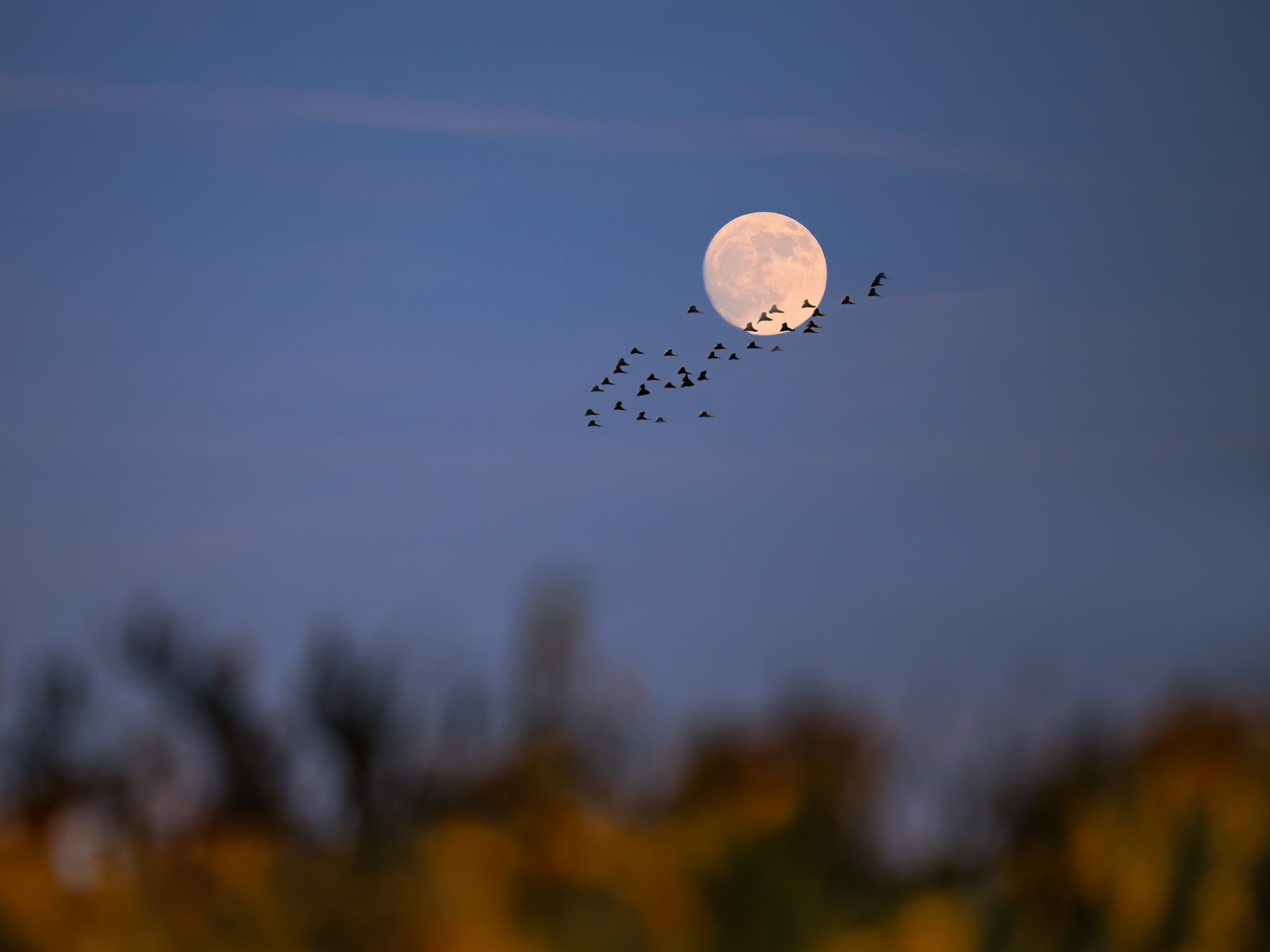
You look up and notice a bird making a wide, unhurried circle. Then another joins it. For a moment, the sky seems to be holding a pattern just for you. It is easy to understand why such a sight might feel meaningful, especially when your own life is at a turning point.
Birds flying in circles can invite spiritual reflection on perspective, cycles, patience and belonging. They also have natural reasons for moving that way. The species, weather, time of day and shape of the movement are better clues to the behavior than a fixed omen dictionary.
You can be curious about both. Observe the birds carefully, then explore what the experience brings up for you without turning it into a prediction you must obey.
First, Notice What Kind of Circle You Are Seeing
A few broad-winged birds rising slowly, a dense flock folding into changing shapes, and several birds repeatedly returning to one spot are different scenes. “Circling” is a useful first description, but it does not identify the cause.
From a safe place, look for the details: Are the birds mostly gliding or flapping? Are they gaining height? Is the group loose or tightly packed? Do they eventually settle somewhere? If you cannot identify the species, write that down instead of guessing with certainty.
Those details can make the sight more absorbing. The question becomes “What is happening here?” before it becomes “What might this mean to me?”
Hawks and Other Soaring Birds: Rising on Moving Air
The Cornell Lab of Ornithology explains that hawks can gather in circling groups called kettles while using thermals, rising currents of warm air. These currents help soaring birds gain height with less flapping. Large gatherings can occur during migration; another bird’s circling can help reveal useful rising air.
This is one reason a group may seem to turn repeatedly above the same area. It does not mean the birds are focused on a person beneath them. Identification still matters: what looks like a hawk flock could include birds such as vultures.
If you identify a hawk, our guide to hawk sightings explores possible symbolism. Keep the behavioral explanation and your personal associations in their own places.
Starling Murmurations: A Different Kind of Movement
A starling murmuration can look like a dark ribbon gathering, loosening and folding across the sky. It is not the same movement as a handful of raptors riding a thermal.
At RSPB Ham Wall in the Avalon Marshes, the reserve’s public guide describes starlings returning in the afternoon before settling into their roost. It also describes the spectacular departures from the reedbeds in the morning. This is a documented example of a particular place and behavior, not a report of a visit made for this article.
Use a local bird guide or reserve’s current information to understand what happens where you live. Do not assume a UK starling description explains every circling flock worldwide.
Spiritual Meanings You Can Explore
The following are reflection possibilities used in this guide. Choose the one that fits your experience, or let the sight remain simply beautiful.
Perspective: Give the Question More Space
A bird rising above the landscape can become an image for stepping back from a narrow view. If you have been replaying one conversation, ask what else belongs in the picture: timing, another person’s circumstances, your own tiredness or information you do not yet have.
A useful response might be to wait until you are calmer before answering a message. You are choosing that pause because it fits the situation, not because a bird has issued an instruction.
Cycles: Returning Does Not Always Mean Being Stuck
A circle may bring up something that keeps returning: a season, a memory, a hope or an unfinished task. Consider whether you are meeting the same question with more experience this time.
Try asking, “What has changed since I last felt this way?” You might notice a stronger boundary, a new resource or a willingness to approach the matter differently.
Patience: Let Movement Be Larger Than Speed
Slow, steady circling can suggest a kind of movement you might overlook when you are impatient. If the image appeals to you, use it to examine what preparation looks like in your own life.
Perhaps progress today means gathering information, resting before a demanding week or practicing a skill. The symbol is useful when it helps you name a sensible action.
Belonging: Notice How You Relate to a Group
A flock may evoke community, while a single bird may suggest independence. Neither image is automatically better. Ask whether you are wanting companionship, more room for yourself or a balance between the two.
A small response could be inviting a friend for a walk or protecting an hour of quiet. Let the feeling point toward a question rather than a fixed verdict about your life.
Birds, Loved Ones and Moments of Remembrance
If birds mattered to someone you miss, an unexpected sighting may feel like a tender connection. You might remember their garden, the sound outside their window or a walk you took together. That personal history can make the moment deeply meaningful.
You can acknowledge the comfort in a journal, a prayer or a conversation with someone who knew them. The flight pattern cannot establish that a deceased person sent a message, and you do not need to prove the connection in order to honor the memory it awakened.
If the birds do not appear again, it does not mean affection or support has disappeared. A meaningful moment does not need a repeating performance.
Is There a Biblical Meaning?
In Matthew 6:25–34, Jesus points to birds while teaching about worry and dependence on God. A Christian reader may connect a bird sighting with that passage’s themes of care and trust.
The passage does not assign a special message to birds circling clockwise, circling a house or appearing in a particular number. Keep the scriptural context separate from a modern interpretation of a sighting.
Likewise, a claim that “all ancient cultures” give a particular bird the same meaning needs a specific source. Traditions and personal associations differ.
Keep an Observation Note and a Meaning Note
Try two short entries instead of searching until you find the interpretation you most want.
- Observation: date, place, weather, approximate number, possible species, wing movement and what happened next. Include what you could not tell.
- Meaning: your mood before the sighting, the memory or theme it evoked and one optional response.
A hypothetical observation might read: “Three large birds gliding in wide loops on a warm afternoon; they gradually rose; species uncertain.” The meaning note might say: “I felt hurried. Their pace reminded me that I can finish the important task before starting another.”
This example demonstrates the method; it is not field data. Returning to your notes later may help you distinguish recurring bird behavior from changes in your own attention and feelings.
Watch without chasing, feeding or disturbing the birds to make a pattern recur. Their activity does not need to become a test of whether the universe is listening.
If the Sighting Feels Like Good Luck
You can welcome a hopeful feeling without treating the sight as a forecast. Ask what you would like to do with that optimism: reconnect, prepare for an opportunity or spend a little more time outdoors.
Our guides to luck and omens, practical ways to make room for good luck and four-leaf clovers and shamrocks explore other symbols with their own contexts. Let the bird sighting add curiosity to your day, with room for both what you observed and what you felt.
Frequently Asked Questions
Do birds circling my house predict death or bad luck?
The flight pattern does not establish such a prediction. Look first at species, conditions and behavior, and avoid treating a frightening interpretation as a fact.
Does clockwise flight have a different spiritual meaning?
There is no universal directional code. You can make a personal association, but the direction alone cannot verify a message or tell you what will happen.
What if I keep seeing the same circling birds?
Record the time, location, possible species and what the birds do next. Repeated conditions or routines may help explain the pattern; keep your personal reflections separate from those observations.
Can the sight still be spiritual if I know the natural explanation?
Yes. Understanding behavior can deepen your attention and appreciation. Personal spiritual meaning does not require the birds' movement to be unexplained.


